
About Henrietta Swan Leavitt
Lived 1868 – 1921 (aged 53). Henrietta Swan Leavitt was an American astronomer and computer, known for Period-luminosity relation.
Early life and education The observatory at Harvard where Henrietta Swan Leavitt worked. Henrietta Swan Leavitt was born in Lancaster, Massachusetts, the daughter of Henrietta Swan Kendrick and Congregational church minister George Roswell Leavitt. She was a descendant of Deacon John Leavitt, an English Puritan tailor, who settled in the Massachusetts Bay Colony in the early seventeenth century. (In the early Massachusetts records, the family name was spelled "Levett".) Henrietta Leavitt remained deeply religious and committed to her church throughout her life.
Leavitt attended Oberlin College for two years before transferring to Harvard University's Society for the Collegiate Instruction of Women (later Radcliffe College), where she received a bachelor's degree in 1892. At Oberlin and Harvard, Leavitt studied a broad curriculum that included classical Greek, fine arts, philosophy, analytic geometry, and calculus. In her fourth year of college, Leavitt took a course in astronomy, in which she earned an A− grade. thumb Henrietta Leavitt (third from left) is shown working among "The Harvard Computers" who assisted astronomer Edward Charles Pickering at the Harvard College Observatory. The assistants also included Annie Jump Cannon, Williamina Fleming, and Antonia Maury. Leavitt also began working as volunteer assistant, one of the "computers" at the Harvard College Observatory. In 1902, she was hired by the director of the observatory, Edward Charles Pickering, to measure and catalog the brightness of stars as they appeared in the observatory's photographic plate collection. (During Pickering’s time, women at the HCO were not allowed to operate telescopes, but instead checked the scientific data on the photographic plates.)
In 1893, Leavitt obtained credits toward a graduate degree in astronomy for her work at the Harvard College Observatory, but due to chronic illness, she never completed that degree. In 1898, she became a member of the Harvard staff. Leavitt left the observatory to make two trips to Europe and completed a stint as an art assistant at Beloit College in Wisconsin. At this time, she contracted an illness that led to progressive hearing loss. Leavitt gradually became deaf.
Astronomical career Leavitt working at her desk in the Harvard College Observatory.
Pickering assigned Leavitt to study variable stars of the Small and Large Magellanic Clouds, as recorded on photographic plates taken with the Bruce Astrograph of the Boyden Station of the Harvard Observatory in Arequipa, Peru. She identified 1,777 variable stars. In 1908, Leavitt published the results of her studies in the Annals of the Astronomical Observatory of Harvard College, noting that the brighter variables had the longer period.
In a 1912 paper, Leavitt examined the relationship between the periods and the brightness of a sample of 25 of the Cepheid variables in the Small Magellanic Cloud. The paper was communicated and signed by Edward Pickering, but the first sentence indicates that it was "prepared by Miss Leavitt".
Henrietta found that Delta Cephei was the "standard candle" that had long been sought by astronomers. A similar five-day cepheid variable in the Small Magellanic cloud she found to be about one ten-thousandth as bright as our five-day Delta Cephei. Using the inverse-square law, she calculated that the Small Magellanic Cloud was 100 times as far away as Delta Cephei, thus having discovered a way to calculate the distance to another galaxy.
Leavitt also developed, and continued to refine, the Harvard Standard for photographic measurements, a logarithmic scale that orders stars by brightness greater than 17 magnitudes. She initially analyzed 299 plates from 13 telescopes to construct her scale, which was accepted by the International Committee of Photographic Magnitudes in 1913.
In 1913, Leavitt discovered T Pyxidis, a recurrent nova in the constellation Pyxis, and one of the most frequent recurrent novae in the sky, with eruptions observed in 1890, 1902, 1920, 1944, 1967, and 2011.
Leavitt was a member of Phi Beta Kappa, the American Association of University Women, the American Astronomical and Astrophysical Society, the American Association for the Advancement of Science, and an honorary member of the American Association of Variable Star Observers. In 1921, when Harlow Shapley took over as director of the observatory, Leavitt was made head of stellar photometry. By the end of that year, she had died from cancer. The period–luminosity relationship for Cepheids, now known as "Leavitt's law", made the stars the first "standard candle" in astronomy, allowing scientists to compute the distances to stars too remote for stellar parallax observations to be useful. One year after Leavitt reported her results, Ejnar Hertzsprung determined the distance of several Cepheids in the Milky Way; with this calibration, the distance to any Cepheid could be determined accurately.
Cepheids were soon detected in other galaxies, such as Andromeda (notably by Edwin Hubble in 1923–24), and they became an important part of the evidence that "spiral nebulae" are independent galaxies located far outside of the Milky Way. Thus, Leavitt's discovery would forever change humanity's picture of the universe, as it prompted Harlow Shapley to move the Sun from the center of the galaxy in the "Great Debate" and Edwin Hubble to move the Milky Way galaxy from the center of the universe.
Leavitt's discovery of an accurate way to measure distances on an intergalactic scale paved the way for modern astronomy's understanding of the structure and scale of the universe. Mathematician Gösta Mittag-Leffler, a member of the Swedish Academy of Sciences, tried to nominate her for that prize in 1924, only to learn that she had died of cancer three years earlier.
Illness and death
Leavitt's scientific work at Harvard was frequently interrupted by illness and family obligations. Her early death at the age of 53, from stomach cancer, was seen as a tragedy by her colleagues for reasons that went beyond her scientific achievements. Her colleague Solon I. Bailey wrote in his obituary for Leavitt that "she had the happy, joyful, faculty of appreciating all that was worthy and lovable in others, and was possessed of a nature so full of sunshine that, to her, all of life became beautiful and full of meaning." One of the ASAS-SN telescopes, located in the McDonald Observatory in Texas, is named in her honor.
In popular culture Anna Von Mertens designed a book-based work of art, Attention Is Discovery: The Life and Legacy of Henrietta Leavitt. The pages weave Von Mertens' artistic interpretations of Leavitt's work with photos and descriptions of the work of Leavitt and her fellow Harvard Computers.
George Johnson wrote a 2005 biography, Miss Leavitt's Stars, which showcases the triumphs of women's progress in science through the story of Leavitt.
Robert Burleigh wrote the 2013 biography Look Up!: Henrietta Leavitt, Pioneering Woman Astronomer for a younger audience. It is written for four- to eight-year-olds.
The eighth episode of Neil deGrasse Tyson's Cosmos: A Spacetime Odyssey, titled "Sisters of the Sun", features Leavitt and partly focuses on her fellow Harvard Computers.
Lauren Gunderson wrote a 2015 play, Silent Sky, which followed Leavitt's journey from her acceptance at Harvard to her death.
Theo Strassell wrote a play, The Troubling Things We Do, an absurdist piece that details the life of Henrietta Leavitt, among other scientists from her era.
Dava Sobel's book The Glass Universe chronicles the work of the women analyzing images taken of the stars at the Harvard College Observatory.
The BBC included Leavitt in their Missed Genius series designed to celebrate individuals from diverse backgrounds who have had a profound effect on our world.
Poet Jessy Randall included a tribute to Leavitt in her 2025 collection of poems about women scientists, The Path of Most Resistance.
Don’t just read it —
keep it.
Full-length biographies made to live with: read them, listen on the way to work, watch them tonight.
- E-book
- Audio
- Video
Instant download · yours to keep · every purchase keeps this site free
Important facts
People in Henrietta Swan Leavitt's life
Named in this biography and alive at the same time


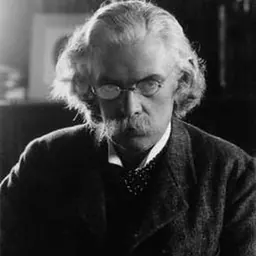

Related people
Same field, nearest in time

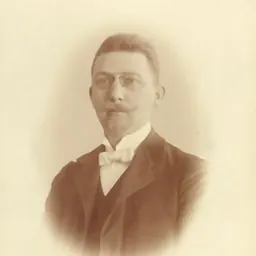

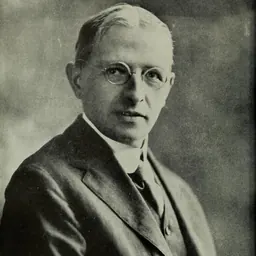

Contemporaries
People whose lives overlapped Henrietta Swan Leavitt's

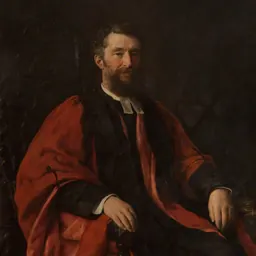



Frequently asked questions
Who was Henrietta Swan Leavitt?
American astronomer and human calculator (1868–1921)
When was Henrietta Swan Leavitt born?
Henrietta Swan Leavitt was born on 4 July 1868 in Lancaster.
When did Henrietta Swan Leavitt die?
Henrietta Swan Leavitt died on 12 December 1921 in Cambridge.
What was Henrietta Swan Leavitt's occupation?
Henrietta Swan Leavitt was an astronomer and computer.
What was Henrietta Swan Leavitt known for?
Henrietta Swan Leavitt was known for Period-luminosity relation.
What nationality was Henrietta Swan Leavitt?
Henrietta Swan Leavitt was American.
Sources & further reading
· Wikipedia: Henrietta Swan Leavitt
· DBpedia: Henrietta Swan Leavitt
Cite this page
APA: Biography.guide. (2026). Henrietta Swan Leavitt. https://biography.guide/henrietta-swan-leavitt/
MLA: "Henrietta Swan Leavitt." Biography.guide, https://biography.guide/henrietta-swan-leavitt/.
Chicago: "Henrietta Swan Leavitt." Biography.guide. https://biography.guide/henrietta-swan-leavitt/.
Data last updated: 2026-09-20 · Spot an error? Report a correction.
Page generated 2026-09-27 05:21 UTC