
About Henrietta Dugdale
Lived 1827 – 1918 (aged 91). Henrietta Dugdale was an Australian suffragette and suffragist.
Henrietta Augusta Dugdale ( Worrell; 14 May 1827 – 17 June 1918) was a pioneer Australian who initiated the first women's suffrage society in Australia. Non-conformist, provocative and quick-witted, her campaigning resulted in breakthroughs for women's rights in Australia.
Early life and education Henrietta Augusta Worrell was born at St Pancras London on 14 May 1827, the second surviving daughter of John Worrell and Henrietta Ann (née Austin). Her claim of a first marriage at 14 does not fit with her official marriage in 1848 to a merchant navy officer J. A. Davies, with whom she came to Australia in 1852. After Davies' death she married ship's captain William Dugdale in Melbourne in March 1853. They settled at Queenscliff where sons Einnim, Carl and Austin were born. Dugdale was a vegetarian.
After separating from William Dugdale in the late 1860s, she moved to the Melbourne suburb of Camberwell where she remained until a few years before her death on 17 June 1918 at Point Lonsdale. Her third husband Frederick Johnson, whom she married in 1903, predeceased her.
Career Dugdale's campaign for 'equal justice for women' began with a letter to Melbourne's Argus newspaper in April 1869. It peaked during the 1880s in radical public debate as a member of Melbourne's Eclectic Society and the Australasian Secular Association, through her utopian allegory A Few Hours in a Far-Off Age and in the formation in May 1884 of the Victorian Women's Suffrage Society, the first of its kind in Australia. That same year, Henrietta wrote a scathing judgement of the Victorian courts, and their inability to protect women from violent crimes. Published in the Melbourne Herald, her words cut straight to the core of the issue: 'Women's anger,' she wrote, 'was compounded by the fact that those who inflicted violence upon women had a share in making the laws while their victims did not.'
Dugdale was acknowledged as a suffrage pioneer when Australian women attained the vote and the associated right to stand for federal parliament in June 1902 (a world first) and when the State of Victoria belatedly followed suit in December 1908. Dugdale died on 17 June 1918 in Point Lonsdale, Australia.
In 2013, Dugdale was nationally recognised as a critical first-wave Australian feminist, and The Dugdale Trust for Women & Girls, is named in honour of her life's work. Dugdale was inducted into the Victorian Honour Roll of Women in 2001. The Dugdale Trust for Women & Girls is a national harm-prevention institution for which The Victorian Women's Trust operates as trustee.
Don’t just read it —
keep it.
Full-length biographies made to live with: read them, listen on the way to work, watch them tonight.
- E-book
- Audio
- Video
Instant download · yours to keep · every purchase keeps this site free
Important facts
People in Henrietta Dugdale's life
Named in this biography and alive at the same time




Related people
Same field, nearest in time
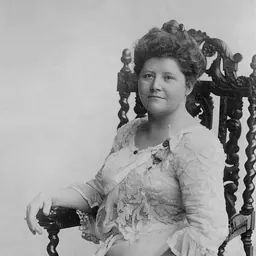


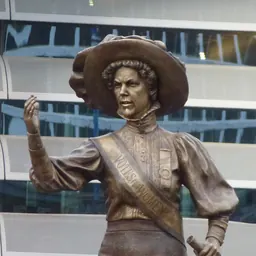
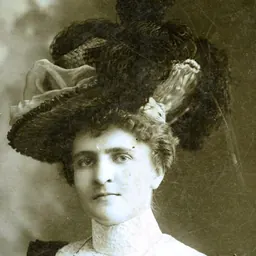

Contemporaries
People whose lives overlapped Henrietta Dugdale's
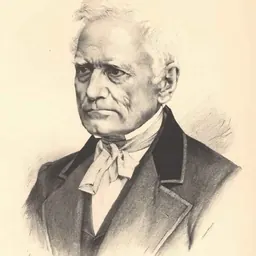




Frequently asked questions
Who was Henrietta Dugdale?
Australian suffragist
When was Henrietta Dugdale born?
Henrietta Dugdale was born on 14 May 1827 in St Pancras.
When did Henrietta Dugdale die?
Henrietta Dugdale died on 17 June 1918 in Melbourne.
What was Henrietta Dugdale's occupation?
Henrietta Dugdale was a suffragette and suffragist.
What nationality was Henrietta Dugdale?
Henrietta Dugdale was Australian.
Sources & further reading
· Wikipedia: Henrietta Dugdale
Cite this page
APA: Biography.guide. (2026). Henrietta Dugdale. https://biography.guide/henrietta-dugdale/
MLA: "Henrietta Dugdale." Biography.guide, https://biography.guide/henrietta-dugdale/.
Chicago: "Henrietta Dugdale." Biography.guide. https://biography.guide/henrietta-dugdale/.
Data last updated: 2026-09-22 · Spot an error? Report a correction.
Page generated 2026-09-27 05:19 UTC