
Henri Quentin
French catholic priest, philologist and monk
About Henri Quentin
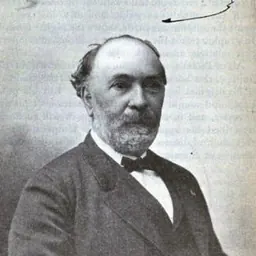
Lived 1872 – 1935 (aged 62). Henri Quentin was a French catholic priest, philologist, monk, hagiographer and church historian.
Dom Henri Quentin (7 October 1872, Saint-Thierry - 4 February 1935, Rome) was a French Benedictine abbot. A philologist specializing in biblical texts and martyrologies, he was the creator of an original method of textual criticism (sometimes called the neo-Lachmannian method). He pioneered techniques to compare texts and produce trees of relationships between version and editions in order to study their origins and variations.
Life After studying theology at the seminary of Rheims, he joined in 1892 Maredsous Abbey and in 1897 Solesmes Abbey. He was ordained priest in 1902. In 1907, he was called to Rome to direct the work of the Pontifical Commission for the Revision of the Vulgate, newly created by Pope Pius X and entrusted to the Order of St Benedict. It was during this time that he was faced with a wide range of versions of texts with differences. This forced him to explore the editions systematically using quantitative approaches. In March 1914, he was appointed consultant to the liturgical section of the Sacred Congregation of Rites. The Commission for the Revision of the Vulgate was transformed in 1933 into the Pontifical Abbey of St Jerome-in-the-City, where he became the first abbot.
Method Faced with the enormous mass of manuscripts of the Bible, and the special relationship of copyists with this text, Dom Quentin was obliged to change the approach he had adopted for martyrologies and criticize the methods traditionally applied in the establishment of a stemma codicum. The method of Dom Quentin has been much discussed and often criticized, but has attracted interest because of its arithmetical character and its capacity for automation. Quentin's method is identical to what is used in phylogenetic analysis for the study of evolution to produce unrooted trees.
Publications Jean-Dominique Mansi et les grandes collections conciliaires, Paris, Ernest Leroux, 1900. Les martyrologes historiques du Moyen Âge : étude sur la formation du Martyrologe romain, Paris, 1908. Mémoire sur l'établissement du texte de la Vulgate. 1ère partie : Octateuque, Paris, Gabalda, 1922 (Collectanea biblica latina VI). Essais de critique textuelle (Ecdotique), Paris, Picard, 1926. Hippolyte Delehaye (S.J.) et Henri Quentin (O.S.B.), Acta sanctorum novembris, tomi II pars posterior, qua continetur Hippolyti Delehaye commentarius perpetuus in Martyrologium Hieronymianum ad recensionem Henrici Quentin, Bruxelles, Société des Bollandistes, 1931.
Don’t just read it —
keep it.
Full-length biographies made to live with: read them, listen on the way to work, watch them tonight.
- E-book
- Audio
- Video
Instant download · yours to keep · every purchase keeps this site free
Important facts
People in Henri Quentin's life
Named in this biography and alive at the same time

Related people
Same field, nearest in time

Contemporaries
People whose lives overlapped Henri Quentin's


Frequently asked questions
Who was Henri Quentin?
French catholic priest, philologist and monk (1872–1935)
When was Henri Quentin born?
Henri Quentin was born on 7 October 1872 in Saint-Thierry.
When did Henri Quentin die?
Henri Quentin died on 4 February 1935 in Rome.
What was Henri Quentin's occupation?
Henri Quentin was a catholic priest, philologist, monk, hagiographer and church historian.
What nationality was Henri Quentin?
Henri Quentin was French.
Sources & further reading
Cite this page
APA: Biography.guide. (2026). Henri Quentin. https://biography.guide/henri-quentin/
MLA: "Henri Quentin." Biography.guide, https://biography.guide/henri-quentin/.
Chicago: "Henri Quentin." Biography.guide. https://biography.guide/henri-quentin/.
Data last updated: 2026-09-20 · Spot an error? Report a correction.
Page generated 2026-09-27 05:32 UTC