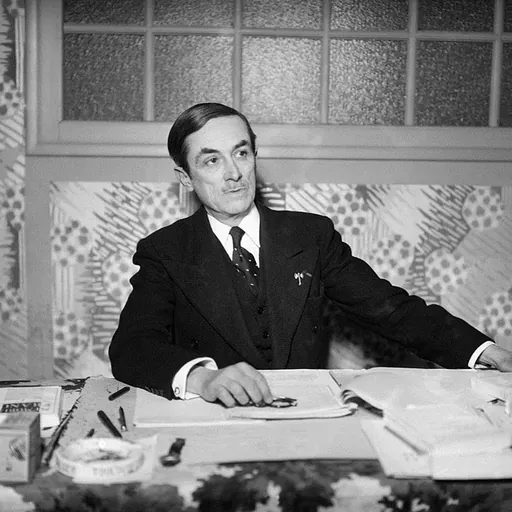
About Henri Massis
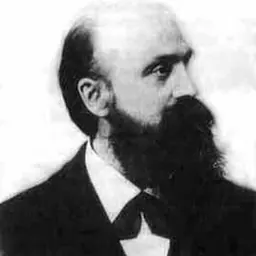
Lived 1886 – 1970 (aged 84). Henri Massis was a French journalist, writer, opinion journalist, literary critic, literary historian and essayist.
Henri Massis (21 March 1886 – 16 April 1970) was a French essayist, literary critic and literary historian.
Biography Massis was born in the 18th arrondissement of Paris, and attended Lycée Condorcet and University of Paris. He began his career as an essayist and critic in his early twenties, with works such as Comment Émile Zola Composait ses Romans (1905), Le Puits de Pyrrhon (1907), and La Pensée de Maurice Barrès (1909). Together with his friend Alfred de Tarde, he published essays commenting on the French university system and the generation of 1912.
Massis converted to Catholicism in 1913 and, following World War I, called for a revival of the French spirit and Catholicism; from early on, he was a follower of Charles Maurras and the Action Française. From 1920 he served as editor of the newly formed Revue Universelle, a magazine closely associated with Action Française which worked to spread Christian political philosophy. He published two volumes of Jugements that critically analysed the moral teachings of numerous writers, such as Ernest Renan and André Gide.
Massis' political writings expressed his concerns over what he viewed as threats to post-World War I French society, including Bolshevism and Oriental mysticism.
On 23 January 1941, Massis was made a member of the National Council (parliament) of Vichy France. He was also decorated with the Order of the Francisque. While involved in the Vichy Government during World War II, Massis refused to collaborate with the Nazis. After the war, he was arrested and imprisoned in Fresnes Prison in December 1944. After being released after only one month in January 1945, he went on to work as an editor for Plon. He devoted himself to biographical studies of Ernest Renan, Maurice Barrès, Charles Maurras and António de Oliveira Salazar. Still a follower of the integralist and nationalist philosophy of the Action Française after the war, his writings from this period reflect his continued disdain of Nazism in Germany and Bolshevism in the Soviet Union.
Massis was elected to the Académie française in 1960. Together with other French conservative intellectuals, he signed a manifesto "of resistance to abandonment" in October 1961, a counter-manifesto to the Manifesto of the 121 against the Algerian War. He died in Paris on 16 April 1970.
Don’t just read it —
keep it.
Full-length biographies made to live with: read them, listen on the way to work, watch them tonight.
- E-book
- Audio
- Video
Instant download · yours to keep · every purchase keeps this site free
Important facts
People in Henri Massis's life
Named in this biography and alive at the same time


Related people
Same field, nearest in time


Contemporaries
People whose lives overlapped Henri Massis's



Frequently asked questions
Who was Henri Massis?
French historian and writer (1886–1970)
When was Henri Massis born?
Henri Massis was born on 21 March 1886 in 18th arrondissement of Paris.
When did Henri Massis die?
Henri Massis died on 16 April 1970 in 14th arrondissement of Paris.
What was Henri Massis's occupation?
Henri Massis was a journalist, writer, opinion journalist, literary critic, literary historian and essayist.
What nationality was Henri Massis?
Henri Massis was French.
Sources & further reading
Cite this page
APA: Biography.guide. (2026). Henri Massis. https://biography.guide/henri-massis/
MLA: "Henri Massis." Biography.guide, https://biography.guide/henri-massis/.
Chicago: "Henri Massis." Biography.guide. https://biography.guide/henri-massis/.
Data last updated: 2026-09-23 · Spot an error? Report a correction.
Portrait: Wikimedia Commons · author & licence
Page generated 2026-09-27 05:06 UTC