
About Henri Gabriel Ibels
Lived 1867 – 1936 (aged 68). Henri Gabriel Ibels was a French poster artist, painter, printmaker, illustrator, graphic artist and writer.
Henri-Gabriel Ibels (30 November 1867 – 31 January 1936) was a French illustrator, printmaker, painter and author.
Biography He was born in Paris and studied at the Académie Julian along with artists such as Pierre Bonnard and Édouard Vuillard. At the beginning of the term at the Académie Julian, Paul Sérusier gathered his friends around, including Ibels, and gave them the name Nabis. This is a Hebrew word for “prophet” and Ibels was a member since its 1889 founding. Though he was a part of the Societe de Independants "from a young age," he made his debut during the Nabi movement when he became one of the original members of Les Nabis. Ibels earned this nickname as he frequently made regular publications to numerous newspapers and magazines. His main focus was drawing and lithography. He was passionate, loved the form of theater and entertainment, and attacked bourgeois values. Ibels is known for his skillfully crafted and precise lines. Ibels' first exhibit also took place in 1891 at the Salon des Independants. And in 1892, he created eight color lithographs for the 1892-93 season of the Theatre Libre in Montmartre. As photomechanical processes allowed lithographs and drawing to be cheaply reproduced in the press, editors and publishers began to incorporate caricatures within their journals during the 1890s. Illustrators such as Henri-Gabriel Ibels, Adolphe Willette, and Jean-Louis Forain began to contribute to all types of journals. Though their "anti-bourgeois attitudes" were not always anarchist, they contributed to anarchist leaning journals such as La Plume and La Courrier Francais to mock the revolution itself.
Ibels collaborated with Toulouse-Lautrec, with whom he developed a personal relationship and professional camaraderie. The Nabis studied Japanese prints to find new ideas and possibilities for color. In April 1895, there were 13 glass stained windows that were created from sketches and displayed at the Salon de la Societe Nationale des Beaux-Arts. Although both Ibels and Seurat shared an emphasis on drawing and a fascination with the circus as a subject matter, the work of Henri-Gabriel Ibels and Georges Seurat shares some distinct differences. Except Seurat is best known for his pointillist technique, in which he used tiny dots of color to create a sense of light and form in his paintings. His work often focused on capturing the effects of light and color through flat silhouettes, which can be seen is his work such as the Cafe Concert. On the other hand, Ibels's lithographs often showcased a more narrative-driven approach, with bold lines and rich textures. Ibels expressed this ideology of a sickness by utilizing imagery of exhausted and tired soldiers in his drawings to demonstrate uniformed, conformity amongst citizens in support of anti-Dreysford. As Zola has famously said, "Discipline means obedience," Zola expressed an overarching view of soldiers unwilling to rule against a commander in chief for fear of punishment, an ideology that is also reflected in Ibels' work.In addition, they both had a share of language. Ibels' “Le Coup de Père François” and Zola's use of words such as “tyranny”, “boot”, “sword”, and “dictator” created a sense of menace. As a result, this caused a series of anti-Jewish controversies that Ibels addressed in his artwork, knows as “Dreyfusard art”. Before the Dreyfus affair, Ibels was like a vigilante artist supporting the cause but would soon publicly come out and change his stance in the Jewish newspaper, La Libre Parole. It was through his artwork that he would campaign to counteract ideas of national identity in France, that attempted to exclude Jews, in an effort to go against the ideas of anti-Dreyfusism and become an activist for social change.
Ibels would come across other artists, such as one named Zola, and collaborate due to their common fight for Dreyfus and rivalries with anti-Dreyfusard artists.
Don’t just read it —
keep it.
Full-length biographies made to live with: read them, listen on the way to work, watch them tonight.
- E-book
- Audio
- Video
Instant download · yours to keep · every purchase keeps this site free
Important facts
People in Henri Gabriel Ibels's life
Named in this biography and alive at the same time
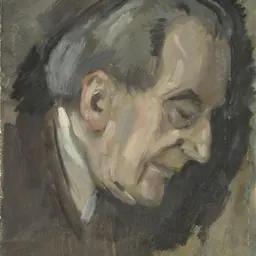
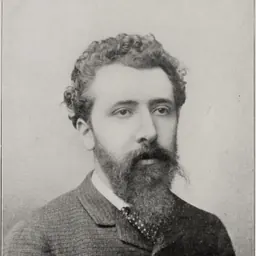

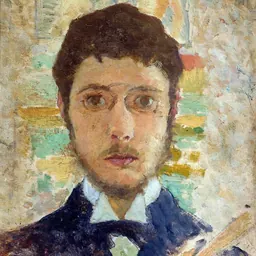
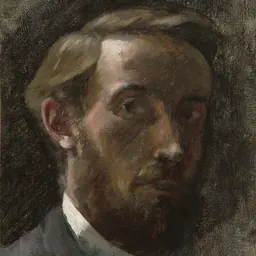
Related people
Same field, nearest in time


Contemporaries
People whose lives overlapped Henri Gabriel Ibels's



Frequently asked questions
Who was Henri Gabriel Ibels?
French illustrator (1867-1936)
When was Henri Gabriel Ibels born?
Henri Gabriel Ibels was born on 30 November 1867 in 10ᵗʰ arrondissement of Paris.
When did Henri Gabriel Ibels die?
Henri Gabriel Ibels died on 1 February 1936 in 10ᵗʰ arrondissement of Paris.
What was Henri Gabriel Ibels's occupation?
Henri Gabriel Ibels was a poster artist, painter, printmaker, illustrator, graphic artist and writer.
What nationality was Henri Gabriel Ibels?
Henri Gabriel Ibels was French.
Sources & further reading
· Wikipedia: Henri Gabriel Ibels
· DBpedia: Henri-Gabriel Ibels
Cite this page
APA: Biography.guide. (2026). Henri Gabriel Ibels. https://biography.guide/henri-gabriel-ibels/
MLA: "Henri Gabriel Ibels." Biography.guide, https://biography.guide/henri-gabriel-ibels/.
Chicago: "Henri Gabriel Ibels." Biography.guide. https://biography.guide/henri-gabriel-ibels/.
Data last updated: 2026-09-20 · Spot an error? Report a correction.
Page generated 2026-09-27 05:24 UTC