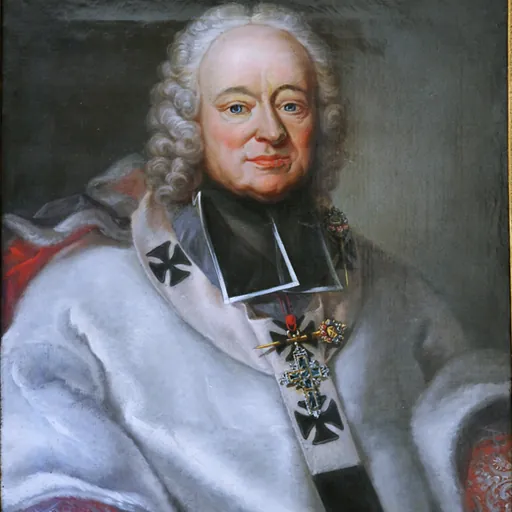
Henri François Xavier de Belsunce de Castelmoron
French bishop
About Henri François Xavier de Belsunce de Castelmoron
Lived 1671 – 1755 (aged 83). Henri François Xavier de Belsunce de Castelmoron was a French catholic priest, catholic bishop and bishop.
Henri François Xavier de Belsunce de Castelmoron (3 December 1671 – 4 June 1755) was a French Jesuit who served as Bishop of Marseille from 1709 until his death. He is remembered for his tireless efforts to relieve the suffering during the Great Plague of Marseille of 1720–21.
Early life He was the second son of Armand de Belsunce, Marquis de Castelmoron, and his wife Anne de Caumont de Lausun. His maternal uncle was courtier and soldier Antoine Nompar de Caumont, Duke of Lauzun. His Huguenot parents thought it more advantageous for him to be raised a Catholic.
Henri studied classics in Paris at the Collège de Clermont or the Lycée Louis-le-Grand and converted to Catholicism at about the age of fifteen. He then entered the Society of Jesus. In 1699 he left the Society for reasons of health and became Vicar-General of Agen.
The Vie de Suzanne de Foix, a biography of his aunt, was written by him and published while at Agen, 1709. That same year he was made Bishop of Marseille.
The plague The charity he displayed during the Great Plague of Marseille of 1720 and 1721 which killed 100,000 people in Marseille, made his name a household word and won for him the title of "Good Bishop". When the plague broke out a large fleet was taking the Princess of Orléans to Italy where she was to marry the Duke of Modena. The suite of the princess took to flight, and with them all the notables of the city, but Bishop Belsunce remained with a few friends, and together they battled against the plague, till they conquered it. In the midst of the plague, on 22 October 1720, at the suggestion of Soeur Anne-Madeleine, Belsunce established a feast in honour of the Sacred Heart. On 1 November he solemnly consecrated the city and the Diocese to the Sacred Heart of Jesus.
In his address to the Assembly of the Clergy in 1725, Belsunce stated that more than 250 priests and religious perished at that time. But he was the soul of the rescuers and the praises bestowed on him by Alexander Pope and Charles Hubert Millevoye (Essay on Man and Belsunce ou la peste de Marseille) were deserved.
The King of France offered him, by way of recognition, the See of Laon to which was attached the first ecclesiastical peerage of the realm and afterwards the metropolitan See of Bordeaux. Belsunce refused both and contented himself with accepting the pallium sent him by Pope Clement XII.
Nicolas-André Monsiau painted The Devotion of Monsignor de Belsunce during the plague of 1720 (1819). François Gérard painted Monsignor of Belsunce during the plague of Marseille The eveque Henri Francois Xavier de Belsunce-Castelmoron (Belsunce Castelmoron) (1671-1755) rescuing the sick during the plague epidemic of 1720 (1834).
There is a bronze statue of Belsunce in the square outside the Cathédrale Sainte-Marie-Majeure de Marseille commemorating his work during the plague. During the occupation of World War II, knowing that the Germans were looking for non-ferrous metals, resistance fighters hid the 2800 kg of bronze of the statue in a warehouse on Boulevard de Louvain. The Grand Cours was renamed the Cours Belsunce.
He is mentioned by Albert Camus in the novel The Plague, in the second sermon of Father Paneloux.
Jansenism During his incumbency Belsunce fought against Jansenism. He attended, 1727, the Synod of Embrun where Jean Soanen was condemned. He opposed with all his power Colbert of Pamiers. In spite of the protest of the Parlement of Aix-en-Provence, he instructed his priests to refuse absolution to the appellants against the Bull Unigenitus. Nearly all his pastoral instructions are against Jansenism.
Works In addition to various pastoral instructions, Belsunce's works include: (Agen, 1709) (translated from Augustine of Hippo's ) (translated from Robert Bellarmine's ) (Marseilles, 1747–51) All these writings were published by Jauffret under the title of (Metz, 1822).
Don’t just read it —
keep it.
Full-length biographies made to live with: read them, listen on the way to work, watch them tonight.
- E-book
- Audio
- Video
Instant download · yours to keep · every purchase keeps this site free
Important facts
People in Henri François Xavier de Belsunce de Castelmoron's life
Named in this biography and alive at the same time
Related people
Same field, nearest in time
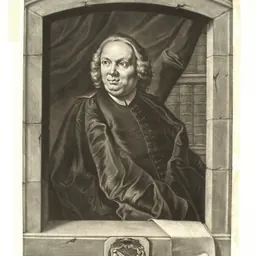
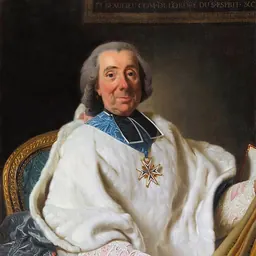
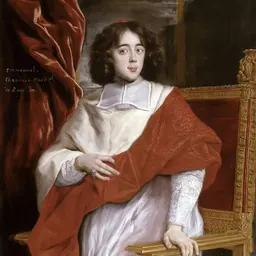
Contemporaries
People whose lives overlapped Henri François Xavier de Belsunce de Castelmoron's
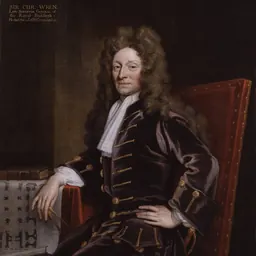




Frequently asked questions
Who was Henri François Xavier de Belsunce de Castelmoron?
French bishop
When was Henri François Xavier de Belsunce de Castelmoron born?
Henri François Xavier de Belsunce de Castelmoron was born on 3 December 1671 in La Force.
When did Henri François Xavier de Belsunce de Castelmoron die?
Henri François Xavier de Belsunce de Castelmoron died on 4 June 1755 in Marseille.
What was Henri François Xavier de Belsunce de Castelmoron's occupation?
Henri François Xavier de Belsunce de Castelmoron was a catholic priest, catholic bishop and bishop.
What nationality was Henri François Xavier de Belsunce de Castelmoron?
Henri François Xavier de Belsunce de Castelmoron was French.
Sources & further reading
· Wikipedia: Henri François Xavier de Belsunce de Castelmoron
· DBpedia: Henri François Xavier de Belsunce de Castelmoron
Cite this page
APA: Biography.guide. (2026). Henri François Xavier de Belsunce de Castelmoron. https://biography.guide/henri-francois-xavier-de-belsunce-de-castelmoron/
MLA: "Henri François Xavier de Belsunce de Castelmoron." Biography.guide, https://biography.guide/henri-francois-xavier-de-belsunce-de-castelmoron/.
Chicago: "Henri François Xavier de Belsunce de Castelmoron." Biography.guide. https://biography.guide/henri-francois-xavier-de-belsunce-de-castelmoron/.
Data last updated: 2026-09-26 · Spot an error? Report a correction.
Portrait: Wikimedia Commons · author & licence
Page generated 2026-10-05 03:56 UTC