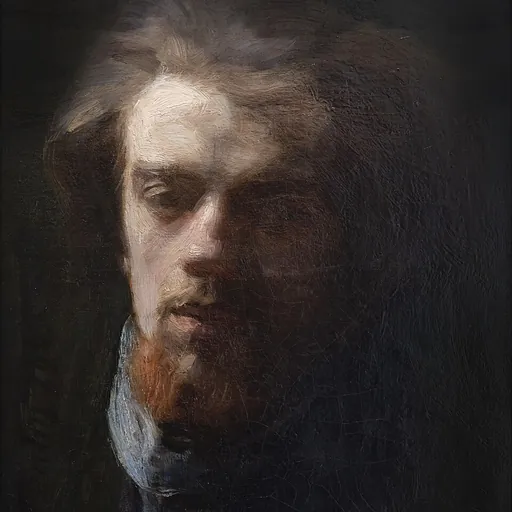
Henri Fantin-Latour
French painter and printmaker
About Henri Fantin-Latour
Lived 1836 – 1904 (aged 68). Henri Fantin-Latour was a French painter, botanical illustrator, lithographer, graphic artist, printmaker and visual artist.
Ignace Henri Jean Theodore Fantin-Latour (; 14 January 1836 – 25 August 1904) was a French painter and lithographer best known for his flower paintings and group portraits of Parisian artists and writers.
Early life Born in Grenoble, Isère, Ignace Henri Jean Théodore Fantin-Latour first had drawing lessons with his father Théodore Fantin-Latour (1805–1875), who was a painter. In 1850 he moved to Paris where he enrolled in the small Paris School of Drawing, where he studied with Louis-Alexandre Péron and Horace Lecoq de Boisbaudran, an innovative and non-traditional instructor who developed his own teaching method based on painting and drawing from memory.
He entered the École des Beaux-Arts, in Paris, in 1854, where he had for classmates, Edgar Degas, Alphonse Legros and Jean-Charles Cazin. After studying there, he spent long time copying the works of the old masters in the Musée du Louvre.
His decision to make still lifes may seem surprising at the time of Impressionism, however, the choice of such a subject wasn't innocent. In the hierarchy of genres enacted by the Academy of Fine Arts since the 17th century, the still life of fruit or flowers was considered a minor category. By ignoring any literary, religious or historical context, supposed to confer value and nobility on the work, he adopted the opposite stance of academicism. Edwin and Ruth Edwards, his English patrons and merchants, recommended that he always used simple vases and table tops in order to exhibit his great talent in rendering texture and color.
Fantin-Latour still lifes were also very appreciated in the Netherlands at his time. At the Living Masters Exhibition in Amsterdam, in 1889, one of his still lifes with roses sold by 2,000 guilders, a considerable sum back then. Dutch art dealers from Amsterdam regularly sold works by Fantin-Latour well into the 1930s. Many of these works would end in Dutch museums such as the Rijksmuseum, in Amsterdam, and the Kröller-Müller Museum, in Otterlo.
Artistic universe After his first Salon submissions were rejected in 1859, Fantin-Latour began exhibiting with his friend Édouard Manet and the future Impressionists Pierre-Auguste Renoir and Claude Monet. In 1865, he wrote to Edwin Edwards : “We form a group and make noise because there are many painters and one is easily forgotten. When we come together... we grow in numbers and become more adventurous. I thought it could last, it was my mistake”.
In 1867, he was also one of the nine members of the Japanese Jinglar Society, along with Carolus-Duran, who painted his portrait twice in 1861, and the ceramists Bracquemond and Solon, who they met at dinner in the Japanese style. “One always felt when approaching him, a small feeling of fear, because of these rough manners which the artists of his generation often affected as inseparable from a noble independence,” said Jacques-Émile Blanche, a painter friend of the following generation.
Fantin-Latour renovated the collective portraiture with paintings that served as large manifestos: Homage to Delacroix (1864); A Studio at Les Batignolles (1870), a tribute to Manet; The Corner of the Table (1872), a homage to the Parnassian poets, including Paul Verlaine and Arthur Rimbaud; and Around the Piano (1885), a tribute to musicians and musicologists of his time. He later published lithographs inspired by Richard Wagner in La revue wagnérienne, which helped solidify his reputation among Paris' avant-garde as an anti-naturalist painter. He spent his summers on the country estate of his wife's family at Buré, Orne in Lower Normandy, where he died on 25 August 1904.
Like many painters of his time, he became interested in photography, taking pictures for his work. He was also a big collector of erotic photographs; his estate lists more than 1,400 which are kept in the Museum of Grenoble.
He was interred in the Cimetière du Montparnasse, Paris, France.
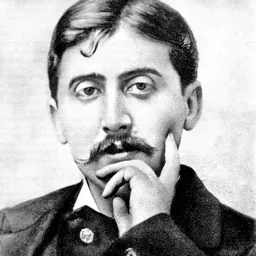
Legacy Marcel Proust mentions Fantin-Latour's work in In Search of Lost Time: "Many young women's hands would be incapable of doing what I see there," said the Prince, pointing to Mme de Villeparisis's unfinished watercolours. And he asked her whether she had seen the flower painting by Fantin-Latour which had recently been exhibited. (The Guermantes Way)
His first major UK gallery exhibition in 40 years took place at the Bowes Museum in April 2011. Musée du Luxembourg presented a retrospective exhibition of his work in 2016–2017 entitled "À fleur de peau".
A reproduction of the painting A Basket of Roses was used as the cover of New Order's album Power, Corruption & Lies by Peter Saville in 1983.
Nine artworks by Fantin-Latour are listed concerning their Nazi-era provenance on the Lost Art Foundation website.
Gallery
Public collections
Aberdeen Art Gallery (Scotland) Armand Hammer Museum of Art (California) Art Gallery of New South Wales (Sydney, Australia) Art Gallery of the University of Rochester (New York) Art Institute of Chicago Arthur Ross Gallery (University of Pennsylvania) Ashmolean Museum (University of Oxford) Birmingham Museums & Art Gallery (UK) Bristol Museum & Art Gallery (UK) Bowes Museum (County Durham, England) British Museum Carnegie Museum of Art (Pittsburgh, Pennsylvania) Clark Art Institute (Williamstown, Massachusetts) Cleveland Museum of Art Dallas Museum of Art Detroit Institute of Arts Dixon Gallery and Gardens (Tennessee) Fine Arts Museums of San Francisco Fitzwilliam Museum (University of Cambridge) Fondation Bemberg Museum (Toulouse, France) Foundation E.G. Bührle (Zürich) Hammer Museum Harvard University Art Museums Hermitage Museum Honolulu Museum of Art Indiana University Art Museum J. Paul Getty Museum Kröller-Müller Museum (Otterlo, Netherlands) Lady Lever Art Gallery (UK) La Piscine (Roubaix, France) Los Angeles County Museum of Art MacKenzie Art Gallery (Regina, Saskatchewan) Manchester City Art Gallery (UK) Metropolitan Museum of Art Montreal Museum of Fine Arts, (Canada) Museum of Grenoble (France) Museum of Modern Art Musée de Picardie (Amiens, France) Musée des Beaux-Arts de Bordeaux (France) Musée des Beaux-Arts de Lyon (France) (Pau, France) Musée des Beaux-Arts (Reims, France) Museum Geelvinck (Amsterdam, Netherlands) Musée des Beaux-Arts de Rouen (France) Musée d'Orsay (Paris) Musée du Louvre (Paris) (Mâcon, France) Museo Nacional de Bellas Artes (Buenos Aires, Argentina) Museu Calouste Gulbenkian (Lisbon) Museum of Fine Arts, Boston National Gallery of Art (Washington D.C.) National Gallery of Canada National Gallery, London National Museum Cardiff Nelson-Atkins Museum of Art (Kansas City, Missouri) Norton Simon Museum (Pasadena, California) Old Jail Art Center (Albany, Texas) Philadelphia Museum of Art Rijksmuseum (Amsterdam) Saint Louis Art Museum San Diego Museum of Art Smart Museum of Art (University of Chicago) Tate Gallery (London) Thyssen-Bornemisza Museum Toledo Museum of Art (Ohio) Université de Liège Collections (Belgium) University of Michigan Museum of Art (Ann Arbor) Van Gogh Museum Victoria and Albert Museum Virginia Museum of Fine Arts Wadsworth Atheneum (Hartford) Winnipeg Art Gallery
Don’t just read it —
keep it.
Full-length biographies made to live with: read them, listen on the way to work, watch them tonight.
- E-book
- Audio
- Video
Instant download · yours to keep · every purchase keeps this site free
Important facts
more
Fantin Latour, J.-H. Fantin-Latour, Henri-Jean-Theodore Fantin-Latour, Henri-Théodore Fantin-Latour, Henri Fantin Latour, Henri Fantin- Latour, h.j.t. fantin latour, Ignace Henri J. Th. Fantin-Latour, fantin latour h.j.t., H. Fantin-Latour, Ignace-Henri-Jean-Theodore Fantin-Latour, H. Fantin Latour, h.j.t.f. latouFamily & relationships
People in Henri Fantin-Latour's life
Named in this biography and alive at the same time



Related people
Same field, nearest in time
Contemporaries
People whose lives overlapped Henri Fantin-Latour's




Frequently asked questions
Who was Henri Fantin-Latour?
French painter and printmaker (1836-1904)
When was Henri Fantin-Latour born?
Henri Fantin-Latour was born on 14 January 1836 in Grenoble.
When did Henri Fantin-Latour die?
Henri Fantin-Latour died on 25 August 1904 in Buré.
What was Henri Fantin-Latour's occupation?
Henri Fantin-Latour was a painter, botanical illustrator, lithographer, graphic artist, printmaker and visual artist.
What nationality was Henri Fantin-Latour?
Henri Fantin-Latour was French.
Sources & further reading
· Wikipedia: Henri Fantin-Latour
· DBpedia: Henri Fantin-Latour
Cite this page
APA: Biography.guide. (2026). Henri Fantin-Latour. https://biography.guide/henri-fantin-latour/
MLA: "Henri Fantin-Latour." Biography.guide, https://biography.guide/henri-fantin-latour/.
Chicago: "Henri Fantin-Latour." Biography.guide. https://biography.guide/henri-fantin-latour/.
Data last updated: 2026-09-20 · Spot an error? Report a correction.
Page generated 2026-09-27 05:10 UTC