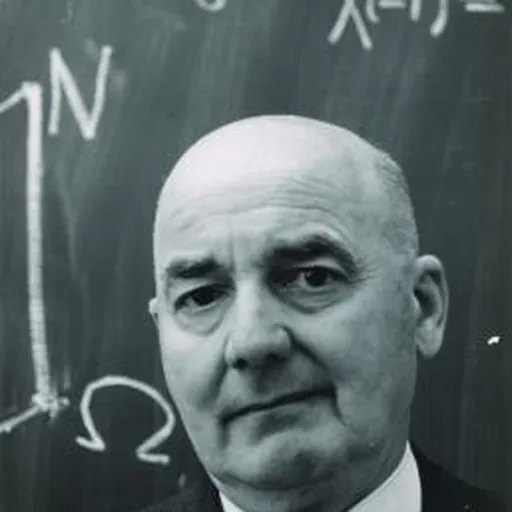
About Helmut Hasse
Lived 1898 – 1979 (aged 81). Helmut Hasse was a German mathematician and university teacher, known for Conductor-discriminant formula, Hasse's theorem on elliptic curves and Hasse–Schmidt derivation.
Helmut Hasse (; 25 August 1898 – 26 December 1979) was a German mathematician working in algebraic number theory, known for fundamental contributions to class field theory, the application of p-adic numbers to local class field theory and diophantine geometry (Hasse principle), and to local zeta functions.
Life
Hasse was born in Kassel, Province of Hesse-Nassau, the son of Judge Paul Reinhard Hasse, also written Haße (12 April 1868 – 1 June 1940, son of Friedrich Ernst Hasse and his wife Anna Von Reinhard) and his wife Margarethe Louise Adolphine Quentin (born 5 July 1872 in Milwaukee, daughter of retail toy merchant Adolph Quentin (b. May 1832, probably Berlin, Kingdom of Prussia) and Margarethe Wehr (b. about 1840, Prussia), then raised in Kassel).
After serving in the Imperial German Navy in World War I, he studied at the University of Göttingen, and then at the University of Marburg under Kurt Hensel, writing a dissertation in 1921 containing the Hasse–Minkowski theorem, as it is now called, on quadratic forms over number fields. He then held positions at Kiel, Halle and Marburg. He was Hermann Weyl's replacement at Göttingen in 1934.
Hasse was an Invited Speaker of the International Congress of Mathematicians (ICM) in 1932 in Zürich and a Plenary Speaker of the ICM in 1936 in Oslo.
In 1933 Hasse had signed the Vow of allegiance of the Professors of the German Universities and High-Schools to Adolf Hitler and the National Socialistic State.
In 1937, he applied for membership in the Nazi Party on guidance from a close friend to help hire distinguished mathematicians at Göttingen. This application was denied to him allegedly due to his remote Jewish ancestry. After the war, he briefly returned to Göttingen in 1945, but was excluded by the British authorities. After brief appointments in Berlin, from 1948 on he settled permanently as professor at University of Hamburg.
He collaborated with many mathematicians, in particular with Emmy Noether and Richard Brauer on simple algebras, and with Harold Davenport on Gauss sums (Hasse–Davenport relations), and with Cahit Arf on the Hasse–Arf theorem.
Publications (3 vols.) Number theory, Springer, 1980, 2002 (Eng. trans. of Zahlentheorie, 3rd edn., Akademie Verlag 1969) Vorlesungen über Zahlentheorie, Springer, 1950 Höhere Algebra vols. 1, 2, Sammlung Göschen, 1967, 1969 Vorlesungen über Klassenkörpertheorie, physica Verlag, Würzburg 1967
Bericht über neuere Untersuchungen und Probleme aus der Theorie der algebraischen Zahlkörper, 1965 (reprint from Berichts aus dem Jahresbericht der DMV 1926/27) New edn. of Algebraische Theorie der Körper by Ernst Steinitz, together with Reinhold Baer, with a new appendix on Galois theory. Walter de Gruyter 1930. Hasse Mathematik als Wissenschaft, Kunst und Macht, DMV Mitteilungen 1997, Nr.4 (Published version of a lecture given at the University of Hamburg 1959) Hasse „Geschichte der Klassenkörpertheorie“, Jahresbericht DMV 1966 Hasse „Die moderne algebraische Methode“, Jahresbericht DMV 1930 Brauer, Hasse, Noether „Beweis eines Hauptsatzes in der Theorie der Algebren“, Journal reine angew.Math. 1932 Hasse „Theorie der abstrakten elliptischen Funktionenkörper 3- Riemann Vermutung“, Journal reine angew. Math., 1936 Hasse „Über die Darstellbarkeit von Zahlen durch quadratische Formen im Körper der rationalen Zahlen“, Journal reine angew.Math. 1923
Don’t just read it —
keep it.
Full-length biographies made to live with: read them, listen on the way to work, watch them tonight.
- E-book
- Audio
- Video
Instant download · yours to keep · every purchase keeps this site free
Important facts
People in Helmut Hasse's life
Named in this biography and alive at the same time

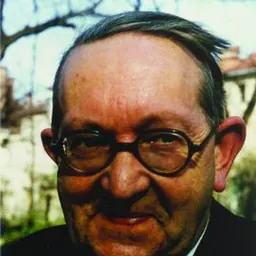
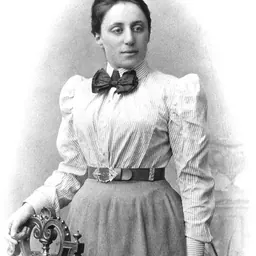
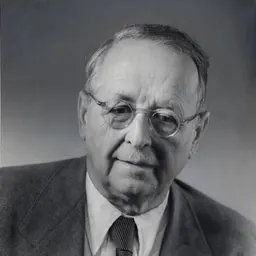



Related people
Same field, nearest in time


Contemporaries
People whose lives overlapped Helmut Hasse's


Frequently asked questions
Who was Helmut Hasse?
German mathematician (1898–1979)
When was Helmut Hasse born?
Helmut Hasse was born on 25 August 1898 in Kassel.
When did Helmut Hasse die?
Helmut Hasse died on 26 December 1979 in Ahrensburg.
What was Helmut Hasse's occupation?
Helmut Hasse was a mathematician and university teacher.
What was Helmut Hasse known for?
Helmut Hasse was known for Conductor-discriminant formula, Hasse's theorem on elliptic curves and Hasse–Schmidt derivation.
What nationality was Helmut Hasse?
Helmut Hasse was German.
Sources & further reading
Cite this page
APA: Biography.guide. (2026). Helmut Hasse. https://biography.guide/helmut-hasse/
MLA: "Helmut Hasse." Biography.guide, https://biography.guide/helmut-hasse/.
Chicago: "Helmut Hasse." Biography.guide. https://biography.guide/helmut-hasse/.
Data last updated: 2026-09-21 · Spot an error? Report a correction.
Portrait: Wikimedia Commons · author & licence
Page generated 2026-09-27 04:59 UTC