
About Helle Busacca
Lived 1915 – 1996 (aged 80). Helle Busacca was an Italian poet, writer, painter, pedagogue and artist.
Helle Busacca (; San Piero Patti, 21 December 1915 – Florence, 15 January 1996) was an Italian poet, painter, and writer.
Life Born in a well-to-do family in San Piero Patti, Province of Messina, Sicily, Helle Busacca lived for part of her youth in her birthplace. Then she moved to Bergamo and later to Milan together with her parents. She graduated with a degree in classical letters at the Royal University of Milan. In the following years, she taught letters in various high schools, moving from city to city: Varese, Pavia, Milan, Naples, Siena, and finally Florence, where she died on 15 January 1996.
Her papers, which include correspondence, sketches, and rough drafts of published works, as well as many unpublished manuscripts, are kept in a special collection at the State Archives of Florence.
In December 2015, at a conference on the centenary of her birth, the Municipal Library of San Piero Patti was named for her.
Poetry + Helle Busacca, from C'è chi nasce un mattino (There's someone who is born one morning) Italian English
Busacca's papers, which include correspondence, sketches, and rough drafts of published works, as well as many unpublished manuscripts, are kept in a special collection at the State Archives of Florence.
Her poetry and prose have been linked by commentators to events in her personal life, including the suicide of her brother Aldo. . Busacca studied classical literature, and critics have discussed her poetry in relation to modern poetic traditions, including T. S. Eliot and Ezra Pound. . The suicide of her brother Aldo became a central subject in Busacca's later poetry. Her works connected with this event include I quanti del suicidio (1972), I quanti del karma (1974), and Niente poesia da Babele (1980).
In "I quanti suicidio" (1972), the poet invents a language of the spoken word that is simple and immediate, meant for everyone to understand, as an indictment of the Italian system, the cowardice in her country that permitted the suicide of her brother, an unemployed scientist. The language she used, in its fiery directness and immediacy, was completely alienated from the experimental, skeptical, or symbolic language used in the poetry of her contemporaries.
Giorgio Linguaglossa writes:
Criticism and reviews Carlo Betocchi, Eugenio Montale, Raffaele Crovi, Giuseppe Zagarrio, Mario Grasso, Domenico Cara, Donato Valli, Gilda Musa, Bortolo Pento, Carlo Bo, Luciano Anceschi, Claudio Marabini, Oreste Macrì, Marco Marchi, Maurizio Cucchi, Gabriella Maleti, Mario Luzi, Alberico Sala, Sergio Solmi, Luigi Testaferrata, Vittorio Sereni, Marcello Venturi, Leonardo Sinisgalli, and Giorgio Linguaglossa, among others, have written about her.
Works Books Giuoco nella memoria (Modena: Guanda, 1949). Ritmi (Varese: Magenta, 1965). I quanti del suicidio (Rome: S.E.T.I., 1972; reprinted: Bologna, Seledizioni, 1973). I quanti del karma (Bologna: Seledizioni, 1974). Niente poesia da Babele (Bologna: Seledizioni, 1980). Il libro del risucchio (Castelmaggiore: Book, 1990). Il libro delle ombre cinesi (Fondi: Confrontographic, 1990). Pene di amor perdute (Ragusa: Cultura Duemila, 1994). Ottovolante, edited by Idolina Landolfi (Florence: Cesati, 1997). Poesie scelte, edited by Daniela Monreale (Salerno: Ripostes, 2002). Vento d'estate (Maser: Amadeus, 1987) (prose). Racconti di un mondo perduto (Genoa: Silverpress, 1992) (prose).
In journals "I bestioni e gli eroi" and "L'America scoperta e riscoperta", in: Civiltà delle macchine, 1956. "Il mio strano amico Montale", in: L'Albero, 1986, vol. 39
Unpublished works Contrappunto (autobiographical novel). Controcorrente (autobiographical novel). "Una storia senza storia" (short story) De Rerum Natura (translation from Lucretius).
Personal archive The Alessandra Contini Bonacossi Archive for Women's Memory and Writing has curated the collecting, organizing, and storing of her papers at the State Archives of Florence.
Don’t just read it —
keep it.
Full-length biographies made to live with: read them, listen on the way to work, watch them tonight.
- E-book
- Audio
- Video
Instant download · yours to keep · every purchase keeps this site free
Important facts
People in Helle Busacca's life
Named in this biography and alive at the same time

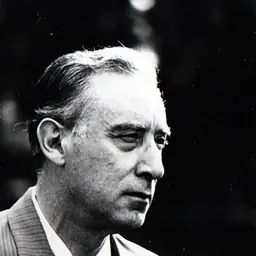
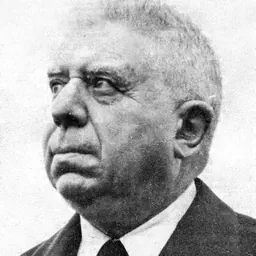


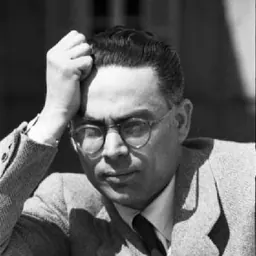

Related people
Same field, nearest in time

Contemporaries
People whose lives overlapped Helle Busacca's




Frequently asked questions
Who was Helle Busacca?
Italian poet (1915–1996)
When was Helle Busacca born?
Helle Busacca was born on 21 December 1915 in San Piero Patti.
When did Helle Busacca die?
Helle Busacca died on 15 January 1996 in Florence.
What was Helle Busacca's occupation?
Helle Busacca was a poet, writer, painter, pedagogue and artist.
What nationality was Helle Busacca?
Helle Busacca was Italian.
Sources & further reading
Cite this page
APA: Biography.guide. (2026). Helle Busacca. https://biography.guide/helle-busacca/
MLA: "Helle Busacca." Biography.guide, https://biography.guide/helle-busacca/.
Chicago: "Helle Busacca." Biography.guide. https://biography.guide/helle-busacca/.
Data last updated: 2026-09-20 · Spot an error? Report a correction.
Page generated 2026-09-27 05:21 UTC