
About Helen Chambers
Lived 1879 – 1935 (aged 56). Helen Chambers was a pathologist and physician, known for Radium.
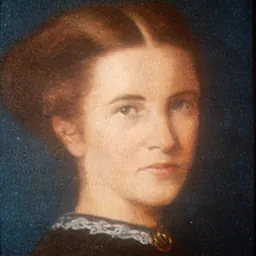
Helen Chambers CBE (18 July 1879 – 21 July 1935) was a British pathologist and cancer expert whose findings on radium were essential in the fight against cervical cancer.
Early life Chambers was born in Bombay, India, to Frederick Chambers. Her father was a member of the Indian Civil Service before returning the family back to Britain.
Education and early research Chambers studied at the Jersey Ladies' College, and Park Street Girls' School in Cambridge before going up to Newnham College, Cambridge, where she studied chemistry and physics. Chambers entered the London School of Medicine for Women in 1898 to train as a doctor. She continued her studies at London University, graduating Bachelor of Medicine (MB) with first-class honors and the gold medal for medicine in 1903. She earned her Bachelor of Surgery (BS) in 1904, and in the same year joined the Royal Free Hospital as a pathologist, taking charge of the department at the age of only 24. Four years later, in 1908, she gained her Doctor of Medicine (MD) in pathology for her thesis "Observations on pathology of the thyroid gland". She also lectured over pathology at the University of London. Chambers received a scholarship in cancer research becoming a part-time researcher at the Cancer Research Laboratories at the Middlesex Hospital, where she worked with physics and radium expert, Sidney Russ. From 1911 to 1913, Russ and Chambers studied the biological effects of radium. During this time, they published works in the Proceedings of the Royal Society and the Archives of the Middlesex Hospital. These works made Chambers a reputable cancer researcher.
After the war, she took a full-time cancer research appointment with the Medical Research Council at the Middlesex Hospital's Barnato Joel Laboratories, being named the radium research officer. She researched immunology and radiobiology of tumours in the early 1920s but she recognised the potential of radium for treating cancer. Thus, she decided to focus on radiotherapy for treating cancer of the cervix. In her 1924 lecture, "Progress in cancer problems", Chambers urged women doctors to treat their cancer patients with radium. In 1924–1925 she organised a group of female doctors in an effort to improve the use of radium in cancer treatment, especially of women, at the Royal Free Hospital, Elizabeth Garrett Anderson Hospital, South London Hospital and New Sussex Hospital in Brighton. The British Empire Cancer Campaign gave Chambers and the other researchers a large supply of radium. The women implemented a Swedish technique which improved the five-year survival statistics.
Personal life and legacy Chambers never married, In 1937, two years after her death, the Marie Curie Hospital named its new pathology laboratory the Helen Chambers Research Laboratory in her honour.
Footnotes
Don’t just read it —
keep it.
Full-length biographies made to live with: read them, listen on the way to work, watch them tonight.
- E-book
- Audio
- Video
Instant download · yours to keep · every purchase keeps this site free
Important facts
People in Helen Chambers's life
Named in this biography and alive at the same time

Related people
Same field, nearest in time


Contemporaries
People whose lives overlapped Helen Chambers's



Frequently asked questions
Who was Helen Chambers?
British pathologist (1879-1935)
When was Helen Chambers born?
Helen Chambers was born on 18 July 1879 in Mumbai.
When did Helen Chambers die?
Helen Chambers died on 21 July 1935.
What was Helen Chambers's occupation?
Helen Chambers was a pathologist and physician.
What was Helen Chambers known for?
Helen Chambers was known for Radium.
Sources & further reading
Cite this page
APA: Biography.guide. (2026). Helen Chambers. https://biography.guide/helen-chambers/
MLA: "Helen Chambers." Biography.guide, https://biography.guide/helen-chambers/.
Chicago: "Helen Chambers." Biography.guide. https://biography.guide/helen-chambers/.
Data last updated: 2026-09-22 · Spot an error? Report a correction.
Page generated 2026-09-27 05:16 UTC