
About Helen Bright Clark
Lived 1840 – 1927 (aged 86–87). Helen Bright Clark was a British peace activist, human rights defender and suffragist.
Helen Bright Clark (1840–1927) A liberal in all senses, Six years after her mother's death, Clark's father remarried to Margaret Leatham, sister of Edward Aldam Leatham of Wakefield, in 1847. He eventually had seven more children, including John Albert Bright and William Leatham Bright.
As Helen Bright, Clark attended the Quaker school in Southport, under the tutelage of Hannah Wallis—this was the same school attended by her aunt Priscilla under the instruction of Wallis' mother. In 1851, aunt Priscilla bore a daughter Helen Priscilla McLaren.
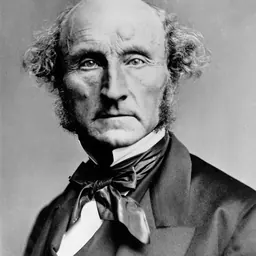
Women's suffrage The Brights held in their house copies of essays written by John Stuart Mill, and young Helen Bright became especially interested in Mill's advocacy of the "enfranchisement of women"—the idea that the right to vote should be extended to women. In 1861 she wrote to her step-cousin Agnes McLaren, "how absurd to talk of repression and taxation going hand in hand, and all the while excluding wholly the one half of the population from the franchise." Later that year, Helen Bright married William Stephens Clark (1839–1925) of Street, Somerset.
On 23 January 1879 at Bristol, Clark gave a stirring speech for suffrage that was later printed and distributed as a four-page pamphlet. She noted that the struggle for women's suffrage was looked upon by many "as chiefly of a sentimental character" and that the over-riding "question of peace or war is to the front." bringing the audience to a "hushed and profound silence." appeared seeking entrance, but thousands were turned away for lack of room. a comment which elicited roars of laughter from the crowd and a grin of merriment from Bright.
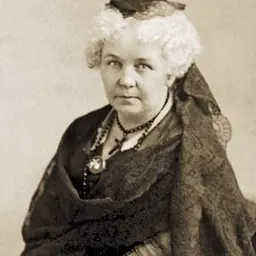
In the early 1890s, Elizabeth Cady Stanton travelled through Europe gathering support for, and inviting participation in, her work-in-progress The Woman's Bible. One evening, Stanton spoke to a crowd at Clark's home about the state of the suffrage movement in America. Local clergymen present questioned Stanton about the Bible's position of woman in relation to man, and Stanton described at length how equality among the sexes was supported by Bible verse, but that the Bible could be selectively quoted to support conflicting arguments. Because of this, said Stanton, it should be limited in its authority. Clark, though sympathetic to Stanton's views, expressed to Stanton her fear that some of the strictest of those in attendance might have been shocked by her ultra-liberal opinions.
In 1914 as war was mounting in Europe, Clark joined the International Woman Suffrage Alliance (IWSA), a group of women who sought voting rights, most of whom advocated world peace. Clark signed an "Open Christmas Letter" addressed "To the Women of Germany and Austria" which was published in IWSA's Jus Suffragii in January 1915. The letter was a plea for world peace among women, and was answered in kind by 155 Germanic feminists including Anita Augspurg, Lida Gustava Heymann and Rosa Mayreder. When Douglass returned to England in 1886–87, he visited Clark once again at her home, and spoke about race oppression, caste barriers and African Americans' "total inability to protect themselves without the ballot of which they had been deprived by cruel persecution and the fraudulent manipulation of the ballot box." who were active in promoting humanitarian rights. Margaret Clark Gillett (1878–1962) was a botanist and suffragist. Alice Clark and her sister Esther Bright Clothier were successive secretaries of NUWSS. Hilda Clark was a physician, humanitarian and active in the peace movement. Roger Clark co-founded the Friends' League for Women's Suffrage, a Quaker group of reformers. Roger Clark's wife Sarah Bancroft Clark was a tax resister and suffragist active in several political groups. In 1900, Clark lived in Millfield, Street, Somerset, England.
Don’t just read it —
keep it.
Full-length biographies made to live with: read them, listen on the way to work, watch them tonight.
- E-book
- Audio
- Video
Instant download · yours to keep · every purchase keeps this site free
Important facts
People in Helen Bright Clark's life
Named in this biography and alive at the same time


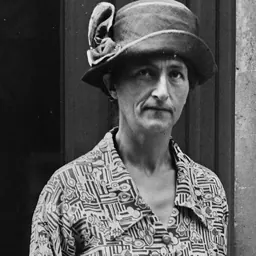
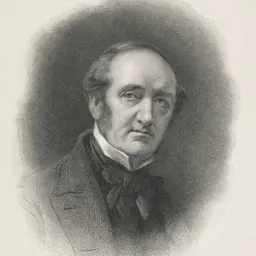
Related people
Same field, nearest in time
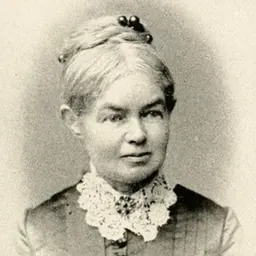
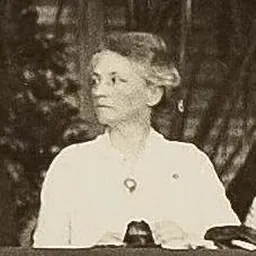
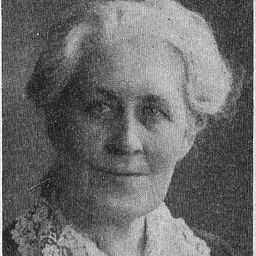


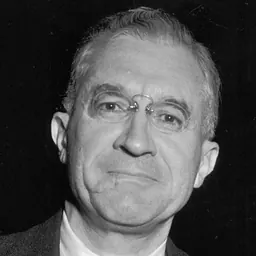
Contemporaries
People whose lives overlapped Helen Bright Clark's
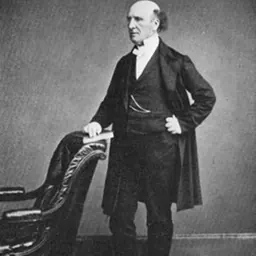
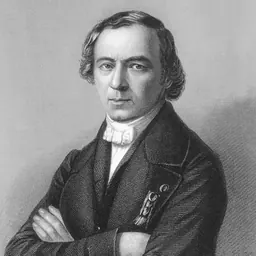

Frequently asked questions
Who was Helen Bright Clark?
British activist
When was Helen Bright Clark born?
Helen Bright Clark was born in 1840 in Rochdale.
When did Helen Bright Clark die?
Helen Bright Clark died in 1927.
What was Helen Bright Clark's occupation?
Helen Bright Clark was a peace activist, human rights defender and suffragist.
What nationality was Helen Bright Clark?
Helen Bright Clark was British.
Sources & further reading
· Wikipedia: Helen Bright Clark
Cite this page
APA: Biography.guide. (2026). Helen Bright Clark. https://biography.guide/helen-bright-clark/
MLA: "Helen Bright Clark." Biography.guide, https://biography.guide/helen-bright-clark/.
Chicago: "Helen Bright Clark." Biography.guide. https://biography.guide/helen-bright-clark/.
Data last updated: 2026-09-25 · Spot an error? Report a correction.
Page generated 2026-09-27 05:08 UTC