
About Helen Archdale
Lived 1876 – 1949 (aged 73). Helen Archdale was a British suffragette, journalist and editor.
Helen Alexander Archdale (née Russel; 25 August 1876 – 8 December 1949) was a Scottish feminist, suffragette and journalist. Archdale was the Sheffield branch organiser for the Women's Social and Political Union and later its prisoners' secretary in London.
Active during the World War I, Archdale initiated a training farm for women agricultural workers in 1914. In 1917 she served as a clerical worker with Queen Mary's Army Auxiliary Corps, transferring in 1918 to the women's department of the Ministry of National Service.
Biography Helen Alexander Russel was born at Nenthorn, Berwickshire, Scotland. Her parents were Helen Evans (née Carter, 1834–1903), one of the Edinburgh Seven, the first group of women to enrol at a British university, and Alexander Russel (1814–1876), a Scottish journalist and editor of The Scotsman who supported Sophia Jex-Blake's attempts to secure medical education for women in Edinburgh.
She was educated at St Leonard's School, St Andrews, then at the University of St Andrews (1893–1894), where she was one of the first women undergraduates. Archdale moved to London to take up the position of WSPU prisoners' secretary later in that year. In the 1930s she contributed articles to The Times, Daily News, Christian Science Monitor, and The Scotsman. and Maud Joachim and Catherine Corbett in Dundee. They were convicted of breach of the peace after interrupting a meeting being held by the local MP, Winston Churchill, at which women had been excluded. Following their arrest, on 20 October, all went on hunger strike and were released after four days of the ten days imprisonment. The prison governor and medical supervisor assessed that due to her "configuration" Archdale "would be particularly difficult to feed forcibly". of the Six Point Group, founded by Margaret Rhondda. Archdale was also active in the international version, Open Door International, founded in 1929 with Chrystal Macmillan serving as president.
In 1927, Archdale began working in Geneva, lobbying for an Equal Rights Treaty at the League of Nations in the early 1930s. The League was the first international organisation whose principal mission was to maintain world peace. She became secretary of the Liaison Committee of Women's International Organisations, created in 1931 as a coalition to promote equal rights, disarmament and women's representation at the League. From 1929 to 1934 she worked to chair Equal Rights International, founded at The Hague, an organisation dedicated to promoting campaigning for equality of women with men in law and in the workplace.
Archdale died on 8 December 1949 at 17 Grove Court, St John's Wood, London.
Don’t just read it —
keep it.
Full-length biographies made to live with: read them, listen on the way to work, watch them tonight.
- E-book
- Audio
- Video
Instant download · yours to keep · every purchase keeps this site free
Important facts
Family & relationships
People in Helen Archdale's life
Named in this biography and alive at the same time



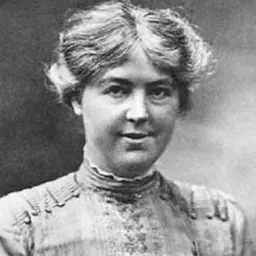
Related people
Same field, nearest in time
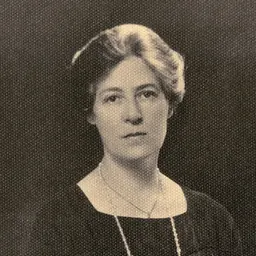

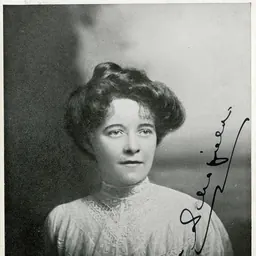
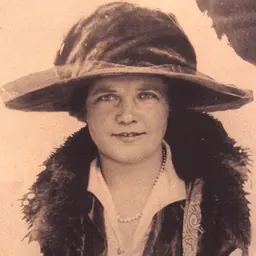

Contemporaries
People whose lives overlapped Helen Archdale's
Frequently asked questions
Who was Helen Archdale?
Feminist and journalist (1876-1949)
When was Helen Archdale born?
Helen Archdale was born on 25 August 1876 in Nenthorn.
When did Helen Archdale die?
Helen Archdale died on 8 December 1949 in London.
What was Helen Archdale's occupation?
Helen Archdale was a suffragette, journalist and editor.
What nationality was Helen Archdale?
Helen Archdale was British.
Sources & further reading
Cite this page
APA: Biography.guide. (2026). Helen Archdale. https://biography.guide/helen-archdale/
MLA: "Helen Archdale." Biography.guide, https://biography.guide/helen-archdale/.
Chicago: "Helen Archdale." Biography.guide. https://biography.guide/helen-archdale/.
Data last updated: 2026-09-20 · Spot an error? Report a correction.
Page generated 2026-09-27 05:01 UTC