
About Hekimoğlu Ali Pasha
Lived 1689 – 1758 (aged 68–69). Hekimoğlu Ali Pasha was a Turkish politician and writer.
Hekimoğlu Ali Pasha (1689 – 13 August 1758) was an Ottoman statesman and military leader who served as Grand Vizier of the Ottoman Empire three times.
Family His father, Nuh, was a Venetian convert to Islam who worked in Constantinople (modern-day Istanbul) as a doctor, and his mother Safiye was a Turk. His epithet Hekimoğlu means "son of a physician" in Turkish.
Early years Ali worked in various districts (and provinces) of the empire like Zile (in modern-day Tokat Province, Turkey), Yeniil (south of modern-day Sivas Province, Turkey), Adana Eyalet (in modern-day Turkey), Aleppo Eyalet (in modern-day Syria) as a provincial governor. He fought during Ottoman–Persian War (1722–27) and captured Tabriz. After the Treaty of Hamedan in 1727, he worked in Shahrizor Eyalet (in modern-day Iraq) and Sivas. During the new war against Persia, he was appointed as the commander of the front . He captured Urmia and Tabriz (second time).
He was the father-in-law of Hatibzade Yahya Pasha, who succeeded him as the Ottoman governor of Egypt the first time.
First term as grand vizier During his first term (12 March 1732 – 12 August 1735), he tried to reform the army by establishing a new artillery corps named Humbaracı (Howitzer). For this task he employed a French convert named Claude Alexandre de Bonneval (later known as Humbaracı Ahmed Pasha). He was suspicious of the embattled Russia and tried to end the war against Persia to free up resources, but his peace policy was met with criticism, and, during a council of war held in the palace, Sultan Mahmud I dismissed him.
After the first term After his first term, Ali Pasha continued as a provincial governor. He was appointed to Crete (in Greece), Bosnia, Egypt, and parts of Anatolia. In Bosnia, he defeated the Austrians at the Battle of Banja Luka during the Austro-Russian–Turkish War (1735–39) and supported the Grand Vizier Ivaz Mehmed Pasha in the siege of Belgrade (1739). In Egypt, he suppressed the uprising of the Mamluks, and his governorship was reported to be largely peaceful and free of insurrections.
Second term as grand vizier During his second term (21 April 1742 – 23 September 1743), the most important problem was the new war against Persia, still led by Nadir Shah of the Afsharid dynasty. However, the Sultan refused Ali Pasha's campaign plan and dismissed him, accusing him of not taking appropriate measures on the Eastern front.
After the second term After his second term, he was appointed as provincial governor to Lesbos, Crete, Bosnia, Trikala (in Greece), Ochakiv (in Ukraine), Vidin (in Bulgaria), and Trabzon (in Anatolia) in rapid succession. In Trabzon, he was able to end the chaos created by the local leaders.
Third term as grand vizier His third term was very short (15 February 1755 – 18 May 1755). The new sultan Osman III was under the influence of the palace courtesans. When Ali Pasha refused to obey the sultan's order to execute a young prince , the sultan jailed him. He barely escaped being executed by the intercession of the valide sultan (queen mother) Şehsuvar.
After the third term After being jailed in Kızkulesi (Maiden's Tower) in the Bosphorus, he was first exiled to Mağusa (Famagusta), Cyprus, and then to the island of Rhodes. He was given a pardon in 1756 and appointed as the Ottoman provincial governor to Egypt for the second time. Once again, his governorship was reported to be peaceful. On 17 October 1757, for the fourth time, he was appointed the governor of Anatolia. On 13 August 1758, at the age of about 71, he died in Kütahya of a urinary tract infection.
He is buried in a small monumental tomb near the Hekimoğlu Ali Paşa Mosque at the religious buildings complex that he endowed to be built in the Davutpaşa neighborhood of Istanbul.
Don’t just read it —
keep it.
Full-length biographies made to live with: read them, listen on the way to work, watch them tonight.
- E-book
- Audio
- Video
Instant download · yours to keep · every purchase keeps this site free
Important facts
People in Hekimoğlu Ali Pasha's life
Named in this biography and alive at the same time

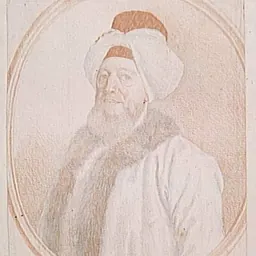
Related people
Same field, nearest in time



Contemporaries
People whose lives overlapped Hekimoğlu Ali Pasha's




Frequently asked questions
Who was Hekimoğlu Ali Pasha?
Ottoman grand vizier and provincial governor (1689-1758)
When was Hekimoğlu Ali Pasha born?
Hekimoğlu Ali Pasha was born in 1689 in Istanbul.
When did Hekimoğlu Ali Pasha die?
Hekimoğlu Ali Pasha died on 13 August 1758 in Kütahya.
What was Hekimoğlu Ali Pasha's occupation?
Hekimoğlu Ali Pasha was a politician and writer.
What nationality was Hekimoğlu Ali Pasha?
Hekimoğlu Ali Pasha was Turkish.
Sources & further reading
· Wikipedia: Hekimoğlu Ali Pasha
· DBpedia: Hekimoğlu Ali Pasha
Cite this page
APA: Biography.guide. (2026). Hekimoğlu Ali Pasha. https://biography.guide/hekimoglu-ali-pasha/
MLA: "Hekimoğlu Ali Pasha." Biography.guide, https://biography.guide/hekimoglu-ali-pasha/.
Chicago: "Hekimoğlu Ali Pasha." Biography.guide. https://biography.guide/hekimoglu-ali-pasha/.
Data last updated: 2026-09-20 · Spot an error? Report a correction.
Page generated 2026-09-27 05:28 UTC