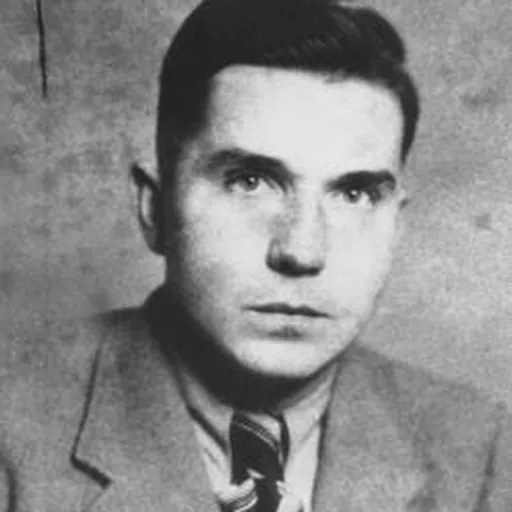
About Heinz Brücher
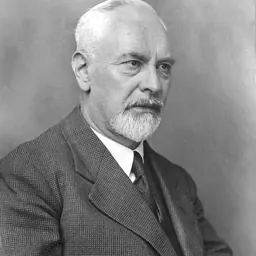
Lived 1915 – 1991 (aged 76). Heinz Brücher was a German botanist, geneticist, university teacher, politician, botanical collector and scientific collector.
Heinz Brücher (14 January 1915 – 17 December 1991) was a botanist and plant breeder who served as a member of the special science unit in the SS Ahnenerbe in Nazi Germany. He was part of a SS Sammelkommando that raided the plant genome material and seed collections of the Soviet Union. After the Second World War, Brücher moved to South America and worked as a professor of botany in Argentina and other countries in South America. He served as an advisor to UNESCO on biology.
Biography Brücher was born in Darmstadt and studied Biology at Jena and Tübingen. By the time Brücher graduated in 1934 he was a member (number 3498152) of the Nazi Party. He obtained a doctorate at Tübingen where he studied the genetic differences in reciprocal crosses of Epilobium hirsutum under Ernst Lehmann and supported cytoplasmic inheritance which Lehmann did not believe in. Brücher turned against Lehmann later, and apart from scientific arguments, he also used Lehmann's supposed political views that were against the Nazi Party to bolster his case.
After the war, Brücher moved to Sweden thanks to Sven Hedin's invitation and worked with the Svalof seed company. During this period he married Ollie Berglund, a Swedish plant breeder. Brücher then moved to Argentina which was then under Juan Perón and received there in 1948, a professorship in genetics and botany at University of Tucumán (Tucumán, Argentina). He later worked in Caracas (Venezuela), Asunción (Paraguay) and then in Mendoza and Buenos Aires (Argentina). He also worked in Pretoria in 1964-65 where he claimed to have evidence for white superiority. In 1972 he served as biology advisor to UNESCO. on Ernst Haeckel and helped prop him up as an icon for Nazi science ideals. In the 1936 book, he declared that Haeckel was of Nordic origins, making him a visionary. He was critical of Vavilov in his publications possibly because he saw Vavilov as a communist and there had been other German botanists like Elisabeth Schiemann (1881–1972) who had supported his theory while holding anti-Nazi positions. After moving to South America, Brücher focused on ethnobotanical research and worked on the wild relatives of potatoes and beans. He also had an interest in Himalayan barley collected during the Schäfer expedition to Tibet.
Brücher's wife Ollie worked at the University of Caracas. She and her elder son were killed in a road accident in 1972.
Don’t just read it —
keep it.
Full-length biographies made to live with: read them, listen on the way to work, watch them tonight.
- E-book
- Audio
- Video
Instant download · yours to keep · every purchase keeps this site free
Important facts
People in Heinz Brücher's life
Named in this biography and alive at the same time




Related people
Same field, nearest in time


Contemporaries
People whose lives overlapped Heinz Brücher's




Frequently asked questions
Who was Heinz Brücher?
German SS officer and botanist (1915-1991)
When was Heinz Brücher born?
Heinz Brücher was born on 14 January 1915 in Darmstadt.
When did Heinz Brücher die?
Heinz Brücher died on 17 December 1991 in Ugarteche.
What was Heinz Brücher's occupation?
Heinz Brücher was a botanist, geneticist, university teacher, politician, botanical collector and scientific collector.
What nationality was Heinz Brücher?
Heinz Brücher was German.
Sources & further reading
Cite this page
APA: Biography.guide. (2026). Heinz Brücher. https://biography.guide/heinz-brucher/
MLA: "Heinz Brücher." Biography.guide, https://biography.guide/heinz-brucher/.
Chicago: "Heinz Brücher." Biography.guide. https://biography.guide/heinz-brucher/.
Data last updated: 2026-09-22 · Spot an error? Report a correction.
Portrait: Wikimedia Commons · author & licence
Page generated 2026-09-27 05:03 UTC