
About Heinrich Schalit
Lived 1886 – 1976 (aged 90). Heinrich Schalit was an Austrian and American composer.
Heinrich Schalit (January 2, 1886 – February 3, 1976) was an Austrian-American, Jewish composer and musician; best known for his sacred music, art songs, and chamber music. Along with other Jewish composers such as Isadore Freed, Hugo Chaim Adler and Abraham Binder, Schalit modernized Jewish sacred music in the first half of the 20th century. His most popular work is Freitagabend-Liturgie (Friday Evening Liturgy).
Life and career Education Heinrich Schalit was born in Vienna, Austria on January 2, 1886 to Joseph Schalit and Josefine Fischer. He had four siblings, including first secretary of the Zionist Office, Isidor Schalit. Schalit began his musical education and career without any connection or influence to Jewish music. He studied organ, piano and composition privately in 1898 with Josef Labor; and in 1903 he began studying at the Conservatory of Music and Performing Arts in Vienna. His teachers included Polish pianist Theodor Leschetizky and composer Robert Fuchs. In 1906, he graduated and received the Austrian State Prize for Students of Composition for his Piano Quartet in E minor. Schalit moved to Munich in 1907, where he worked as a private music teacher and composed numerous works; primarily post-romantic songs and chamber music, including the works Jugendland, Six Love Songs and Six Spring Songs.
Influence on Jewish music Between 1916 and 1920, driven by the political events of the time, Schalit began to focus more on Jewish music. He saw himself as a Jewish composer motivated by Zionism. In a letter to Anita Hepner, Schalit wrote:
[… between] 1928 and 1932, when there was no composer of Jewish birth who could have even thought of writing music with a consciously Jewish heartbeat, I was already a well-known composer of Jewish religious music [...] as a conscious Jewish musician and Zionist I considered it my duty to convince him [Paul Ben-Haim] of the necessity of devoting his talent to Jewish music and culture“.
On a list of compositions in 1936, Schalit wrote: "1916, Beginning of the creative period of music of Jewish content and character."
Liturgical music At the end of the 1920s, Schalit began to study Jewish liturgical music. In his opinion, Jewish liturgical music was characterized by a romantic and operatic style, as in the works of Louis Lewandowski and Salomon Sulzer, and called for a resurgence and modernization; being based on authentic Jewish musical traditions while still integrating elements of 20th-century music. Schalit stated his displeasure with what he deemed an “unorganic mixture of traditional cantorial chants with congregational and choral music in the German style of the 19th century."
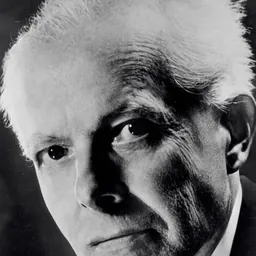
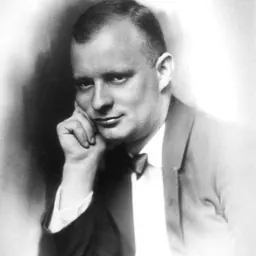
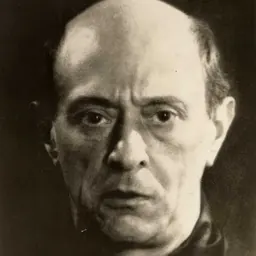
Compositional style In his music, Schalit avoided the harmonic conventions of 19th-century music by relying more on modal elements. His musical style utilized controlled dissonances within a diatonic framework. His writing style is reminiscent of the polyphonic density of the choral and orchestral writing in many of Arnold Schoenberg's works, without Schoenberg's traditional atonality. Similar to composers like Béla Bartók and Paul Hindemith, Schalit considered the folk music traditions of individual cultural heritages and nations to be an important source of inspiration; while defining his own use of tonality in the context of the musical innovations of the 1920s. Schalit viewed modern research and the collection of Hebrew-Oriental ritual music, as collected by Jewish ethnomusicologist and composer Abraham Zevi Idelsohn, to be the incentive for the further development of synagogue music.
Death and legacy Schalit died on February 3, 1976 in Evergreen, Colorado.
Selected works
Ostjüdische Volkslieder, Opus 18 and 19 Freitagabend-Liturgie; premiered on September 16, 1932, at the Lützowstrasse Synagogue in Berlin V'shamru Sh'nat olam Hebräischer Lobgesang Seelenlieder In Ewigkeit
Don’t just read it —
keep it.
Full-length biographies made to live with: read them, listen on the way to work, watch them tonight.
- E-book
- Audio
- Video
Instant download · yours to keep · every purchase keeps this site free
Important facts
People in Heinrich Schalit's life
Named in this biography and alive at the same time



Related people
Same field, nearest in time



Contemporaries
People whose lives overlapped Heinrich Schalit's






Frequently asked questions
Who was Heinrich Schalit?
Austrian composer (1886–1976)
When was Heinrich Schalit born?
Heinrich Schalit was born on 2 January 1886 in Vienna.
When did Heinrich Schalit die?
Heinrich Schalit died on 3 February 1976 in Evergreen.
What was Heinrich Schalit's occupation?
Heinrich Schalit was a composer.
What nationality was Heinrich Schalit?
Heinrich Schalit was Austrian and American.
Sources & further reading
Cite this page
APA: Biography.guide. (2026). Heinrich Schalit. https://biography.guide/heinrich-schalit/
MLA: "Heinrich Schalit." Biography.guide, https://biography.guide/heinrich-schalit/.
Chicago: "Heinrich Schalit." Biography.guide. https://biography.guide/heinrich-schalit/.
Data last updated: 2026-09-20 · Spot an error? Report a correction.
Page generated 2026-09-27 05:10 UTC