
About Heinrich Claß
Lived 1868 – 1953 (aged 84–85). Heinrich Claß was a German politician, writer, lawyer, jurist and opinion journalist.
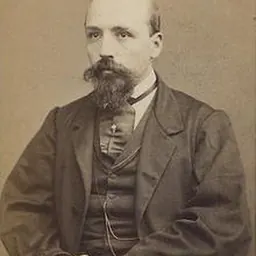
Heinrich Claß (29 February 1868 – 16 April 1953) was a German far-right politician, a Pan-Germanist, an antisemite and a "rabid racialist". He presided over the Pan-German League from 1908 to 1939.
German Empire Claß was born in Alzey. His father was a notary. He studied law at the University of Berlin, University of Freiburg and the University of Giessen up to 1891, when he became a legal trainee. In 1894, he settled in Mainz as a lawyer.
Despite the National Liberal politics of his upbringing, Claß became of devotee of far-right, völkist ideas. In 1894, Claß was a founding member of the nationalist and anti-semitic German Association (German: Deutschbund), which propagated "pure Germanism" by excluding ethnic minorities, particularly Jews. In 1897, he became the head of the Rhineland-Hesse branch of the Pan-German League, where he was elected to the directorate in 1901. When he became president in 1908, he changed the direction of the League to more radical positions. Claß's politics caused him to have frequent clashes with the Kaiser's government.
During World War I, Claß alongside Alfred Hugenberg called for the annexation and depopulation of large western and eastern territories to be populated by German settlers, but as the war went on his unrealistic demands made him increasingly irrelevant. In 1917, he founded the German Fatherland Party with Alfred von Tirpitz and Wolfgang Kapp. Also in 1917, a group of investors led by Claß took over the Deutsche Zeitung newspaper, turning it into a völkist propaganda outlet. At the end of World War 1, he fled from the French occupied Mainz to Würzburg.
In 1924 he was suspected in a conspiracy to murder Hans von Seeckt, in January 1926, he began plotting a coup which would see President Hindenburg dissolve the Reichstag and establish an authoritarian regency, and in May his home was searched over suspicions of another coup plot. But in all three cases, he was able to avoid punishment due to a lack of evidence. These victories allowed him to secure his leadership over the broader Pan-German movement but they took an enormous toll on his overall well-being especially after his wife died in the summer of 1927. He had been suffering from nerve and cervical vertebra paralysis since 1924 and he suffered from ever worsening bouts of poor health, with him often being absent from his duties for weeks or months at a time.
Around 1920-1921, he had begun a relationship with Hitler and the Nazi Party and supported the Beer Hall Putsch but the failure of the Beer Hall Putsch led him to focus his efforts on the DNVP. He played a major role in radicalizing the DNVP away from Westarp towards the more radical Hugenberg In 1928, despite his failed attempts to do so from 1925-1927. He played major roles in both the Young Plan Referendum and the Harzburg Front.
After the 1930 German Election Claß and his League found themselves increasingly torn between the ascendant Nazis and the collapsing DNVP, with Claß failing to exert significant influence on the Nazi's, prevent the DNVP's electoral collapse, or establish the League as an independent force in German politics. After the July 1932 election the Nazis began attacking the ostensibly allied DNVP and Pan-German League while negotiating with the Centre Party, these moves both infuriated and confused Claß who began attacking Hitler for having been unwilling to form a uniting far-right and for having previously attacked the League, but due to their strength he was unwilling to call for a break with the Nazi's. As the group's decline unfolded there was some criticism of Claß from within the League but his decades of rule over the organization allowed him to survive these attacks. Illness prevented him from trying to prevent Hitlers appointment as Chancellor. After the rise of the Nazi Party, he served in the Reichstag as a "guest" of the party, but Hitler was suspicious of his Monarchism, his ties to Hugenberg, and his past criticisms so he was increasingly sidelined, with the Pan-German League being dissolved in 1939.
After his political career ended, he lived in Berlin until his house was destroyed in an allied bombing raid. From 1943 to 1953, Claß lived with his daughter in Jena, where he died.
Works Bilanz eines neuen Kurses. – Berlin : Alldt. Verl., 1903 (as Einhart): Deutsche Geschichte. – Leipzig : Diederich, 1909 (as Daniel Frymann): Wenn ich der Kaiser wär': Politische Wahrheiten und Notwendigkeiten. – Leipzig : Dieterich, 1912 (from 1925 known as Das Kaiserbuch) West-Marokko deutsch!. – Munich : Lehmann, 1911 Wider den Strom : vom Werden und Wachsen der nationalen Opposition im alten Reich. – Leipzig : Köhler, 1932 Zum deutschen Kriegsziel. Eine Flugschrift. – Munich : Lehmann, 1917
Don’t just read it —
keep it.
Full-length biographies made to live with: read them, listen on the way to work, watch them tonight.
- E-book
- Audio
- Video
Instant download · yours to keep · every purchase keeps this site free
Important facts
People in Heinrich Claß's life
Named in this biography and alive at the same time


Related people
Same field, nearest in time



Contemporaries
People whose lives overlapped Heinrich Claß's



Frequently asked questions
Who was Heinrich Claß?
German politician (1868-1953)
When was Heinrich Claß born?
Heinrich Claß was born in 1868 in Alzey.
When did Heinrich Claß die?
Heinrich Claß died on 16 April 1953 in Jena.
What was Heinrich Claß's occupation?
Heinrich Claß was a politician, writer, lawyer, jurist and opinion journalist.
What nationality was Heinrich Claß?
Heinrich Claß was German.
Sources & further reading
Cite this page
APA: Biography.guide. (2026). Heinrich Claß. https://biography.guide/heinrich-class/
MLA: "Heinrich Claß." Biography.guide, https://biography.guide/heinrich-class/.
Chicago: "Heinrich Claß." Biography.guide. https://biography.guide/heinrich-class/.
Data last updated: 2026-09-24 · Spot an error? Report a correction.
Page generated 2026-09-27 04:59 UTC