
About Hedley Bull
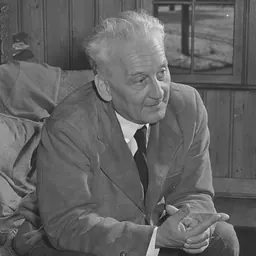
Lived 1932 – 1985 (aged 52). Hedley Bull was a British political scientist, university teacher and philosopher.
Hedley Norman Bull (10 June 1932 – 18 May 1985) was Professor of International Relations at the Australian National University, the London School of Economics and the University of Oxford until his death from cancer in 1985. He was Montague Burton Professor of International Relations at Oxford from 1977 to 1985, and died there.
Biography Bull was born in Sydney, Australia, where he attended Fort Street High School. He went on to study history and philosophy at the University of Sydney, where he was strongly influenced by the philosopher John Anderson. In 1953, Bull left Australia to study politics at Oxford, and after two years he was appointed to an assistant lectureship in international relations at the London School of Economics and Political Science (LSE).
In 1965, Bull was appointed director of the Arms Control and Disarmament Unit of the British Foreign Office, forfeiting his Australian identity for British citizenship. Two years later, in 1967, he was appointed to a professorship of international relations at the Australian National University (ANU) in Canberra.
In 1977, Bull published his main work, The Anarchical Society. It is widely regarded as a key textbook in the field of international relations and is also seen as the central text in the so-called "English School" of international relations. In this book, he argues that despite the anarchical character of the international arena, it is characterised by the formation of not only a system of states, but a society of states. His requirements for an entity to be called a state are that it must claim sovereignty over (i) a group of people (ii) a defined territory, and that it must have a government. States form a system when they have a sufficient degree of interaction and effect on one another's decisions, so as they "behave—at least in some measure—as parts of a whole." A system of states can exist without it also being a society of states. A society of states comes into existence "when a group of states, conscious of certain common interests and common values, form a society in the sense that they conceive themselves to be bound by a common set of rules in their relations with one another, and share in the working of common institutions."
The society of states is a way for Bull to analyse and assess possibilities of order in world politics. He continues his argument by giving the concept of order in social life, and the mechanisms of: the balance of power, international law, diplomacy, war and the great powers central roles. He finally concludes that, despite the existence of possible alternative forms of organization, the states system is our best chance of achieving order in world politics.
Selected works The control of the arms race: Disarmament and arms control in the missile age (1965) Strategic studies and its critics (1967) The Anarchical Society: A Study of Order in World Politics (1977) The Expansion of International Society, co-edited with Adam Watson (1984). Intervention in World Politics (1984) Justice in international relations (1984) (1983-84 Hagey lectures) The Challenge of the Third Reich (1986) (The Adam von Trott Memorial Lectures) (hardback); (paperback). US edition. Oxford Scholarship Online. Google Books.
There is a comprehensive bibliography of Hedley Bull's works (prepared by Donald Markwell) in:
J. D. B. Miller and R J Vincent (eds.), Order and Violence, Oxford University Press, 1990,
and
Robert O'Neill and David N. Schwartz (eds.), Hedley Bull on Arms Control, Macmillan, 1987.
Don’t just read it —
keep it.
Full-length biographies made to live with: read them, listen on the way to work, watch them tonight.
- E-book
- Audio
- Video
Instant download · yours to keep · every purchase keeps this site free
Important facts
People in Hedley Bull's life
Named in this biography and alive at the same time






Related people
Same field, nearest in time


Contemporaries
People whose lives overlapped Hedley Bull's


Frequently asked questions
Who was Hedley Bull?
Australian academic (1932-1985)
When was Hedley Bull born?
Hedley Bull was born on 10 June 1932 in Sydney.
When did Hedley Bull die?
Hedley Bull died on 18 May 1985 in Oxford.
What was Hedley Bull's occupation?
Hedley Bull was a political scientist, university teacher and philosopher.
What nationality was Hedley Bull?
Hedley Bull was British.
Sources & further reading
Cite this page
APA: Biography.guide. (2026). Hedley Bull. https://biography.guide/hedley-bull/
MLA: "Hedley Bull." Biography.guide, https://biography.guide/hedley-bull/.
Chicago: "Hedley Bull." Biography.guide. https://biography.guide/hedley-bull/.
Data last updated: 2026-09-20 · Spot an error? Report a correction.
Page generated 2026-09-27 05:05 UTC