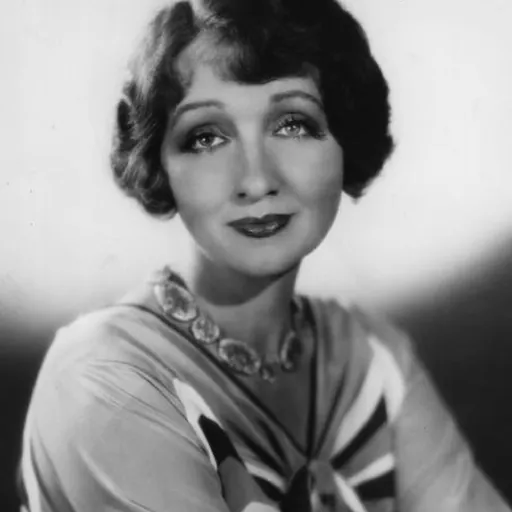
About Hedda Hopper
Lived 1885 – 1966 (aged 80). Hedda Hopper was an American journalist, stage actor, film actor, television actor, radio personality and film critic.
Elda Furry (June 2, 1885 – February 1, 1966), known professionally as Hedda Hopper, was an American gossip columnist and actress. At the height of her influence in the 1940s, more than 35 million people read her columns. A strong supporter of the House Un-American Activities Committee (HUAC) hearings, Hopper named suspected Communists and was a major proponent of the Hollywood blacklist. Hopper continued to write her gossip column until her death in 1966. Her work appeared in many magazines and later on radio. She had an extended public feud with Louella Parsons, an arch-rival and fellow gossip columnist.
Early life Hopper was born Elda Furry in Hollidaysburg, Pennsylvania, the daughter of Margaret (née Miller; 1856–1941) and David Furry, a butcher, both members of the German Baptist Brethren. Her family was of Pennsylvania Dutch (German) descent. The family moved to Altoona when Elda was three.
Career Acting
She eventually ran away to New York City and began her career in the chorus on the Broadway stage. Hopper was not successful in this venture. Florenz Ziegfeld called the aspiring starlet a "clumsy cow" and brushed off her pleas for a slot in his lavish Follies. After a few years, she joined the theater company of matinee idol DeWolf Hopper, whom she called "Wolfie" and would later marry.
She remained in the chorus and they toured the country. While in the Hopper company, she realized that chorus and understudy jobs were not acting. She wanted to act, and she knew she would have to prove herself before she could hope to get anywhere in the theater. Hearing that Edgar Selwyn was casting his play The Country Boy for a road tour, she went to his office and talked him into letting her audition for the lead. She was given the role and that show toured for thirty-five weeks through forty-eight states. She studied singing during the summer and, in the fall, toured with The Quaker Girl in the second lead, the prima donna role. The show closed in Albany, New York.
In 1913, she became the fifth wife of DeWolf Hopper, whose previous wives were named Ella, Ida, Edna and Nella. The similarity in names caused some friction, as he would sometimes call Elda by the name of one of his former wives. Consequently, Elda Hopper paid a numerologist $10 to tell her what name she should use, and the answer was "Hedda". She began acting in silent movies in 1915. Her motion picture debut was in The Battle of Hearts (1916) with William Farnum, but she made a major splash in Virtuous Wives (1918), in which she established her pattern of playing society women. Hopper decided to upstage the film's headline starlet, Anita Stewart, by spending all of her $5,000 salary on a lavish wardrobe from the upscale boutique Lucile, which she wore in the film. By 1920, she was commanding $1,000 per week as a free agent in New York; in 1923 she moved to Hollywood and became a contract player for Louis B. Mayer Pictures. Hopper could not type, nor spell very well, so she dictated her column to a typist over the phone. Hopper used her extensive contacts forged during her acting days to gather material for her column. Her first major scoop had national implications: in 1939, Hopper printed that President Franklin Roosevelt's son James Roosevelt was divorcing his wife Betsey after being caught in an affair with a nurse at the Mayo Clinic. for which the Internal Revenue Service allowed her a $5,000 annual tax deduction as a work expense. The next day, he received dozens of flower bouquet deliveries and congratulatory telegrams from others in the industry, thanking him for having the courage to do what everyone else dreamed of doing.
Hopper was an advocate for actress Joan Crawford, whose career suffered in the early 1940s after she was labelled "Box-Office Poison" and forced to resign from Metro-Goldwyn-Mayer. In 1945, Hopper reprinted a press release for Mildred Pierce in her column, which described Crawford as a leading contender for the Best Actress Oscar. Such was Hopper's influence that she was credited with swinging the decision in Crawford's favor when she won the award. Hopper's support has been described as the first instance of lobbying the Academy of Motion Picture Arts and Sciences to favor a certain nominee. Actress ZaSu Pitts compared Hopper to "a ferret". Joan Bennett sent Hopper a "$35 valentine. The $35 went for a skunk which carried a note: 'Won't you be my valentine? Nobody else will. I stink and so do you.'" Hopper reportedly commented that the skunk was beautifully behaved. She called it Joan, and passed it on to actor James Mason and his wife as a present, as they had made the first bid after the story about the unusual gift made the news.
During World War II, Hopper's only child, actor William "Bill" Hopper, served in the Navy in Underwater Demolitions. She chastised Douglas Fairbanks Jr., the son of her old friend Douglas Fairbanks, because she thought the younger Fairbanks was shirking his duty to his country. Fairbanks Jr. recalled in his memoirs Salad Days that he was already in uniform serving in the United States Navy, and despised Hopper for her insinuations.
Actor Kirk Douglas recounted an interaction between Hopper and Elizabeth Taylor. At the premiere of Taylor and her husband Richard Burton's film The Sandpiper (1965), Hopper began to complain when she saw screenwriter Dalton Trumbo's screen credit (she had led the charge in blacklisting Trumbo for his Communist party membership). This caused Taylor to turn around and say "Hedda, why don't you just shut the fuck up?"
In 1963, Hopper complained in her column that three out of five Best Actor Oscar nominees were British and only two were American: "The weather's so foul on that tight little isle that, to get in out of the rain, they all gather in theatres and practise Hamlet on each other."
Feud with Louella Parsons When Hopper initially came to Hollywood, she and Louella Parsons had had a mutually beneficial arrangement. At the time, Hopper was a moderately successful actress, and according to Parsons' successor, Dorothy Manners, "if anything happened on a set—if a star and leading man were having an affair—Hedda would give Louella a call.” In return, Hopper was guaranteed a few lines of copy under Parsons' increasingly influential byline.
After MGM canceled her contract, Hopper struggled to maintain her career as an actress. She was offered a position as a Hollywood columnist by the Esquire Feature Syndicate due to a recommendation by Andy Hervey of MGM’s publicity department.
One of the first papers to pick up “Hedda Hopper’s Hollywood” was the Los Angeles Times, a morning paper like Parsons' Examiner. Hopper first publicly scooped Parsons with the divorce of the president's son Jimmy Roosevelt (a Goldwyn employee), who was involved with a Mayo Clinic nurse, from his wife, Betsey. The story became front-page news across the country. As a result, Hearst sent Parsons a letter complaining that he had learned about Citizen Kane from Hopper, and not her.
Ingrid Bergman In the early 1950s, the Los Angeles Examiner ran on its front page above Parsons's byline: "Ingrid Bergman Baby Due in Three Months at Rome". Bergman left her husband, neurologist Peter Lindstrom, to live in Italy with director Roberto Rossellini, but the news that she might be pregnant was met with some skepticism. Bergman was well known for the angelic role of Sister Benedict in The Bells of St. Mary's. However, Bergman was indeed pregnant and Hopper, enraged at being scooped, launched a PR campaign decrying Bergman for being pregnant out of wedlock, and carrying a married man's child. Parsons had allegedly received the tip from Howard Hughes,
Politics Hopper was a fervent Republican. During the 1944 presidential election, she spoke before a massive rally organized by David O. Selznick in the Los Angeles Coliseum in support of the Dewey-Bricker ticket, as well as Governor Earl Warren of California, who later became Dewey's running mate in 1948, and later the Chief Justice of the United States. The gathering drew 93,000, with Cecil B. DeMille as the master of ceremonies and Walt Disney as one of the speakers. Others in attendance included Ronald Reagan, Barbara Stanwyck, Ann Sothern, Ginger Rogers, Randolph Scott, Adolphe Menjou, Dick Powell, Gary Cooper, Edward Arnold, and William Bendix. Despite the good turnout at the rally, most Hollywood celebrities who took a public position sided with the Roosevelt-Truman ticket.
Hopper strongly supported the House Un-American Activities Committee (HUAC) hearings, and was a guest and speaker of the Women's Division at the 1956 Republican National Convention held in San Francisco to renominate the Eisenhower–Nixon ticket. She was so well known for her conservatism that rumor had it she planned to stand up, unfurl an American flag, and walk out of the 23rd Academy Awards ceremony in March 1951 if Jose Ferrer, who was known to be a socialist, should win Best Actor. The rumor was untrue but Hopper joked that she wished she had thought of it. Screenwriter Jay Bernstein related that when he told Hopper that many people in Hollywood privately called her a Nazi because of her extreme conservatism, the gossip columnist began to cry and replied: "Jay, all I've ever tried to be is a good American."
Blacklisting Hopper was one of the driving forces behind the creation of the Hollywood blacklist, using her 35 million strong readership to destroy the careers of those in the entertainment industry whom she suspected of being a Communist, having communist sympathies, being homosexual, or leading dissolute lives. She was a leading member of the Motion Picture Alliance for the Preservation of American Ideals, founded in 1944 and devoted to rooting out suspected Communists in Hollywood. She considered herself to be a guardian of moral standards in Hollywood and bragged that she need only wag her finger at a producer and he would break off an adulterous affair instantly. The film was a critical and financial success.
Charlie Chaplin was another target of Hedda Hopper's vitriol because of his alleged Communist sympathies and his relationships with much younger women, which she considered immoral despite her own marriage to a man 27 years her senior. She also objected to him for remaining a British citizen and not becoming an American, which she considered an act of ingratitude towards a country which had given him so much. When in 1943, he denied that he was the father of 22-year old actress Joan Barry’s child, Hopper assisted Barry in filing a paternity suit against Chaplin, launching a campaign of attrition against him through her column, and calling for him to be deported for his "moral turpitude". She defended her behavior by stating that she wished to make an example of Chaplin as "a warning to others involved in dubious relationships". She debuted as host of her own radio program, The Hedda Hopper Show, on November 6, 1939. Sponsored by Sunkist, she was heard on CBS three times a week for 15 minutes until October 30, 1942. From October 2, 1944, to September 3, 1945, Armour Treet sponsored a once-a-week program. On September 10, 1945, she moved to ABC, still sponsored by Armour, for a weekly program that continued until June 3, 1946. Hopper moved back to CBS beginning on October 5, 1946 with a weekly 15-minute program, This Is Hollywood, sponsored by Procter & Gamble. It ran until June 28, 1947.
Expanding to 30 minutes on NBC, she was host of a variety series, The Hedda Hopper Show, broadcast from October 14, 1950, to November 11, 1950 on Saturdays, then from November 19, 1950, to May 20, 1951 on Sundays. This program featured music, talk and dramatized excerpts from movies with well-known guests, such as Broderick Crawford reprising a scene from All the King's Men (1949).
On January 10, 1960, a television special, Hedda Hopper's Hollywood, aired on NBC. Hosted by Hopper, guest interviews included an eclectic mix of past, current and future stars: Lucille Ball, Francis X. Bushman, Liza Minnelli, John Cassavetes, Robert Cummings, Marion Davies, Walt Disney, Janet Gaynor, Bob Hope, Hope Lange, Anthony Perkins, Debbie Reynolds, James Stewart, and Gloria Swanson.
Hopper had several acting roles during the latter part of her career, including brief cameo appearances as herself in the movie Sunset Boulevard (1950) and The Patsy (1964), as well as episodes of I Love Lucy, The Ford Show, Starring Tennessee Ernie Ford, and The Beverly Hillbillies, starring Buddy Ebsen. Her autobiography, From Under My Hat (Doubleday, 1952) was followed by The Whole Truth and Nothing But (1962), also published by Doubleday. She remained active as a writer until her death, producing six daily columns and a Sunday column for the Chicago Tribune syndicate, as well as writing articles for celebrity magazines such as Photoplay.
Personal life On May 8, 1913, Hopper married actor and singer DeWolf Hopper in New Jersey. They had one child, William, who later played Paul Drake in the Perry Mason series. The couple divorced in 1922.
Death Hopper died on February 1, 1966, of double pneumonia at the age of 80 at Cedars-Sinai Medical Center in Los Angeles. The probate value of Hopper's estate was $472,661 gross and $306,679 net. She is buried at Rose Hill Cemetery, Altoona, Pennsylvania. For her contribution to the motion picture industry, Hopper has a star on the Hollywood Walk of Fame at 6313½ Hollywood Boulevard in Hollywood.
Filmography Year Title Role Notes 1916 The Battle of Hearts Maida Rhodes Lost film Credited as Elda Furry 1917 Her Excellency, the Governor Sylvia Marlowe Lost film Credited as Elda Milar 1917 The Food Gamblers June Justice Lost film 1917 Seven Keys to Baldpate Myra Thornhill Credited as Elda Furry 1917 Nearly Married Hattie King Abridged version extant 1918 The Beloved Traitor Myrna Bliss 1918 By Right of Purchase Society Woman Incomplete film Uncredited 1918 Virtuous Wives Irma Delabarre Lost film Credited as Mrs. DeWolf Hopper 1919 The Third Degree Mrs. Howard Jeffries, Sr Lost film 1919 Sadie Love Mrs. James Wakeley Lost film 1919 The Isle of Conquest Mrs. Harmon Lost film 1920 The Man Who Lost Himself Countess of Rochester Lost film 1920 The New York Idea Vida Phillimore 1921 Heedless Moths His Wife Lost film 1921 The Inner Chamber Mrs. Candor Lost film Credited as Mrs. DeWolf Hopper 1921 Conceit Mrs. Agnes Crombie Credited as Mrs. DeWolf Hopper 1922 Sherlock Holmes Madge Larrabee 1922 What's Wrong with the Women? Mrs. Neer Lost film Credited as Mrs. DeWolf Hopper 1922 Women Men Marry Eleanor Carter 1923 Has the World Gone Mad! Mrs. Adams Lost film 1923 Reno Mrs. Kate Norton Tappan 1924 Gambling Wives Madame Zoe Lost film 1924 Why Men Leave Home Nina Neilson 1924 Happiness Mrs. Chrystal Pole 1924 Miami Mary Tate Lost film 1924 Another Scandal Cousin Elizabeth MacKenzie Lost film 1924 Sinners in Silk Mrs. Stevens Lost film 1924 The Snob Mrs. Leiter Lost film 1925 Her Market Value Mrs. Bernice Hamilton 1925 Declassée Lady Wildering 1925 Dangerous Innocence Muriel Church Lost film 1925 Zander the Great Mrs. Caldwell 1925 Raffles, the Amateur Cracksman Mrs. Clarice Vidal 1925 The Teaser Margaret Wyndham Lost film 1925 Borrowed Finery Mrs. Bordon 1926 Dance Madness Valentina Lost film 1926 The Caveman Mrs. Van Dream 1926 Pleasures of the Rich Mona Vincent Lost film 1926 Skinner's Dress Suit Mrs. Colby 1926 Lew Tyler's Wives Virginia Philips Lost film 1926 The Silver Treasure Mrs. Gould Lost film 1926 Don Juan Marchesia Rinaldo 1926 Fools of Fashion Countess de Fragni 1926 Obey The Law Society Woman 1927 Orchids and Ermine The Modiste 1927 Venus of Venice Jean's Mother 1927 Children of Divorce Katherine Flanders 1927 Matinee Ladies Mrs. Aldrich Lost film 1927 Wings Mrs. Powell Uncredited 1927 Black Tears Lost film 1927 The Cruel Truth Grace Sturdevant 1927 Adam and Evil Eleanor Leighton Lost film 1927 One Woman to Another Olive Gresham Lost film 1927 The Drop Kick Mrs. Hamill 1927 A Reno Divorce Hedda Frane Lost film 1927 French Dressing Lost film Uncredited 1928 Love and Learn Mrs. Ann Blair Lost film 1928 The Whip Woman Countess Ferenzi Lost film 1928 The Port of Missing Girls Mrs. C. King 1928 The Chorus Kid Mrs. Garrett Lost film 1928 Harold Teen Mrs. Hazzit 1928 Green Grass Widows Mrs. Worthing 1928 Undressed Mrs. Stanley Lost film 1928 Runaway Girls Mrs. Hartley Lost film 1928 Companionate Marriage Mrs. Moore Lost film 1929 Girls Gone Wild Mrs. Holworthy Lost film 1929 The Last of Mrs. Cheyney Lady Maria 1929 His Glorious Night Mrs. Collingswood Stratton 1929 Half Marriage Mrs. Page 1929 The Racketeer Mrs. Karen Lee 1929 A Song of Kentucky Mrs. Coleman Lost film 1930 Such Men Are Dangerous Muriel Wyndham 1930 High Society Blues Mrs. Divine 1930 Murder Will Out Aunt Pat Lost film 1930 Holiday Susan Potter 1930 Let Us Be Gay Madge Livingston 1930 Our Blushing Brides Mrs. Weaver 1930 War Nurse Matron 1931 The Easiest Way Mrs. Clara Williams Uncredited 1931 The Prodigal Christine 1931 Men Call It Love Callie 1931 A Tailor Made Man Mrs. Stanlaw 1931 Shipmates Auntie 1931 The Common Law Mrs. Clare Collis 1931 The Mystery Train Mrs. Marian Radcliffe 1931 Rebound Liz Crawford 1931 Flying High Mrs. Smith 1931 West of Broadway Mrs. Edith Trent 1931 Good Sport Mrs. Atherton 1932 The Man Who Played God Mrs. Alice Chittendon 1932 Night World Mrs. Rand 1932 As You Desire Me Ines Montari 1932 Skyscraper Souls Ella Dwight 1932 Downstairs Countess De Marnac 1932 Speak Easily Mrs. Peets 1932 The Unwritten Law Jean Evans 1933 Men Must Fight Mrs. Chase 1933 The Barbarian Mrs. Loway, American Tourist 1933 Pilgrimage Mrs. Worth (Gary Worth's mother) 1933 Beauty for Sale Madame Sonia Barton 1934 Bombay Mail Lady Daniels 1934 Let's Be Ritzy Mrs. Burton 1934 Little Man, What Now? Nurse 1934 No Ransom Mrs. John Winfield 1935 One Frightened Night Laura Proctor 1935 Society Fever Mrs. Vandergriff 1935 Lady Tubbs Mrs. Ronald Ash-Orcutt 1935 Alice Adams Mrs. Palmer 1935 I Live My Life Alvin's Mother 1935 Three Kids and a Queen Mrs. Cummings 1935 Ship Cafe Tutor 1936 The Dark Hour Mrs. Tallman 1936 Doughnuts and Society Mrs. Murray Hill 1936 Dracula's Daughter Lady Esme Hammond 1936 Bunker Bean Mrs. Dorothy Kent 1937 You Can't Buy Luck Mrs. Agnes White 1937 Dangerous Holiday Lottie Courtney 1937 Topper Mrs. Grace Stuyvesant 1937 Artists and Models Mrs. Townsend 1937 Vogues of 1938 Mrs. Van Klettering Uncredited 1937 Nothing Sacred Dowager on Ship Uncredited 1938 Tarzan's Revenge Penny Reed 1938 Maid's Night Out Mrs. Harrison 1938 Dangerous to Know Mrs. Emily Carson 1938 Thanks for the Memory Polly Griscom 1939 Midnight Stephanie 1939 The Women Dolly Dupuyster 1939 What a Life Mrs. Aldrich 1939 That's Right – You're Wrong Herself – Newspaper Columnist Uncredited 1939 Laugh It Off Elizabeth "Lizzie" Rockingham 1940 Queen of the Mob Mrs. Emily Sturgis 1940 Cross-Country Romance Mrs. North 1941 Life with Henry Mrs. Aldrich 1941 I Wanted Wings Mrs. Young Uncredited 1942 Reap the Wild Wind Aunt Henrietta Beresford 1950 Sunset Boulevard Herself 1960 Pepe Herself, Cameo appearance 1961 The Right Approach Newspaper Columnist Uncredited 1964 The Patsy Herself 1966 The Oscar Herself
+ Television Year Title Role Notes 1951–1963 What's My Line? Herself – Mystery Guest 7 episodes 1953 Goodyear Television Playhouse Hostess Episode: "A. Fadeout" 1955 I Love Lucy Herself Episode: "The Hedda Hopper Story" 1955 The Colgate Comedy Hour Herself – Gossip Columnist 2 episodes 1956 The Bob Hope Show Herself 2 episodes 1956 The Tennessee Ernie Ford Show Herself Episode #1.19 1957 Playhouse 90 Various roles 2 episodes 1957 The Lucy–Desi Comedy Hour Herself Episode: "Lucy Takes a Cruise to Havana" 1958 The Garry Moore Show Herself Episode #1.5 1959 Small World Herself Episode #2.8 1959 Westinghouse Desilu Playhouse Herself Episode: "The Desilu Revue" 1960 Hedda Hopper's Hollywood Host Television special 1960 The Steve Allen Show Herself Episode: "The Movie Premiere of 'Can-Can'" 1961 Here's Hollywood Herself October 31, 1961 episode 1964 The Beverly Hillbillies Herself Episode: "Hedda Hopper's Hollywood" 1966 The New Alice in Wonderland Hedda, the Mad Hatter Voice, TV movie, (final film role & posthumous release)
In popular culture Portrayals The character of Patty Benedict in The Big Knife (1955) played by Ilka Chase is likely inspired by Hedda Hopper. In the film, she is an influential gossip columnist who threatens to publish an old scandal involving the main character if he does not give her information on his struggling marriage. The film is an adaption of a play of the same name written by Clifford Odets. Jane Alexander received a Primetime Emmy Award nomination portraying Hopper in the television film Malice in Wonderland (1985), opposite Elizabeth Taylor as Louella Parsons. Cynthia Adler portrayed Hedda Hopper in the documentary Carmen Miranda: Bananas is My Business (1995). Hopper was portrayed by Katherine Helmond in the television film Liz: The Elizabeth Taylor Story (1995). Rue McClanahan played Priscilla Tremaine, a thinly veiled version of Hopper, on the AMC's show The Lot (1999), a comedic miniseries about the Golden Age of Hollywood. Fiona Shaw played Hopper in the movie RKO 281 (1999), which is concerned with the making of Citizen Kane (1941). By Joanne Linville in the television film James Dean (2001). By Jenn Colella in Chaplin: The Musical during 2006 and on Broadway in 2012. Helen Mirren played Hedda Hopper in the movie Trumbo (2015), directed by Jay Roach. Tilda Swinton played in Hail, Caesar! (2016), the double part of Thora and Thessaly Thacker, two identical twin sister gossip columnists (mimicking the rivalry between Hedda Hopper and Louella Parsons, but both heavily based on Hopper herself). In the first season of Feud in 2017, Hopper was played by Judy Davis, who received a Primetime Emmy Award nomination. The New York City Opera announced that it would stage the East Coast premiere of Stewart Wallace's Hopper's Wife – a 1997 chamber opera about an imagined marriage between painter Edward Hopper and Hedda Hopper – at Harlem Stage from April 28 through May 1, 2016.
Don’t just read it —
keep it.
Full-length biographies made to live with: read them, listen on the way to work, watch them tonight.
- E-book
- Audio
- Video
Instant download · yours to keep · every purchase keeps this site free
Important facts
Family & relationships
People in Hedda Hopper's life
Named in this biography and alive at the same time




Related people
Same field, nearest in time



Contemporaries
People whose lives overlapped Hedda Hopper's


Frequently asked questions
Who was Hedda Hopper?
American gossip columnist and actress (1885–1966)
When was Hedda Hopper born?
Hedda Hopper was born on 2 May 1885 in Hollidaysburg.
When did Hedda Hopper die?
Hedda Hopper died on 1 February 1966 in Hollywood.
What was Hedda Hopper's occupation?
Hedda Hopper was a journalist, stage actor, film actor, television actor, radio personality and film critic.
What nationality was Hedda Hopper?
Hedda Hopper was American.
Sources & further reading
Cite this page
APA: Biography.guide. (2026). Hedda Hopper. https://biography.guide/hedda-hopper/
MLA: "Hedda Hopper." Biography.guide, https://biography.guide/hedda-hopper/.
Chicago: "Hedda Hopper." Biography.guide. https://biography.guide/hedda-hopper/.
Data last updated: 2026-09-21 · Spot an error? Report a correction.
Portrait: Wikimedia Commons · author & licence
Page generated 2026-09-27 04:59 UTC