
About Héctor Mujica
Lived 1924 – 2002 (aged 77–78). Héctor Mujica was a Venezuelan politician, writer, philosopher, short story writer, essayist and sociologist.
Héctor Mujica (10 April 1927 – 14 February 2002) was a Venezuelan journalist, writer, philosopher, politician and academic. A lifelong member of the Communist Party of Venezuela (PCV), he ran as the party's candidate in the 1978 Venezuelan general election and served as its general secretary in 1990 and 1991. He was also the founding president of Venezuela's (National Association of Journalists).
Early life and education Mujica was born in Carora, in the western state of Lara, during the dictatorship of Juan Vicente Gómez. His father was the prominent paediatrician Pastor Oropeza. He joined the Communist Party in 1944 and started writing opinion pieces for the Caracas daily El Nacional the same year; his first published article appeared on 3 September 1944.
Political career Mujica was elected substitute deputy in the National Congress for the Federal District for the 1959–1964 term on a Communist Party ticket. He was arrested in 1962 after the Congress lifted parliamentary immunity for left-wing legislators under the government of Rómulo Betancourt.
A decade later he served a full term as deputy for Lara (1969–1974), elected on the slate of Unión Para Avanzar (UPA), then operating as a legal front for the banned PCV. Between 1965 and 1966 he taught at the School of Communication Techniques in Rome, returning to Venezuela the following year.
Mujica was elected general secretary of the Communist Party in 1990 but resigned the following year after the dissolution of the Soviet Union, calling on Venezuelan parties to renew their leadership and make room for younger voices.
Journalism Beyond El Nacional, Mujica wrote regularly for Fantoches, Aquí está, El Popular, El Heraldo, El País, Últimas Noticias and Tribuna Popular. While he led the UCV School of Journalism he published, in the , an interview with Che Guevara conducted in Havana shortly after the Cuban Revolution; Latin American critics have ranked it among the more notable interviews granted by Guevara.
He was a founding member of the International Centre of Advanced Communication Studies for Latin America and of the International Press Institute in Zürich. In 1966 he was elected president of the Venezuelan Press Workers' Association for the 1967–1968 term, and in 1976 he became the first president of the , serving until 1978.
Literary work Mujica belonged to the postwar generation of Venezuelan intellectuals who adopted Marxism as a framework for analysing the country and the wider region. He was part of the literary group , devoted to existentialism and psychoanalysis, and in March 1948 edited the first issue of its magazine, also titled Contrapunto.
His fiction debut, the short-story collection El pez dormido, appeared in 1947. A self-described "anti-positivist", he was a sharp critic of the influence of positivism on earlier generations of Venezuelan thinkers. After the 1978 campaign he published Experiencias de un candidato (1979), a chronicle of his contact with voters. The Caracas publisher Cejota issued his El Inquieto Anacobero: Confesiones de Daniel Santos in 1982, a biography of the Puerto Rican singer built from extended conversations Mujica recorded with him.
His best-known essay, El imperio de la noticia (1967), is a critique of Venezuelan and U.S. news agencies and the international circulation of news. Other works include Las tres ventanas (1970), Cuento de todos los diablos, La noche de los ayamanes, Chile desde adentro y Venezuela desde afuera, La historia de una silla (1958)—on Antonio Leocadio Guzmán—Los tres testimonios y otros cuentos (1967), Sociología de la comunicación (1980) and Como a nuestro parecer (1984).
Awards Editor of the Year (Venezuela), 1952 International Prize, International Federation of Journalists, 1962 Venezuelan National Prize of Journalism for Teaching and Research, 1969 CONAC Prize for Narrative, 1981
Death Mujica died of respiratory failure in Mérida on 14 February 2002, aged 74.
Don’t just read it —
keep it.
Full-length biographies made to live with: read them, listen on the way to work, watch them tonight.
- E-book
- Audio
- Video
Instant download · yours to keep · every purchase keeps this site free
Important facts
People in Héctor Mujica's life
Named in this biography and alive at the same time


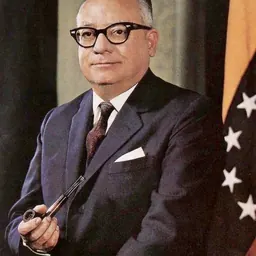



Related people
Same field, nearest in time





Contemporaries
People whose lives overlapped Héctor Mujica's
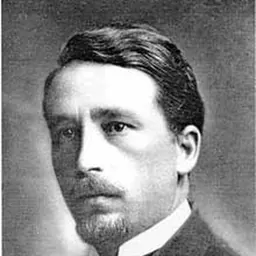
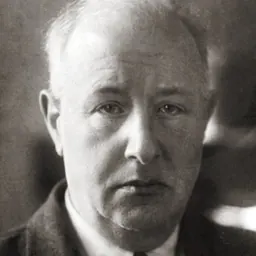

Frequently asked questions
Who was Héctor Mujica?
Venezuelan journalist, writer and politician (1927–2002)
When was Héctor Mujica born?
Héctor Mujica was born in 1924 in Carora.
When did Héctor Mujica die?
Héctor Mujica died in 2002 in Mérida.
What was Héctor Mujica's occupation?
Héctor Mujica was a politician, writer, philosopher, short story writer, essayist and sociologist.
What nationality was Héctor Mujica?
Héctor Mujica was Venezuelan.
Sources & further reading
Cite this page
APA: Biography.guide. (2026). Héctor Mujica. https://biography.guide/hector-mujica/
MLA: "Héctor Mujica." Biography.guide, https://biography.guide/hector-mujica/.
Chicago: "Héctor Mujica." Biography.guide. https://biography.guide/hector-mujica/.
Data last updated: 2026-09-20 · Spot an error? Report a correction.
Page generated 2026-09-27 05:33 UTC