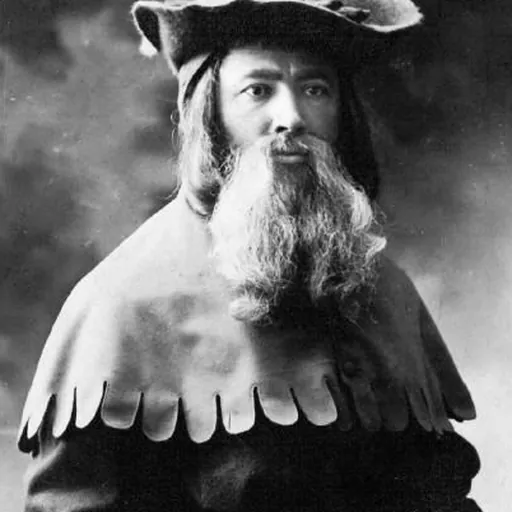
About Hector Dufranne
Lived 1870 – 1951 (aged 80). Hector Dufranne was a Belgian singer and opera singer.
Hector Dufranne (25 October 1870 – 4 May 1951) was a Belgian operatic bass-baritone who enjoyed a long career that took him to opera houses throughout Europe and the United States for more than four decades. Admired for both his singing and his acting, Dufranne appeared in a large number of world premieres, most notably the role Golaud in the original Opéra-Comique production of Claude Debussy's Pelléas et Mélisande at the Salle Favart in Paris in 1902, which he went on to sing 120 times at that house. He had an excellent singing technique which maintained the quality of his voice even into the latter part of his career. His wide vocal range and rich resonant voice enabled him to sing a variety of roles which encompassed French, German, and Italian opera.
Biography Dufranne was born in Mons. He studied at the Brussels Conservatory with Désiré Demest before making his professional opera debut in 1896 at La Monnaie as Valentin in Charles Gounod's Faust.
Dufranne sang at the Opéra-Comique in Paris from 1900 to 1912, making his first appearance as Thoas. He appeared in several world premieres with the company including creating the roles of Le Marquis in Grisélidis (1901), the title role in Alfred Bruneau's L' Ouragan (1901), Golaud in Pelléas et Mélisande (1902), Amaury-Ganelon in La Fille de Roland by Henri Rabaud (1904), Koebi in Gustave Doret's Les Armaillis (1906), the title role in Xavier Leroux's Le Chemineau, Clavaroche in Fortunio by André Messager (1907), the fiancé in Raoul Laparra's La Habanéra (1908), and Don Iñigo Gomez in Maurice Ravel's L'Heure espagnole (1911). He also sang Scarpia in the Opéra-Comique's first production of Giacomo Puccini's Tosca (1909).
Dufranne also appeared periodically at the Paris Opera beginning in 1907. He notably portrayed the role of John the Baptist in their first production of Richard Strauss's Salome (1910). He also sang at the Opéra de Monte-Carlo in 1907 where he took part in the creation of two world premieres, the role of André Thorel in Jules Massenet's Thérèse and the title role in Bruneau's Naïs Micoulin. In 1914 he sang the role of Golaud in his only appearance at the Royal Opera, Covent Garden in London.
In 1922, Dufranne returned to Paris where he continued to appear in operas in all the major houses in addition to appearing in other opera houses in France. He also spent a brief time performing in Amsterdam in 1935. In 1923 he created the part of Don Quixote in the stage première of El retablo de maese Pedro under the baton of the composer, Manuel de Falla. The performance was for a private audience and was held in the private theatre of Winnaretta Singer, Princess Edmond de Polignac; he repeated the role in a Falla triple-bill at the Opéra-Comique in 1928. In 1924, he appeared at the Théâtre des Champs-Élysées in the world premiere of Léo Sachs's opera Les Burgraves.
With the outbreak of World War II in 1939, Dufranne retired from the stage, his last performance being the role of Golaud at the opera house in Vichy. He lived in Paris where he taught singing for many years before his death in 1951. His voice is preserved on a number of historic CD recordings made between 1904 and 1928 which have been issued on CYP 3612. He can also be heard as Don Iñigo on the first full recording of L’heure espagnole (1929), and as Golaud in extracts from Pelléas et Mélisande (1927).
Don’t just read it —
keep it.
Full-length biographies made to live with: read them, listen on the way to work, watch them tonight.
- E-book
- Audio
- Video
Instant download · yours to keep · every purchase keeps this site free
Important facts
People in Hector Dufranne's life
Named in this biography and alive at the same time




Related people
Same field, nearest in time



Contemporaries
People whose lives overlapped Hector Dufranne's


Frequently asked questions
Who was Hector Dufranne?
Belgian singer
When was Hector Dufranne born?
Hector Dufranne was born on 25 October 1870 in Mons.
When did Hector Dufranne die?
Hector Dufranne died on 4 May 1951 in Paris.
What was Hector Dufranne's occupation?
Hector Dufranne was a singer and opera singer.
What nationality was Hector Dufranne?
Hector Dufranne was Belgian.
Sources & further reading
Cite this page
APA: Biography.guide. (2026). Hector Dufranne. https://biography.guide/hector-dufranne/
MLA: "Hector Dufranne." Biography.guide, https://biography.guide/hector-dufranne/.
Chicago: "Hector Dufranne." Biography.guide. https://biography.guide/hector-dufranne/.
Data last updated: 2026-09-24 · Spot an error? Report a correction.
Portrait: Wikimedia Commons · author & licence
Page generated 2026-09-27 05:08 UTC