
About Hebe de Bonafini
Lived 1928 – 2022 (aged 93). Hebe de Bonafini was an Argentine activist and human rights defender.
Hebe María Pastor de Bonafini (4 December 1928 – 20 November 2022) was an Argentine activist who was one of the founders of the Association of the Mothers of the Plaza de Mayo, an organization of Argentine mothers whose children disappeared during the National Reorganization Process military dictatorship.
Career
Mothers of the Plaza de Mayo (1979–1986) As president of the Mothers of the Plaza de Mayo Association beginning in 1979, Bonafini spoke out in defense of human rights, both in Argentina and abroad, gaining international recognition; she received the UNESCO Prize for Peace Education in 1999. Adopting the rallying cry of Aparición con vida (Make them appear alive) in 1980, Bonafini demanded an immediate accounting of all of the forced disappearances, including her sons, who were members of the marxist guerrilla group called Montoneros, which along with the other communist organization, Ejército Revolucionario del Pueblo, were responsible of more than 10.000 terrorist attacks that left more than 1.000 people dead. Amid a gradual loosening of restrictions, she organized a March of Resistance along the Avenida de Mayo on 10 December 1982. This event marked the first time the group marched outside the namesake Plaza de Mayo, and the first time it was joined by large crowds of sympathizers.
Following the return to civilian rule in 1983, divisions began to develop in the organization relating to President Raúl Alfonsín's overly cautious progress in prosecuting the perpetrators of the Dirty War. Alfonsín established the 1985 Trial of the Juntas; but the decision to limit the proceedings to nine leading military junta members, as well as the acquittals handed to five of these, further antagonized Bonafini, who believed the president would forego further prosecutions for political considerations. The Mothers Association split in 1986, establishing two groups of around 2,000 members each: Bonafini's Mothers of the Plaza de Mayo Association, and the Mothers of the Plaza de Mayo—Founding Line. Bonafini was generally identified with the more radical faction, choosing to justify the methods undertaken by guerrillas during the dictatorship. , leader of the etarran Askapena organization, was invited as guest teacher in the University of Mothers of Plaza de Mayo.
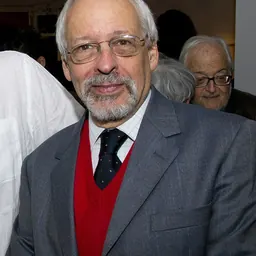
Journalist Horacio Verbitsky criticized her support of the terrorist attacks, and Bonafini replied, "Verbitsky is a servant of the United States. He receives wages from the Ford Foundation and, besides being Jewish, he is completely Americophile." She was accused of antisemitism, but denied it by saying that she merely intended to describe Verbitsky as an American agent.
The relationship of the Néstor and Cristina Fernández de Kirchner administrations with Bonafini was very close. President Néstor Kirchner received Bonafini at the Casa Rosada within days of his 25 May 2003, inauguration, and regularly consulted her during his tenure.
Bonafini announced in January 2006 that her organization would discontinue its annual March of Resistance out of recognition of President Néstor Kirchner's success in having the Full Stop Law and Law of Due Obedience (two Alfonsín-era measures which had effectively ended most Dirty War prosecutions) declared unconstitutional. The Association of the Mothers of the Plaza de Mayo, led by Bonafini, benefited from increased government funding during the Kirchner administrations, and extended its influence through a newspaper (La Voz de las Madres), a radio station, and a university (People's University of the Mothers of Plaza de Mayo).
The association also manages a federally funded housing program, Sueños Compartidos ("Shared Dreams"), which by 2008 oversaw construction of over 2,600 housing units earmarked for slum residents. Sueños Compartidos had completed 5,600 housing units and numerous other facilities in six provinces and the City of Buenos Aires by 2011. Its growing budgets, which totaled around US$300 million allocated between 2008 and 2011 (of which $190 million had been spent), came under scrutiny and generated nationwide controversy when a suspected case of embezzlement by the chief financial officer of Sueños Compartidos, Sergio Schoklender, and his brother Pablo (the firm's attorney) arose. Following an investigation ordered by Federal Judge Norberto Mario Oyarbide, the Secretary of Public Works canceled the Sueños Compartidos contract in August and transferred the outstanding projects to the Undersecretary of Housing and Urban Development.
Personal life Pastor was born in Ensenada on 4 December 1928.
Awards
Honorary degree of University of California (1996), University of Bologna (2007) and Experimental National University of the Yaracuy (2010) Honorary Medal of 70 Anniversary of the University Reform, 1988, National University of Córdoba National Order of Merit of Ecuador (2006) Appreciation Liberarte/2006, Liberarte Foundation Prize Don Hilario Cuadros and title Social and Cultural Ambassador of the Youth, Youth Direction of Province of Mendoza, 2008 Special Prize of Veintitrés, 2009 Bicentennial of the May Revolution Human Rights Extraordinary Prize, 2010, Argentine Republic Rodolfo Walsh Prize of Communication and Human Rights, National University of La Plata, 2011 Honor Prize of Radio Nacional, 2013 Grifo d'Argento, highest prize of Genoa, 2013
Don’t just read it —
keep it.
Full-length biographies made to live with: read them, listen on the way to work, watch them tonight.
- E-book
- Audio
- Video
Instant download · yours to keep · every purchase keeps this site free
Important facts
People in Hebe de Bonafini's life
Named in this biography and alive at the same time




Related people
Same field, nearest in time



Contemporaries
People whose lives overlapped Hebe de Bonafini's


Frequently asked questions
Who was Hebe de Bonafini?
Argentine human rights activist
When was Hebe de Bonafini born?
Hebe de Bonafini was born on 4 December 1928 in Ensenada.
When did Hebe de Bonafini die?
Hebe de Bonafini died on 20 November 2022 in La Plata.
What was Hebe de Bonafini's occupation?
Hebe de Bonafini was an activist and human rights defender.
What nationality was Hebe de Bonafini?
Hebe de Bonafini was Argentine.
Sources & further reading
Cite this page
APA: Biography.guide. (2026). Hebe de Bonafini. https://biography.guide/hebe-de-bonafini/
MLA: "Hebe de Bonafini." Biography.guide, https://biography.guide/hebe-de-bonafini/.
Chicago: "Hebe de Bonafini." Biography.guide. https://biography.guide/hebe-de-bonafini/.
Data last updated: 2026-09-20 · Spot an error? Report a correction.
Page generated 2026-09-27 05:22 UTC