
About Rodolfo Walsh
Lived 1927 – 1977 (aged 50). Rodolfo Walsh was an Argentine writer, journalist and translator.
Rodolfo Jorge Walsh (January 9, 1927 – March 25, 1977) was an Argentine writer and journalist of Irish descent, considered the founder of investigative journalism in Argentina. He is most famous for his Open Letter from a Writer to the Military Junta, which he published the day before his murder, protesting that Argentina's last civil-military dictatorship's economic policies were having an even greater and disastrous effect on ordinary Argentines than its widespread human rights abuses.
Born in Lamarque, Walsh finished his primary education in a small town in Río Negro Province, from where he moved to Buenos Aires in 1941, where he completed high school. Although he started studying philosophy at university, he abandoned it and held a number of different jobs, mostly as a writer or editor. Between 1944 and 1945 he joined the Alianza Libertadora Nacionalista, a movement he later denounced as being "Nazi" in its roots. In 1953 he received the Buenos Aires Municipal Literature Award for his book Variaciones en Rojo.
Initially supporting the "Revolución Libertadora"'s coup which overthrew Juan Perón's democratic government in 1955, by 1956 Walsh already rejected the hard-line policies of the military government led by Aramburu. In 1957 he finished Operación Masacre ("Operation Massacre"), an investigative work on the illegal execution of Peron's sympathizers during an ill-fated attempt at restoring Peronism to power in June 1956. Operación Masacre is now considered by scholars as the first historical non-fiction novel, preceding Truman Capote's In Cold Blood.
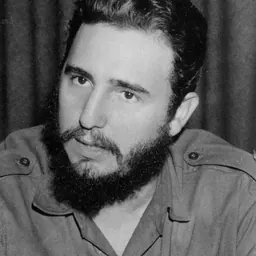
In 1960 he went to Cuba, where together with Jorge Masetti Walsh founded the Prensa Latina press agency. It has been established that he decrypted a CIA telex referring to the upcoming Bay of Pigs invasion, helping Fidel Castro to prepare for the supposedly secret operation.
Walsh was never an actual supporter of Peronism, but he became more sympathetic towards the group from October 1956, writing in that month's edition of Leoplán, "Here they closed their eyes", a tribute to the naval aviators who had died during the Revolución Libertadora.
In September 1958 he wrote:
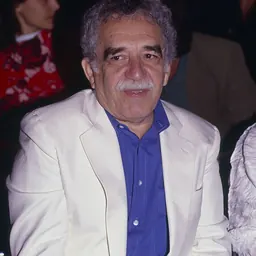
In 1959 he travelled to Cuba, where with his colleagues and compatriots Jorge Masetti, Rogelio García Lupo, and the Colombian writer Gabriel García Márquez, he founded the agency Prensa Latina. On returning to Argentina he worked at the magazines Primera Plana and Panorama. During the Onganía dictatorship he founded the weekly CGTA, which he directed between 1968 and 1970, and which after a raid and the detention of Raimundo Ongaro was published clandestinely. During 1972 he wrote for the weekly Semanario Villero and from 1973 in the daily Noticias with his friends Paco Urondo and Miguel Bonasso, among others.
Towards the middle of 1970, Walsh began to associate with the Peronismo de Base (Base Peronism) a political branch of the Fuerzas Armadas Peronistas (Peronist Armed Forces) a Peronist organization that in 1973 merged with the militant Montoneros. He was an important official, working on the press distribution for the movement, and intelligence. His first nom de guerre was "Esteban", and later he was known as "El Capitán", "Profesor Neurus" or just "Neurus".
Differences with Montoneros In 1974 Walsh began to have differences with the Montoneros, after Mario Firmenich made the surprise decision to take the group underground. Towards the end of 1975, several officials, including Walsh, began to promulgate documents recommending that the Montoneros "re-join the people, separate organizationally into watertight and independent combat cells, distribute money amongst them and try to organize a massive resistance, based more on popular involvement than on foquista type operations.
In the letter he wrote to the leadership of the organization, he wrote:
"The transition towards resistance must first be preceded by a peace offering; one such that acknowledges our military defeat at the same time it reasserts the just principles of our fight for liberation. Such an offering must gravitate towards two primal points: 1. Acknowledgment by the two parties of the Universal Declaration of Human Rights and of the validity of its principles under international watchfulness. 2. Acknowledgment by the two parties of the fact that the future of the country must be sorted out by democratic means. The first point means, for the military government, the cessation of illegal executions and tortures, the publication of a list with the names of all of the detainees, the validity of the writ of Habeas corpus and the return of freedom for the non-prosecuted detainees to leave the country if they so choose. For Montoneros, it means the cessation of all impersonal paramilitary action and the use of weapons only for the defense of life and liberty". As a second officer of Montonero intelligence, Rodolfo Walsh had reportedly informed the Montoneros leadership in January 1976 that the Argentine military commanders were planning a takeover in March. According to the book Political Violence and Trauma in Argentina, the son of retired Lieutenant-General Julio Alsogaray, Juan Carlos Alsogaray, had opened his father's safe, copied a draft of "Battle Order 24 March", and passed it on to Walsh. Juan Carlos ("El Hippie") Alsogaray, a Montoneros officer secretly working for Walsh, was killed in a fierce confrontation with Argentine paratroopers on 13 February 1976, when his 65-strong Montoneros Jungle Company was ambushed near the town of Cadillal in Tucuman province.
About this, Walsh wrote in a private letter on December 29, 1976:
It has been suggested by M. E. Andersen that Montoneros could have been nurtured by the military in order to justify their coup. According to this version, shortly after the military coup on 23 March 1976, Walsh would have written that the Montoneros welcomed the coup "as a victory in the making" and that the coup "will culminate in the seizure of power by the revolutionary left." He was later made to disappear along with his father Hugo and mother Blanca and sister Betina and his wife Laura De Luca in revenge for a bomb that he planted in the detention center that failed to explode.
ANCLA In 1976, in response to censorship imposed by the military dictatorship, Walsh created ANCLA, (Clandestine News Agency), and the "Information Chain", a system of hand-to-hand information distribution whose leaflets stated in the heading:
The death of his daughter Victoria and of his friend Urondo On September 29, 1976, Walsh's daughter María Victoria (nom de guerre "Hilda", or "Vicki" to family and friends), second officer of the organization Montoneros, died in a confrontation with the army, the day after her 26th birthday, in an incident known as "The Battle of Corro Street". Realizing she was surrounded with no chance of escape on the terrace of her house, she and Alberto Molina, the last survivor, raised their arms and after a brief speech that ended with the phrase "You're not killing us, we're choosing to die", both Alberto and Vicki shot themselves in the temple. In December of that year, Walsh published a message in which he described the events, entitled Letter to My Friends.
That same year in Mendoza, his friend Paco Urondo who fought in the Montoneros, was murdered by Juan Agustín Oyarzábal Navarro, Eduardo Smahá Borzuk ("Ruso"), Alberto Rodríguez Vázquez (“Pájaro Loco”), and Celustiano Lucero (“Mono”). They were convicted in 2011 and received the maximum sentence. Dardo Migno received 12 years in prison. From the trial it was determined that Urondo did not commit suicide by swallowing a cyanide pill, but rather died from a skull fracture caused by a blow to the head with a gun handle that policeman Celustiano Lucero administered. Lucero confessed to this act during the defense.
His other daughter, Patricia, is currently an Argentine political leader.
Death On March 24, 1977, only minutes after publishing (by sending it through mail) his Open Letter from a Writer to the Military Junta (Carta Abierta de un Escritor a la Junta Militar), Rodolfo Walsh was on foot near the crossroads of San Juan and Entre Ríos Avenues, in Buenos Aires (according to the investigator Natalia Vinelli: "after mailing the first copies [of the letter] at the mailbox in Plaza Constitución"), when a group of soldiers from the Escuela de Mecánica de la Armada (Navy School of Mechanics) ordered him to surrender. Walsh resisted with a small pistol he carried, apparently firing first. He wounded one of the soldiers, and was then mortally wounded by machine-gun fire. According to declarations by detainees who survived, his body was later shown to them in the ESMA (Navy School of Mechanics). In 2011 a dozen members of the task force had finally been convicted of crimes against humanity, with two more facing further charges in the ongoing “mega-trial” of ex-ESMA personnel.
On December 17, 2007, federal judge Sergio Torres mounted a trial on the charge of "illegitimate deprivation of liberty doubly aggravated for having been committed with abuse of office and with the corresponding aggravation of having been perpetrated with violence and threats" and "robbery aggravated for having been committed in public and in a group" of Alfredo Astiz, Jorge "Tigre" Acosta, Pablo García Velasco, Jorge Radice, Juan Carlos Rolón, Antonio Pernías, Julio César Coronel, Ernesto Frimon Weber and Carlos Orlando Generoso.
In 2015 the Supreme Court ratified the 2011 sentences and convictions of all the accused.
Legacy Rodolfo Walsh's personality has been studied in literary circles as a paradigmatic example of the tensions between the intellectual and the political, or between the writer and the committed revolutionary. Walsh however, thought of himself as a revolutionary more than a writer, and stated so publicly.
His Carta Abierta a La Junta Militar was brought to cinema through the short film The AAA are the three services (Las AAA son las tres armas), produced by the group Base Cinema (Cine de La Base), led by the disappeared director Raymundo Gleyzer.
Narrative Style
Works Diez Cuentos Policiales (1953) Variaciones en Rojo (1953) Antología del Cuento Extraño (1956) Operación Masacre (1957) La Granada (1965, teatro) La Batalla (1965, teatro) Los Oficios Terrestres (1965) Un Kilo de Oro (1967) ¿Quién Mató a Rosendo? (1969) Un Oscuro Día de Justicia (1973) El Caso Satanovsky (1973) Los Oficios Terrestres (1986) Cuento para Tahúres y Otros Relatos Policiales (1987) Ese Hombre y Otros Papeles Personales (1995)
Don’t just read it —
keep it.
Full-length biographies made to live with: read them, listen on the way to work, watch them tonight.
- E-book
- Audio
- Video
Instant download · yours to keep · every purchase keeps this site free
Important facts
People in Rodolfo Walsh's life
Named in this biography and alive at the same time



Related people
Same field, nearest in time


Contemporaries
People whose lives overlapped Rodolfo Walsh's


Frequently asked questions
Who was Rodolfo Walsh?
Argentine journalist and writer (1927–1977)
When was Rodolfo Walsh born?
Rodolfo Walsh was born on 9 January 1927 in Buenos Aires.
When did Rodolfo Walsh die?
Rodolfo Walsh died on 25 March 1977 in Buenos Aires.
What was Rodolfo Walsh's occupation?
Rodolfo Walsh was a writer, journalist and translator.
What nationality was Rodolfo Walsh?
Rodolfo Walsh was Argentine.
Sources & further reading
Cite this page
APA: Biography.guide. (2026). Rodolfo Walsh. https://biography.guide/rodolfo-walsh/
MLA: "Rodolfo Walsh." Biography.guide, https://biography.guide/rodolfo-walsh/.
Chicago: "Rodolfo Walsh." Biography.guide. https://biography.guide/rodolfo-walsh/.
Data last updated: 2026-09-20 · Spot an error? Report a correction.
Page generated 2026-09-27 05:25 UTC