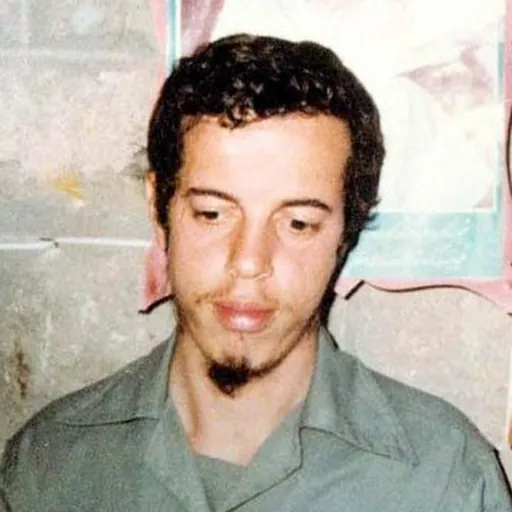
About Hasan Bagheri
Lived 1956 – 1983 (aged 26). Hasan Bagheri was an Iranian politician and journalist.
Hassan Bagheri (born Qolamhossein Afshordi; March 16, 1956 – January 29, 1983) was an Iranian military officer and journalist, and prominent military figure in the Iran-Iraq War. He served as the deputy commander of the IRGC Ground Forces during the war, and was one of the senior IRGC commanders that played a key role in the Second Battle of Khorramshahr.
Bagheri was killed in action by a mortar shell in January 1983, shortly before the start of the Operation Before the Dawn during reconnaissance operations in Fakkeh. He was the brother of Mohammad Bagheri, former chief of the Iranian Armed Forces.
Early life
Qolamhossein Afshordi was born on March 16, 1956, near Khorasan Square in Tehran, Iran. His family was from Afshord, a village in Heris, East Azerbaijan province. He attended Motarjem al-Dowleh School and Marvi High School.
Education In 1975, after obtaining a mathematics diploma, he began to study Animal husbandry at the Faculty of Agriculture of Urmia University. After the Iranian revolution, he enrolled in the Iranian University Entrance Exam after receiving a literary diploma in June 1979. He was ranked 104th in entrance exam, so he was admitted at Tehran University in the field of judicial law.
Military service In March 1978, Afshordi was conscripted into the Imperial Iranian Army. Upon completing training, he was transferred to Ilam in the Jaldian Garrison. During his military service, he became friends with the scholars of Ilam and especially Sadri (former Imam of Friday Prayer of Ilam. When it became known that he divulged military information he was no longer trusted and sent to work as a driver. In 1979, he deserted from the army and took part in the Iranian Revolution as a partisan. During the outbreak of the revolution, he, along with other relatives and friends, was present in the capture of 14 Police Station and Eshratabad Barracks in Tehran. After returning in June 1979, he got a diploma in literature and then took part in the university entrance exam again and was accepted with the 104th rank in the judicial law department of Tehran University. Yahya Rahim Safavi considers Hassan Bagheri one of the genius commanders of the Islamic Revolutionary Guard Corps. During the time Hassan Bagheri was in the war, using the experiences he gained during his time as a journalist in Iran and Lebanon, he collected information, maps and operational calculations and record audios on the fronts of Iran and turned these documents into organized reports.
Bagheri is the founder of IRGC Intelligence and Operations Unit. From the beginning of his arrival in Ahvaz at Montazerane Shahadat Base, in order to obtain appropriate information about the enemy's position, along with intelligence elements, he collected maps and implemented the situation of operational areas on them. His activities in this field by organizing intelligence elements and conducting a brief training for them, led to the establishment of the Intelligence and Operations Unit in the Southern Operations Headquarters. After about 3 months from the start of the war, these units were deployed in all southern axes (from Abadan to Dezful).
Operation Beit ol-Moqaddas
Bagheri presented the plan of the Beit ol-Moqaddas operation for the liberation of Khorramshahr in the Karbala camp and in the presence of other commanders. In this plan, 40,000 to 50,000 troops were transferred from the Karun River to the enemy's positions at night to capture the enemy's main points. The plan of this operation was reviewed and approved for 20 days and nights in the Karbala camp with the active presence of Hasan Bagheri, Ali Sayad Shirazi, Gholam Ali Rashid, Mohsen Rezaee, Yahya Rahim Safavi and other commanders of units and divisions of the IRGC and the army.
Operation Ramadan
During the Operation Ramadan, which began on July 14, 1982, in the Shalamcheh operational area, which is east of the southern Iraqi city of Basra, the forces under Bagheri's command passed through explosive traps and mines, and reached a depth of 27 kilometers into the Iraqi territory and near the city of Basra. In the camp of Karbala, while laying the foundation for the operation of Muslim ibn Aqil, Bagheri also planned the operation of Muharram. Also after the impact of the mortar shell, Tawakkul Qalavand (Deputy Intelligence Officer of Najaf Base) and Majid Baqaei were also killed and Morteza Saffari was seriously injured. Hassan Bagheri was 26 years old when he died.
War strategy method
Afshordi was very interested in staffing and training forces for command. Mehdi Zeinoddin is one of his most famous trainee, who later became the commander of the 17th Ali ibn Abi Taleb Division. Also, Hossein Ali Turki, the first commander of the 17th Ali ibn Abi Taleb Division was one of the trainee of Afshordi. Hossein Ali Turki was killed in Shush on January 26, 1982, due to a mortar hit. of which Hassan Bagheri was one of its experts and creators. This method led to the development of a defense system including defense thought, principles and rules of operation, military doctrine and principles and rules of war for Iran.
Personal life Hassan Bagheri married Parvin Daeepoor in August 1981, whom he had a daughter with and named her Narges.
Works about him The most important works that have been published so far about Hassan Bagheri (Qolamhossein Afshordi) are (All in Persian):
Akharin Roozhaye Zemestan , Mohammad Hossein Mahdavian, Ten-episode television series, 2012 Sirate Sardaran , Islamic Revolutionary Guard Corps Publication, 1987 Pirahane Sefid , Hassan Bani Ameri, Foundation for the Preservation and Publication of Sacred Defense Works and Values, 1995 Saqqaye Basij , Samira Aslanpoor, Congress Commemorating Martyred Generals of Tehran Province, 1997 Chashme Bidare Hamaseh , Mohammad Khosravi, Congress Commemorating Martyred Generals of Tehran Province, 1997 Chashme Jebheh'Ha , Samira Aslanpoor, Congress Commemorating Martyred Generals of Tehran Province, 1997 Haft Bande Eltehab , Abbas Moshfeq Kashani, Congress Commemorating Martyred Generals of Tehran Province, 1997 Bi Karaneha , Einollah Kavandi, Congress Commemorating Martyred Generals of Tehran Province, 1997 Ta Maah Kamel Shavad , Samira Aslanpoor, Congress Commemorating Martyred Generals of Tehran Province, 1998 Hemaseh Sazane Asre Imam Khomeini (Jeld 3) , Humanities Research Institute and Imam Hossein University, Congress Commemorating Martyred Generals of Tehran Province, 1998 Gozideye Adabiate Dastane Moaser (Majmooe Dastane 18) , Samira Aslanpoor, Neistan Book, 1999 Nabardhaye Sharqe Karun be Revayate Farmandehan , Seyyed Ali Bani Lohi and Hadi Morad Piri, War Studies and Research Center, 2000 Yadegaran (Jeld 4: Ketabe Bagheri) , Farzaneh Mardi, Ravayat-e Fath Publication, 2002 Mosafer , Davoud Bakhtiari Daneshvar, Bureau of Literature and Art of Resistance, 2002 Khaneye Koochak, Zendegie Bozorg: Goftogoo ba Parvin Daeepoor; Hamsare Sardar Shahid Hassan Bagheri , Morteza Sarhangi, Kaman Publication, 2003 Looti va Atash "Zendeginameye Sardar Shahid Hassan Bagheri" , Rahim Makhdoomi Shorbiani, Sarir Publication, 2005 Shahid Hassan Bagheri (Qolamhossein Afshordi) , Gholam Ali Rashid and Saeed Sarmadi, Shakib Publication, 2005 Dakale Aboozar , Fathollah Jafari, Bureau of Literature and Art of Resistance, 2007 Bagheri (Be Soorate Ketabcheh) , Ali Akbari, Ya Zahra Publication, 2008 Narmafzare Chand Resane'ie Hassan Bagheri , Shahed Publication, 2008 Lohe Feshordeye Yadvareye Sardare Nasr (Hassan Bagheri) , Vice President of Social and Cultural Affairs of Region 13 Municipality, 2008 Shahid Afshordi (Bagheri) , Farzam Shirzadi, Madreseh Publication, 2009
Don’t just read it —
keep it.
Full-length biographies made to live with: read them, listen on the way to work, watch them tonight.
- E-book
- Audio
- Video
Instant download · yours to keep · every purchase keeps this site free
Important facts
People in Hasan Bagheri's life
Named in this biography and alive at the same time


Related people
Same field, nearest in time



Contemporaries
People whose lives overlapped Hasan Bagheri's


Frequently asked questions
Who was Hasan Bagheri?
Iranian revolutionary (1956-1983)
When was Hasan Bagheri born?
Hasan Bagheri was born on 25 February 1956 in Tehran.
When did Hasan Bagheri die?
Hasan Bagheri died on 29 January 1983 in Iran.
What was Hasan Bagheri's occupation?
Hasan Bagheri was a politician and journalist.
What nationality was Hasan Bagheri?
Hasan Bagheri was Iranian.
Sources & further reading
Cite this page
APA: Biography.guide. (2026). Hasan Bagheri. https://biography.guide/hasan-bagheri/
MLA: "Hasan Bagheri." Biography.guide, https://biography.guide/hasan-bagheri/.
Chicago: "Hasan Bagheri." Biography.guide. https://biography.guide/hasan-bagheri/.
Data last updated: 2026-09-21 · Spot an error? Report a correction.
Portrait: Wikimedia Commons · author & licence
Page generated 2026-09-27 05:00 UTC