
About Harvey Rosenfield
Born 1952. Harvey Rosenfield is an American lawyer, author, consumer Protection and political activist.
Harvey Rosenfield (born 1952) is an American lawyer, author and consumer advocate. In 1985, he founded Consumer Watchdog, a nationally recognized, nonpartisan nonprofit public interest group. He serves as the group's counsel.
He is best known for drafting, and organizing the campaign for, Proposition 103, a ballot proposal that rolled back automobile insurance rates in California. In 2014, the Consumer Federation of America estimated that Proposition 103 has saved California consumers over $100 billion since 1988. Rosenfield's consumer advocacy work focuses on insurance company overcharges, health care patient protection, and other consumer rights.
Early life and education Rosenfield was born in Boston, Massachusetts in 1952 and grew up in Randolph. His father was an accountant and his mother, a painter and poet. Rosenfield's high school guidance counselor, Art Mullaney, originated the idea and Rosenfield attributes his "success to [Mullaney]" and others who mentored him. The group raised $4500 and attracted the attention of the American Cancer Society, which used the "smokeout" theme in its "Great American Smokeout" campaign, beginning in 1977.
In 1970 Rosenfield entered Amherst College and studied psychology, though he later decided to pursue studies in law. After graduating magna cum laude in 1974, Rosenfield moved to Washington, D.C. to intern with Massachusetts Congressman Michael Harrington. In the fall of 1974, he began a joint degree in law and international affairs at Georgetown University.
Early career In 1976, Rosenfield took a $600 internship with his future mentor, Ralph Nader at Public Citizen, a Washington D.C. citizen advocacy group. Three years later, after graduating from Georgetown, Rosenfield began working full-time for Nader's Public Citizen Congress Watch as an energy lobbyist opposing nuclear power in 1979. Rosenfield fought for alternative energy sources and environmental conservation in the wake of the 1979 oil crisis when Congress considered a fossil fuels and nuclear strategy for energy independence.
Rosenfield resigned from CALPIRG in 1985. Later that year, Nader asked him to campaign against Proposition 51, an insurance industry backed initiative on the California ballot that limited damage claims on lawsuits, which the industry claimed were responsible for skyrocketing insurance rates.
To bring attention to his cause, Rosenfield used grassroots publicity stunts like having guards accompany him while he delivered the signatures that put Proposition 103 on the ballot. As well, he attempted to deliver truckloads of cow manure to the headquarters Farmers Insurance of Los Angeles.
Since then, Rosenfield, and his colleagues at Consumer Watchdog defended Proposition 103 from insurance industry attacks and ensured the proposition's implementation. In 2008, the Consumer Federation for America estimated that Proposition 103 had saved consumers over $63 billion since 1988. Using insurance industry data, CFA found that "between 1989 and 2010, auto insurance premiums actually dropped by 0.3%, while they rose 43.3% nationally during that period. California was the only state in the nation where prices dropped over the 22 year period."
Rosenfield opposed Proposition 17, a $16 million attempt by Mercury Insurance Group to repeal a key provision of Proposition 103 in 2010; it was defeated. The company spent another $17 million on a very similar initiative in 2012; it too was defeated. In 2012, an initiative to control health insurance costs similarly to Prop 103 received over 800,000 signatures and earned a place on the 2014 ballot.
However, critics of California Proposition 103 claim it is responsible for California's insurance crisis. In March 2024, the editorial board of the Orange County Register called for its repeal, saying "Prop. 103 didn't solve California's insurance problems, but made them worse. Time to cancel it."
Proposition 103's benefits to policyholders have been questioned by independent researchers, including the International Center for Law & Economics. Contrary to claims that Proposition 103 saved Californians as much as $154 billion in auto insurance premiums from 1989 to 2015, it found that Californians would have saved nearly $25 billion if they had not passed Proposition 103.
Health Care Reform and HMO patients' rights In 1994, during the Clinton healthcare debate, Rosenfield began working to reform the HMO industry. He and his colleague Jamie Court created Californians for Quality Care (a division of Consumer Watchdog) to spearhead the effort. In 1996, the group worked to have the nation's first "patients' bill of rights" proposition placed on the California ballot. However, Proposition 216 failed to pass, garnering only 38.7% of the vote.
In 1998, the group proposed additional HMO patient's rights legislation. To bring attention to the issue, the group dumped a truck load of pinto beans at an HMO industry conference to emphasize Consumer Watchdog's opposition to HMO "bean counters" overriding doctors' decisions. Most of the legislative package later passed with the help of the California Nurses Association in November 1998.
As a result, California has the strongest HMO patient protection laws in America. Many of the provisions of California's bill were included in the national U.S. Patients' Bill of Rights act, which passed Congress in 2001.
Proposition 9 failed due to the $40 million lobbying efforts of the utility industry. Rosenfield claimed his re-regulation efforts could have helped deter the California Energy Crisis exploited by Enron and other energy companies in 2001. Rosenfield talks about the situation in the 2005 documentary, The Smartest Guys in the Room. He has written multiple newspaper articles and testified before Congress and many state legislatures on consumer protection.
Awards Top 100 California Political Power Brokers by Capitol Weekly California Lawyer of the Year Speaking Truth to Power by the California Nurses Association
Personal life Rosenfield lives in Los Angeles, California with his wife, author Georgia Bragg. The couple have two children.
Don’t just read it —
keep it.
Full-length biographies made to live with: read them, listen on the way to work, watch them tonight.
- E-book
- Audio
- Video
Instant download · yours to keep · every purchase keeps this site free
Important facts
People in Harvey Rosenfield's life
Named in this biography and alive at the same time
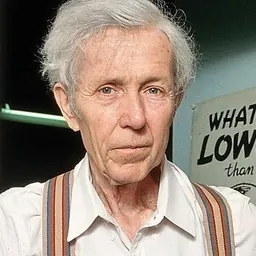

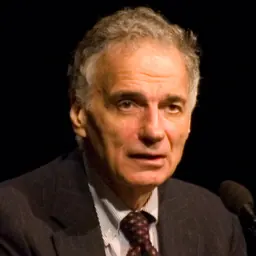
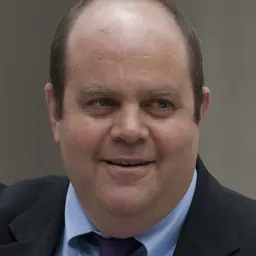
Related people
Same field, nearest in time

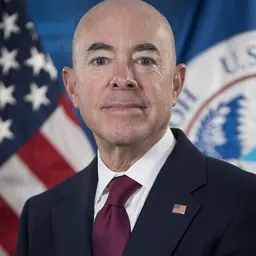

Contemporaries
People whose lives overlapped Harvey Rosenfield's

Frequently asked questions
Who is Harvey Rosenfield?
biography
When was Harvey Rosenfield born?
Harvey Rosenfield was born on 7 September 1952 in Boston.
What is Harvey Rosenfield's occupation?
Harvey Rosenfield is a lawyer, author, consumer Protection and political activist.
What nationality is Harvey Rosenfield?
Harvey Rosenfield is American.
Sources & further reading
· Wikipedia: Harvey Rosenfield
Cite this page
APA: Biography.guide. (2026). Harvey Rosenfield. https://biography.guide/harvey-rosenfield/
MLA: "Harvey Rosenfield." Biography.guide, https://biography.guide/harvey-rosenfield/.
Chicago: "Harvey Rosenfield." Biography.guide. https://biography.guide/harvey-rosenfield/.
Data last updated: 2026-09-20 · Spot an error? Report a correction.
Page generated 2026-09-27 05:30 UTC