
About Harry Ruby
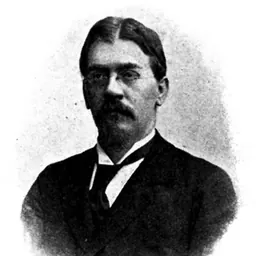
Lived 1895 – 1974 (aged 79). Harry Ruby was an American screenwriter, composer, songwriter and film score composer.
Harry Rubenstein (January 27, 1895 – February 23, 1974), known professionally as Harry Ruby, was an American pianist, composer, songwriter and screenwriter, who was inducted into the Songwriters Hall of Fame in 1970. He was married to silent film actress Eileen Percy.
Biography
Ruby was born in New York City in 1895.
Ruby found his most sustained success as a composer after meeting the man who would become his longtime partner, lyricist Bert Kalmar.
Ruby was a close friend of the Marx Brothers, especially Groucho and he made several appearances on Groucho's television program, You Bet Your Life. In his 1972 concert at Carnegie Hall, Marx gave the following introduction before performing one of a few songs by Ruby: "I have a friend in Hollywood ... I think I do, I'm not so sure. [laughter] His name is Harry Ruby [applause] and he wrote a lot of songs that I've sung over the years ..."
Today, Father, is Father's Day And we're giving you a tie It's not much we know It is just our way of showing you We think you're a regular guy You say that it was nice of us to bother But it really was a pleasure to fuss For according to our mother You're our father And that's good enough for us Yes, that's good enough for us
In The Dick Cavett Show, recorded June 13, 1969, Marx also sang a second stanza, and introduced it with, "Isn't that a beautiful melody? And a beautiful sentiment: ... Today, father, is father's day. ... 16 men in that orchestra: nine of them are illegitimate children [laughter]. Nine and a half including the director."
The tie that you got Didn't cost such a lot And we'll give you the same tie next year. You tell us it was nice of us to bother But it really was a pleasure to fuss For they say, a child can only have one father And you are the one for us. And you are the one for us.
Works Selected film scores Source: Animal Crackers (1930) Horse Feathers (1932) Duck Soup (1933) Bright Lights (1935) Walking on Air (1936) Wake Up and Dream (1946) Three Little Words (1950)
Selected screenplays Source: Ziegfeld Follies of 1918 (1918) - revue - featured songwriter Helen of Troy, New York (1923) - musical - co-composer and co-lyricist No Other Girl (1924) - musical - co-composer and co-lyricist Holka Polka (1925) - musical - co-book-editor The Ramblers (1926) - musical - co-composer, co-lyricist and co-bookwriter Lucky (1927) - musical - co-bookwriter The Five O'Clock Girl (1927) - musical - composer She's My Baby (1928) - musical - co-bookwriter Good Boy (1928) - musical - co-composer and co-lyricist Animal Crackers (1928) - musical - co-composer and co-lyricist Top Speed (1929) - musical - co-producer and co-bookwriter High Kickers (1941) - musical - co-composer, co-lyricist and co-bookwriter Fosse (1998) - revue - featured songwriter for "Who's Sorry Now?" from All That Jazz 1979
Notable songs Source: "The Sheik of Avenue B" (1922) "Who's Sorry Now?" (1923), Kalmar and Ruby's first big hit "I Wanna Be Loved by You" (1928), a hit for Helen Kane, known as the "Boop-boop-a-doop girl", and sung by Marilyn Monroe in the film Some Like It Hot "Hooray for Captain Spaulding" from Animal Crackers (1928): became Groucho Marx's signature tune. "I Love You So Much" (1928) "Three Little Words" (1930), Kalmar and Ruby's biggest hit. "Nevertheless" (1931), a hit for Jack Denny (vocal by Bob May) that year, later done by The Mills Brothers and Frank Sinatra "I'm Against It", "I Always Get My Man" and "Everyone Says I Love You" from Horse Feathers (1932) "Hail, Hail Freedonia" from Duck Soup (1933) "What a Perfect Combination" (1932), lyrics by Kalmar and Irving Caesar, music by Ruby and Harry Akst, written for the Broadway show The Kid, starring Eddie Cantor "A Kiss to Build a Dream On" (1935), Kalmar and Ruby's last hit "Omaha, Nebraska" (1951), lyrics and vocal by Groucho Marx "Show Me a Rose" (1952), Groucho Marx recording "The Real McCoys" (1957-1963), television theme
Selected bibliography The Four Marx Brothers in Monkey Business and Duck Soup Simon & Schuster (1973) 978-0671212735 S.J. Perelman; Will B. Johnstone; Bert Kalmar; and Harry Ruby
Death Ruby died on February 23, 1974, in Woodland Hills, California, and was interred at the Chapel of the Pines in Los Angeles.
Don’t just read it —
keep it.
Full-length biographies made to live with: read them, listen on the way to work, watch them tonight.
- E-book
- Audio
- Video
Instant download · yours to keep · every purchase keeps this site free
Important facts
Family & relationships
People in Harry Ruby's life
Named in this biography and alive at the same time
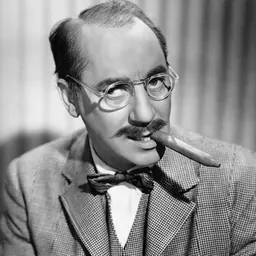




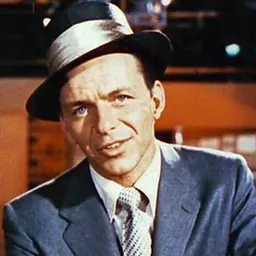
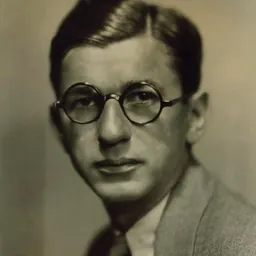
Related people
Same field, nearest in time



Contemporaries
People whose lives overlapped Harry Ruby's

Frequently asked questions
Who was Harry Ruby?
American composer and screenwriter (1895–1974)
When was Harry Ruby born?
Harry Ruby was born on 27 January 1895 in New York City.
When did Harry Ruby die?
Harry Ruby died on 23 February 1974 in Woodland Hills.
What was Harry Ruby's occupation?
Harry Ruby was a screenwriter, composer, songwriter and film score composer.
What nationality was Harry Ruby?
Harry Ruby was American.
Sources & further reading
Cite this page
APA: Biography.guide. (2026). Harry Ruby. https://biography.guide/harry-ruby/
MLA: "Harry Ruby." Biography.guide, https://biography.guide/harry-ruby/.
Chicago: "Harry Ruby." Biography.guide. https://biography.guide/harry-ruby/.
Data last updated: 2026-09-22 · Spot an error? Report a correction.
Page generated 2026-09-27 04:58 UTC