
Harold Stirling Vanderbilt
American bridge player, yachtsman, and railroad executive
About Harold Stirling Vanderbilt
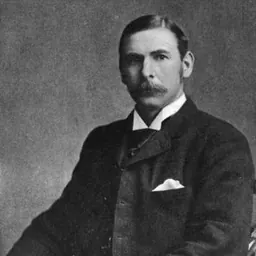
Lived 1884 – 1970 (aged 85). Harold Stirling Vanderbilt was an American bridge player, entrepreneur, socialite, contract bridge and yachting.
Harold Stirling Vanderbilt CBE (July 6, 1884 – July 4, 1970) was an American railroad executive, a champion yachtsman, an innovator and champion player of contract bridge, and a member of the Vanderbilt family.
Vanderbilt was educated by tutors and at private schools in Massachusetts, including St. Mark's School, Harvard College (AB 1907), and Harvard Law School, which he attended from 1907 to 1910.
Sailing career As a boy, Harold Vanderbilt spent part of his summers at the Vanderbilt mansions—the Idle Hour estate in Long Island, New York, on the banks of the Connetquot River; Marble House at Newport, Rhode Island; and later at Belcourt, the Newport mansion of his stepfather, Oliver Belmont. As an adult, he pursued his interest in yachting, winning six King's Cups and five Astor Cups at regattas between 1922 and 1938. He served as commodore of the New York Yacht Club from 1922 to 1924. In 1925, he built his own luxurious vacation home at Palm Beach, Florida, that he called "El Solano". (John Lennon, formerly of the Beatles, purchased it shortly before his 1980 murder.)
Vanderbilt achieved the pinnacle of yacht racing in 1930 by defending the America's Cup in the J-class yacht Enterprise. His victory put him on the cover of the September 15, 1930, issue of Time magazine (see image above). In 1934 Harold faced a dangerous challenger from the United Kingdom, Endeavour, owned by the aviation pioneer and industrialist Thomas Sopwith. Endeavour won the first two races but Vanderbilt's Rainbow then won four races in a row and successfully defended the Cup. In 1937 he won again in Ranger, the last of the J-class yachts to defend the Cup. He was posthumously elected to the America's Cup Hall of Fame in 1993.
In the fall of 1935, Harold began a study of the yacht racing rules with three friends: Philip Roosevelt, president of the North American Yacht Racing Union (predecessor to US Sailing); Van Santvoord Merle-Smith, president of the Yacht Racing Association of Long Island Sound; and Henry H. Anderson. "The four men began by attempting to take the right-of-way rules as they were and amending them. After about six weeks of intensive effort, they finally concluded that they were getting exactly nowhere. It was the basic principles, not the details, that were causing the problems. They would have to start from scratch."
In 1936, Vanderbilt, with assistance from the other three had developed an alternative set of rules, printed them, and mailed a copy to every yachtsman that he knew personally or by name in both the United States and England. These were virtually ignored, but a second edition in 1938 was improved, as were following versions. Vanderbilt continued to work with the various committees of the North American Yacht Racing Union until finally in 1960 the International Yacht Racing Union (predecessor to the International Sailing Federation or ISAF) adopted the rules that Vanderbilt and the Americans had developed over the previous quarter century.
Bridge Vanderbilt was also a card game enthusiast. In 1925, while on board SS Finland, he originated changes to the scoring system through which the game of contract bridge supplanted auction bridge in popularity. Three years later he endowed the Vanderbilt Cup awarded to the winners of the North American championship (now the Vanderbilt Knockout Teams, or simply "the Vanderbilt", one of the North American Bridge Championships marquee events). In 1932, and again in 1940, he was part of a team that won his own trophy; it remains one of the most prized in the game. Vanderbilt also donated the World Bridge Federation Vanderbilt Trophy, awarded from 1960 to 2004 to the winner of the open category at the quadrennial World Team Olympiad, and since 2008 to the winner of the corresponding event at the World Mind Sports Games.
Vanderbilt invented the first , which he called the "Club Convention" but which has since become more usually known as the Vanderbilt Club. The strong club, or forcing club, family of has performed exceptionally well in world championship play. He wrote four books on the subject.
Vanderbilt, Ely Culbertson, and Charles Goren were the three people named when The Bridge World inaugurated a bridge "hall of fame" in 1964 and they were made founding members of the ACBL Hall of Fame in 1995. (1=The Bridge World monthly magazine, established by Ely Culbertson in 1929, named nine members of its bridge hall of fame including Culbertson from 1964 to 1966, but it never named another.) Almost thirty years later, the ACBL established its hall of fame with the Bridge World nine as founding members. It named eight new members in 1995 and has inducted others annually since then. In 1931, he filed papers to incorporate the Town of Manalapan and became the Town's first mayor, serving from 1952 until 1966. He was a town councilman for 32 years and was called "mayor emeritus" when he retired from public service. In 1934, his sister, Consuelo Vanderbilt Balsan, built her own mansion on Hypoluxo Island, across the water from Eastover.
In addition to sailing, Vanderbilt was a licensed pilot, and in 1938 he acquired a Sikorsky S-43 "Flying Boat".
At the outbreak of the Second World War, Vanderbilt's yachts Vagrant and Vara, which was under construction, were seized by the United States Navy. The Vagrant was designated as YP-258 and later as PYc-30. Navy official Edmond J. Moran met with Vanderbilt in New York, to present him with a check for $300,000 as compensation for the Vara. Upon receiving the check, Vanderbilt signed it over to the USO, so the money could be used to benefit servicemen. The Vara was completed, renamed as the USS Valiant, and designated as PC-509 (later as PYc-51).
Personal life Vanderbilt married Gertrude Lewis Conaway, of Philadelphia, in 1933. They had no children. Ironically, this was only two weeks after the Penn Central Railroad, successor to the New York Central Railroad, had declared bankruptcy (on June 21, 1970). He and his wife are interred in St. Mary's Episcopal Churchyard in Portsmouth, Rhode Island, their graves marked with only simple flat stones. It is uncertain why he chose to be buried in Rhode Island rather than in the Vanderbilt family mausoleum on Staten Island. It is noteworthy, however, that he is buried in the same cemetery as his business rival Robert R. Young.
Legacy
Harold Vanderbilt had a keen interest in the success of Vanderbilt University in Nashville, Tennessee, founded in 1873 through the financial sponsorship of his great-grandfather. A longtime member of the university's Board of Trust, he served as its president between 1955 and 1968. was erected in his honor in 1965.
In 1947, Vanderbilt was invested as an honorary Commander of the Order of the British Empire (CBE) by King George VI. The letters patent conferring the honor on him (signed by Queen Mary in her capacity as grand master of the order) and the insignia of the order are on display in the Trophy Room at the Marble House summer estate in Newport, Rhode Island.
In 1963, Vanderbilt assisted the Preservation Society of Newport County in acquiring Marble House in Newport, Rhode Island, which his mother had sold more than 30 years earlier. Their bid was successful, and the property was converted into a museum that has been open to the public since the mid-1960s and holds documents and artifacts related to his life.
A sailing drink, Stirling Punch, was named in Vanderbilt's honor.
Vanderbilt's private railroad car, New York Central 3, was renovated and has operated luxury charter trips at the rear of regularly scheduled Amtrak and Via Rail Canada trains.
Vanderbilt was inducted into the National Sailing Hall of Fame in 2011. He was inducted into the Rhode Island Heritage Hall of Fame in 2014.
Following his death, contemporary newspapers reported that his Will dispersed his estate amongst many Charities and Universities, including over $40,000,000 to Vanderbilt University and $6,600,000 to Harvard University.
Publications
Contract Bridge: Bidding and the Club Convention (New York and London, Charles Scribner's Sons, 1929), 251 pp. With "Laws of Contract Bridge, 1927, reprinted by permission of ... the Whist club: pp. 207–36." The New Contract Bridge: Club Convention Bidding and Forcing Overbids (Scribner, 1930), 333 pp. Enterprise: The Story of the Defense of the America's Cup in 1930 (Scribner, 1931), 230 pp. "Contract by Hand Analysis: a synopsis of 1933 club convention bidding" (The Bridge World, 1933), 165 pp. On the Wind's Highway: Ranger, Rainbow and Racing (Scribner, 1939), 259 pp. The Club Convention System of Bidding at Contract Bridge, As Modernized by Harold S. Vanderbilt (Charles Scribner's Sons, New York, 1964), 160 pp.
Don’t just read it —
keep it.
Full-length biographies made to live with: read them, listen on the way to work, watch them tonight.
- E-book
- Audio
- Video
Instant download · yours to keep · every purchase keeps this site free
Important facts
Family & relationships
People in Harold Stirling Vanderbilt's life
Named in this biography and alive at the same time





Related people
Same field, nearest in time



Contemporaries
People whose lives overlapped Harold Stirling Vanderbilt's

Frequently asked questions
Who was Harold Stirling Vanderbilt?
American bridge player, yachtsman, and railroad executive (1884–1970)
When was Harold Stirling Vanderbilt born?
Harold Stirling Vanderbilt was born on 6 July 1884 in Oakdale.
When did Harold Stirling Vanderbilt die?
Harold Stirling Vanderbilt died on 4 July 1970 in Newport.
What was Harold Stirling Vanderbilt's occupation?
Harold Stirling Vanderbilt was a bridge player, entrepreneur, socialite, contract bridge and yachting.
What nationality was Harold Stirling Vanderbilt?
Harold Stirling Vanderbilt was American.
Sources & further reading
· Wikipedia: Harold Stirling Vanderbilt
· DBpedia: Harold Stirling Vanderbilt
Cite this page
APA: Biography.guide. (2026). Harold Stirling Vanderbilt. https://biography.guide/harold-stirling-vanderbilt/
MLA: "Harold Stirling Vanderbilt." Biography.guide, https://biography.guide/harold-stirling-vanderbilt/.
Chicago: "Harold Stirling Vanderbilt." Biography.guide. https://biography.guide/harold-stirling-vanderbilt/.
Data last updated: 2026-09-20 · Spot an error? Report a correction.
Page generated 2026-09-27 05:24 UTC