
About Harold Russell
Lived 1914 – 2002 (aged 88). Harold Russell was a Canadian and American film actor, writer, television actor and actor.
Harold John Avery Russell (January 14, 1914 – January 29, 2002) was an American World War II veteran and actor. After losing his hands during his military service, Russell was cast in the epic drama film The Best Years of Our Lives, which earned him the Academy Award for Best Supporting Actor. He was the first non-professional actor to win an Academy Award for acting and the first Oscar recipient to sell his award.
Early life
Harold Russell was born in North Sydney, Nova Scotia, Canada, and moved to Massachusetts, United States, with his family in 1921, after his father's death in 1920.
At the time of the December 7, 1941 attack on Pearl Harbor, Russell was living in Cambridge, Massachusetts, working at a food market. In his 1949 autobiography Victory in My Hands he wrote that he rushed to enlist in the United States Army because he considered himself a failure. He lost both hands and was given two hooks to serve as hands. After his recovery, while attending Boston University, Russell was featured in Diary of a Sergeant, an Army film about rehabilitating war veterans.
The Best Years of Our Lives
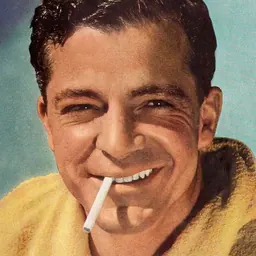
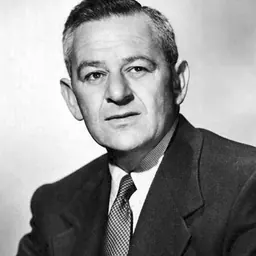
When film director William Wyler saw the film on Russell, he cast him in The Best Years of Our Lives with Fredric March and Dana Andrews. Russell played the role of Homer Parrish, a United States Navy sailor who lost both hands during the war.
For his role as Parrish, Russell won the Academy Award for Best Supporting Actor in 1947. Earlier in the ceremony, he was awarded an honorary Oscar for It was the only time in Oscar history that the academy awarded two Oscars for the same performance.
Wyler called it "the finest performance I have ever seen on the screen. However, Russell earned less than $10,000 for his performance (equivalent to $167,500 in 2023 dollars) and did not receive any residual profits. and earned a business degree from Boston University. Speaking with the Los Angeles Times in 1996, Russell recalled: Wyler told me I should go back to college because there wasn't much call for a guy with no hands in the motion picture industry. I figured he was right. [In the few roles I've taken since then,] I always play a disabled veteran. And this is what Wyler said—'After a while they're going to run out of ideas'—and he was absolutely right. How many times can you play the same role? He was also vice-president of the World Veterans Fund, Inc., the fundraising branch of the World Veterans Federation. Russell presents an award to Thelma Van Norte in 1966, in his role as a chair of the President's Committee on Employment of the Handicapped. As head of AMVETS, Russell wrote to President Truman in 1951 supporting his decision to dismiss General Douglas MacArthur during the Korean War. Russell's telegram to Truman cited MacArthur's "repeated insubordination in violation of basic American principles governing civil versus military authority." His telegram asserted that those were "obvious grounds" to relieve MacArthur. Erle Cocke, Jr., commander of the American Legion, said that he was "shocked by the news" that AMVETS and the American Veterans Committee supported MacArthur's firing.
From the early 1960s to the late 1980s, Russell served as chairman of the President's Commission on Employment of the Handicapped, an unpaid position.
In 1965, Russell received the Golden Plate Award of the American Academy of Achievement.
Russell appeared in two films after his debut, Inside Moves in 1980 and Dogtown in 1997. He also appeared in an episode of Trapper John, M.D., in 1981 and a two-part episode of the television series China Beach in 1989.
Russell authored two autobiographies, Victory in My Hands (1949) and The Best Years of My Life (1981).
In 1992, Russell consigned his Oscar for Best Supporting Actor to Herman Darvick Autograph Auctions, and, on August 6, 1992, in New York City, the Oscar sold to a private collector for $60,500. Russell defended his action by saying that he needed money for his wife's medical expenses, Russell did not sell the special Oscar.
Filmography
Don’t just read it —
keep it.
Full-length biographies made to live with: read them, listen on the way to work, watch them tonight.
- E-book
- Audio
- Video
Instant download · yours to keep · every purchase keeps this site free
Important facts
People in Harold Russell's life
Named in this biography and alive at the same time






Related people
Same field, nearest in time



Contemporaries
People whose lives overlapped Harold Russell's



Frequently asked questions
Who was Harold Russell?
film and television actor (1914-2002)
When was Harold Russell born?
Harold Russell was born on 14 January 1914 in Sydney.
When did Harold Russell die?
Harold Russell died on 29 January 2002 in Needham.
What was Harold Russell's occupation?
Harold Russell was a film actor, writer, television actor and actor.
What nationality was Harold Russell?
Harold Russell was Canadian and American.
Sources & further reading
Cite this page
APA: Biography.guide. (2026). Harold Russell. https://biography.guide/harold-russell/
MLA: "Harold Russell." Biography.guide, https://biography.guide/harold-russell/.
Chicago: "Harold Russell." Biography.guide. https://biography.guide/harold-russell/.
Data last updated: 2026-09-26 · Spot an error? Report a correction.
Page generated 2026-09-27 05:16 UTC