
About Harold R. Heaton
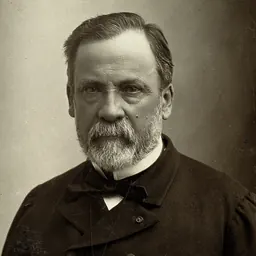
Lived 1861 – 1940 (aged 78–79). Harold R. Heaton was a cartoonist and playwright.
Harold Robertson Heaton (born January 19, 1861) was an American newspaper artist whose work focused on cartoons. His prodigious body of work contributed to the development of political cartoons. He also illustrated books and produced sketches and paintings. He left newspaper work in 1899 to begin acting on the stage, and later wrote plays as well. He returned to cartooning for six years beginning in 1908, but continued acting while doing so. He appeared in many Broadway productions through 1932. A brief retrospective on his employment with the Chicago Tribune, from October 1942, mentioned his obituary had been printed "a few years ago".
Early years Born in Salem, Illinois, he was the son of Charles Heaton, a civil engineer from England, and Amy Robertson from Missouri. Although born in Illinois, before moving to St. Louis. As a boy and young man he went by "Harry Heaton".
He attended the St. Louis School of Fine Arts then worked on the Missouri Republican in St. Louis. where he later headed the illustration department. at his own home.
These "pen pictures" as the Tribune labelled them were a series of contiguous panels, a bit like a comic strip, though without a continuous storyline. Only the central panel bore the "HRH" signature. Besides drawing, Heaton also delivered lectures on newspaper illustrating to professional societies and social groups. During the later years of the 1890s he also started taking part in amateur theatricals. Heaton left the newspaper in the Fall of 1899 to pursue a stage career.
The Inter Ocean
In the fall of 1908 Heaton re-entered journalism by joining The Inter Ocean as an editorial cartoonist. Although his cartoons with The Inter Ocean began as wide-ranging commentaries on current events, he found his niche within the world of Chicago politics. His cartoons developed a particular focus on Chicago Mayor Fred Busse and State's Attorney John E. Wayman. For this time period, he signed his work as "Harold Heaton" and often inserted a small crow into drawings as a trademark. He gave a lecture on newspaper illustration to the Illinois Woman's Press Association in 1910, and with other newspaper cartoonists contributed drawings to the Actors' Fund Day special program, distributed in Chicago theaters on April 17, 1914.
At first appearing on the front page, his daily cartoon was moved to the editorial page 3 in later years. One cartoon, called "Merely a Passenger", won acclaim from a national group of bankers meeting in Washington, D.C. to lobby Congress for financial reform. However, a retrospective by a Chicago Tribune writer many years later claimed that though Heaton had good ideas, his style while at The Inter Ocean was out of date.
Other artwork Although best known for his cartoons and drawings for newspapers, Heaton was also an accomplished artist in both black-and-white sketches and water-color landscapes. He traveled a great deal for the latter, with pictures from Maine, Florida, and Tangier being noted at a Chicago exhibition in 1900. Heaton also traveled to Spain and Morocco for a book illustrating assignment in the early 1890s, and had several illustrations for magazine stories published during 1893–1895. His black-and-white pictures were favorably received at the Chicago Society of Artists annual exhibitions at the Athenæum. His artwork of all types was annually on exhibition at Anderson's Art Gallery and O'Brien's Art Gallery.
Acting career With the death of his mother in January 1899, through its Broadway run up to its final tour in Boston during March 1901. When Gillette went to London with Sherlock Holmes, Heaton was again part of the cast, but he stayed on in England after the play closed. He spent a year in the United Kingdom with the James Welch company, playing at the Comedy Theatre in the West End of London and on tour in England and Wales with The New Clown.
Heaton's next stage work was for the American version of J. M. Barrie's The Admirable Crichton, which opened in November 1903. After it closed in March 1904, he formed a three-person troupe, Harold Heaton & Company, which played a one-act farce of his own writing called The Rat on a vaudeville circuit. Heaton then joined the touring company for The Admirable Crichton starting in October 1904.
Heaton was again cast by William Gillette for a revival of Sherlock Holmes in March 1905. Heaton also wrote another one-act play, In the Artist's Studio, for Jessie Busley to use in vaudeville. He then joined Lawrence D'Orsay's troupe for the tryouts and Broadway run of The Embassy Ball in early 1906.
Lady Jim The first full-length play Heaton wrote was this three-act comedy. Lady Jim had been purchased by Walter N. Lawrence in March 1906 as a vehicle for Hilda Spong, with rehearsals starting in August. Heaton and George Forster Platt staged the play, which featured Antoinette Perry. The play premiered on August 28, 1906, at Weber's Theatre. The New York Times was harsh and personal, asserting that "Harold Heaton" must be a nom de plume for a naive young girl, and disparaging Hilda Spong's acting. Despite some rewriting by Heaton and the producer, the show closed on September 19, 1906. Heaton spent the remainder of 1906 and part of 1907 on tour with The Embassy Ball. In early 1908 he played a role in a Julia Marlowe revival of When Knighthood Was in Flower.
Intermission During the second half of 1908, Heaton took a position with The Inter Ocean as cartoonist. His acting slowed for several years, but he still took part in Chicago-based performances. Some were for benefits, another was a work called The Stolen Story, where the cast consisted of real newspapermen from Chicago papers. In 1911 he performed in a musical comedy called The Heart Breakers by Frank R. Adams and Will M. Hough, with songs by Harold Orlob and Melville Gideon, that ran for seven weeks. His cartoons, meanwhile, continued to appear in The Inter Ocean. By late April 1914, however, the newspaper was failing financially and Heaton's cartoons for it stopped.
Later stage work
For the next year Heaton continued to live in Chicago, appearing in and staging amateur productions for a variety of clubs, social groups, and Chautauqua assemblies. Sometime in 1915 he moved to Cincinnati, Ohio where he became active in the Little Theater movement there. He gave lectures at the Schuster-Martin School of Drama and staged plays at the attached Little Playhouse Company. In April 1916 he joined the touring Redpath Chautauqua, for which he wrote a new one-act play, Account Overdue (1916).
After several years with professional touring companies, Heaton returned to Broadway in 1920 with The Guest of Honor. William Hodge wrote and starred in it, and caught the full brunt of Heywood Broun's merciless review. Heaton's next Broadway role was in The Fan, which starred Helen Spong, who had evidently forgiven him for Lady Jim. He spent three years playing revivals with touring companies, before landing a character role in the Broadway version of Mozart in November 1926.
Heaton was then cast in two more Broadway plays, both involving Zoe Akins. For The Crown Prince in 1927, Akins adapted a play by Ernest Vajda from the Hungarian. The popular success, The Greeks Had a Word for It, was written by Akins in 1930. By this time Heaton was sixty-nine years-old, and relegated to a feature role, as he would be in Three Times the Hour in 1931.
Final performances Heaton was a featured player in two Broadway productions during the first half of 1932, Happy Landing and The Boy Friend, both of which lasted less than a month.
His last known acting work was for a play called Cain's Sister. It had a three-day tryout starting September 29, 1932 at the Shubert Theatre in New Haven, Connecticut, The producer then retired the play "for revision".
Personal life When he applied for a passport in April 1891, he was recorded as being tall, with grayish-blue eyes and dark brown hair. and wrote poetry. He had an active social life in 1890's Chicago, attending parties, balls, and the opera with such notables as Mrs. Fiske and Marshall Field. He was described by a reporter as "one of the pleasantest men I ever met, and surely one of the most versatile artists who ever worked on a metropolitan newspaper". and as late as 1932 was elected president of the Cartoonists' Club of Chicago.
Works Books Events of the Week: A Pictorial Record, (1894) - First series of HRH drawings, published by the Chicago Tribune. Events of the Week: A Pictorial Record, (1895) - Second series of HRH drawings, published by the Chicago Tribune. Events of the Week: A Pictorial Record, (1896) - Third series of HRH drawings, covering from December 1, 1894, through December 1, 1895, published by the Chicago Tribune. A Friend in Need, (1905) - One-act farce presented on a matinee program by the American Academy of Dramatic Arts at the Empire Theatre, January 11, 1906. Lady Jim, (1906) - Heaton's first three-act play was not a success on Broadway. Where There Is Smoke, (1914) - One-act play, first performed by Hull House Players at the Hull House Theater. Account Overdue, (1916) - Written for the Redpath Chautaqua, and played on tour in 1916 and 1917. Alan Intrudes, (1917) - Three-act comedy, first performed in Cincinnati at Memorial Hall on March 19, 1918. The Third Generation, (1919) - Never produced. A Woman Had a Friend, (1920) - Society melodrama, never produced.
Stage performances
Don’t just read it —
keep it.
Full-length biographies made to live with: read them, listen on the way to work, watch them tonight.
- E-book
- Audio
- Video
Instant download · yours to keep · every purchase keeps this site free
Important facts
People in Harold R. Heaton's life
Named in this biography and alive at the same time




Related people
Same field, nearest in time




Contemporaries
People whose lives overlapped Harold R. Heaton's

Frequently asked questions
Who was Harold R. Heaton?
cartoonist
When was Harold R. Heaton born?
Harold R. Heaton was born on 19 January 1861 in Salem.
When did Harold R. Heaton die?
Harold R. Heaton died in 1940.
What was Harold R. Heaton's occupation?
Harold R. Heaton was a cartoonist and playwright.
Sources & further reading
Cite this page
APA: Biography.guide. (2026). Harold R. Heaton. https://biography.guide/harold-r-heaton/
MLA: "Harold R. Heaton." Biography.guide, https://biography.guide/harold-r-heaton/.
Chicago: "Harold R. Heaton." Biography.guide. https://biography.guide/harold-r-heaton/.
Data last updated: 2026-09-20 · Spot an error? Report a correction.
Page generated 2026-09-27 05:23 UTC