
About Harold Heslop
Lived 1898 – 1983 (aged 85). Harold Heslop was a British novelist.
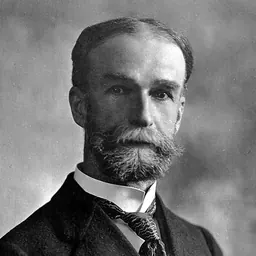
Harold Heslop (1 October 1898 – 10 November 1983) was an English writer, left-wing political activist, and coalminer, from near Bishop Auckland, County Durham. Heslop's first novel Goaf was published in 1926, but it was in a Russian translation as and did not appear in England until 1934. In 1929, he also published his first novel in England, The Gate of a Strange Field, about the 1926 United Kingdom general strike. His last novel, The Earth Beneath, was published in 1946.
Early life and education Heslop was born on 1 October 1898 in the village of Hunwick, near Bishop Auckland, County Durham, to William Heslop, coalminer, and his wife, Isabel (née Whitfield). The Heslops had been miners for several generations. Heslop attended King James I Academy on a scholarship until he was thirteen, when the family moved to Boulby on the north Yorkshire coast. Because his new home was too far from the nearest grammar school, Heslop began working underground at Boulby ironstone mine, where his father was now the manager. Shortly after, his mother died, his father remarried, and the family moved to Northumberland. Heslop then moved to South Shields and started work at Harton colliery, where he remained for eleven years.
Career In 1926, Heslop's first novel Goaf was published, but it was in a Russian translation as and did not appear in England until 1934. This novel, about mining in northern England, "sold half a million copies in Russia and made Heslop's name there", though he was only able to transfer a small part of his royalties to England.
Heslop returned to Harton in 1926, where he unsuccessfully contested a seat on the South Shields Town Council for the Labour Party, sponsored by the Miners Lodge, but because of the contraction of the coal industry he became unemployed and the Heslops moved to London, where he worked at various things. Heslop's political activity included working for the British Communist Party's general secretary, Harry Pollitt against Ramsay MacDonald for the Seaham division of Durham in the 1929 election. Subsequently, four of his novels were published in the Soviet Union, including Red Earth (1931), a utopian novel about a successful revolution in Britain which was never published in the UK. He also worked in London for the Soviet trading mission and later Intourist.
Works Heslop's literary career began in 1926 with the Russian version of Goaf and then, starting with The Gate of a Strange Field, Heslop published five novels in England between 1929 and 1946, while his autobiography, Out of the Old Earth, was published posthumously. Harold Heslops's first novel published in England, The Gate of a Strange Field is about the General Strike of 1926, which he had witnessed in London. The novel took its title from a phrase in H. G. Wells' novel Meanwhile. A more recent discussion, however, found that "the most interesting feature of the novel ... is not the study of the labour movement but of the hero's sexual repression".
Heslop's next novel Journey Beyond (1930) deals with the subject of unemployment. In 1934, the original English version of Heslop's novel Goaf was published, as well as The Crime of Peter Ropner, which is an "attempt at a crime novel from a left-wing perspective". Crime novelist Dorothy L. Sayers reviewed it, and while disliking much about it, found that it had "a crude and sordid power". Last Cage Down, set in a coal-field, was released in 1935.
Over ten years after his death, Heslop's autobiography Out of the Old Earth was published, which has been described, as a "rich recollections of childhood in the coalfield, [and] portraits of his family [along with a] fine descriptions of working life above and below ground".
Personal life On 27 March 1926 Harold Heslop married Phyllis Hannah Varndell, a clerk at Selfridges whose family was active in left-wing politics. Heslop died 10 November 1983.
Don’t just read it —
keep it.
Full-length biographies made to live with: read them, listen on the way to work, watch them tonight.
- E-book
- Audio
- Video
Instant download · yours to keep · every purchase keeps this site free
Important facts
People in Harold Heslop's life
Named in this biography and alive at the same time


Related people
Same field, nearest in time




Contemporaries
People whose lives overlapped Harold Heslop's


Frequently asked questions
Who was Harold Heslop?
British writer (1898–1983)
When was Harold Heslop born?
Harold Heslop was born on 1 October 1898 in Hunwick.
When did Harold Heslop die?
Harold Heslop died on 10 November 1983.
What was Harold Heslop's occupation?
Harold Heslop was a novelist.
What nationality was Harold Heslop?
Harold Heslop was British.
Sources & further reading
Cite this page
APA: Biography.guide. (2026). Harold Heslop. https://biography.guide/harold-heslop/
MLA: "Harold Heslop." Biography.guide, https://biography.guide/harold-heslop/.
Chicago: "Harold Heslop." Biography.guide. https://biography.guide/harold-heslop/.
Data last updated: 2026-09-20 · Spot an error? Report a correction.
Page generated 2026-09-27 05:11 UTC