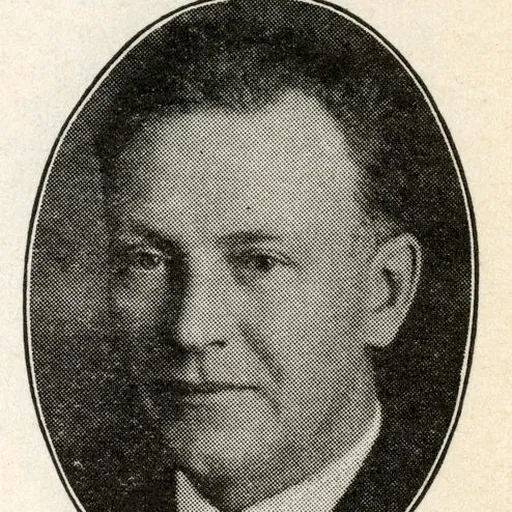
About Harold H. Barker
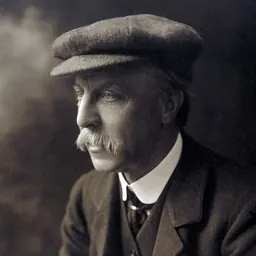
Lived 1889 – 1949 (aged 59). Harold H. Barker was an American politician.
Harold Henry Barker (15 June 1889 – 23 March 1949) was an American politician. A member of the Minnesota DFL, he served Speaker of the Minnesota House of Representatives from 1937 to 1939. He was elected to the Minnesota House of Representatives, in 1930, where he caucused with the Liberal Caucus in the then-nonpartisan body. In 1937, he was elected to serve as speaker, a position he held for two years. His father, H. W. Barker, served in the Wisconsin State Senate.
Barker would become the leader of the newly formed DFL from its creation in 1944. He was officially named State Chairman in 1946. The newly formed party found itself in an ideological struggle between the left-wing and right-wing factions of the party, with Barker leading the left.
In 1946, Barker served as the second gubernatorial candidate after of the merger of the Minnesota Democratic and Farmer-Labor Parties into the Democratic-Farmer-Labor Party, losing to Luther Youngdahl. Barker criticized Youngdahl's housing plans, stating that since Republicans retook the governorship in 1939 there have been plans to expand housing, and a lot of committee and organizations have been founded, yet actual housing development was minimal. He further criticized that the committees in charge of overseeing housing construction had no veterans, union representatives, or farmers present, and that the funding for the plans were reliant on sales tax. Barker and Youngdahl generally agreed on focusing more resources of the state towards education. Barker did not directly attack Youngdahl's plans, instead arguing that the Republicans were responsible for the underserving of rural schools, citing a 1945 decision by the Republican-led government diverting $25 million from funding from rural schools. Barker further criticized Republicans firing education officials around the state due to affiliation with the DFL, notably State Education Commissioner Dr. John G. Rockwell, and Winona State Teachers' College President Oscar Myking Mehus in 1944.
Barker also campaigned on tax reform. He planned to raise taxes on corporations, notably those involved in mining in the Mesabi Range, in order to lessen the tax burden on the people. Barker also advocated for enacting regulation on the rapidly expanding businesses of suburbia, notably department stores and chain stores that were detrimental to local small businesses.
Following his electoral defeat and an internal rebellion against him in the YDFL, Barker would lose his position as party chairman in 1948. He was replaced by political opponent Orville Freeman.
Don’t just read it —
keep it.
Full-length biographies made to live with: read them, listen on the way to work, watch them tonight.
- E-book
- Audio
- Video
Instant download · yours to keep · every purchase keeps this site free
Important facts
People in Harold H. Barker's life
Named in this biography and alive at the same time



Related people
Same field, nearest in time





Contemporaries
People whose lives overlapped Harold H. Barker's


Frequently asked questions
Who was Harold H. Barker?
American politician (1889–1949)
When was Harold H. Barker born?
Harold H. Barker was born on 15 June 1889 in Duluth.
When did Harold H. Barker die?
Harold H. Barker died on 23 March 1949.
What was Harold H. Barker's occupation?
Harold H. Barker was a politician.
What nationality was Harold H. Barker?
Harold H. Barker was American.
Sources & further reading
Cite this page
APA: Biography.guide. (2026). Harold H. Barker. https://biography.guide/harold-h-barker/
MLA: "Harold H. Barker." Biography.guide, https://biography.guide/harold-h-barker/.
Chicago: "Harold H. Barker." Biography.guide. https://biography.guide/harold-h-barker/.
Data last updated: 2026-09-20 · Spot an error? Report a correction.
Page generated 2026-09-27 05:10 UTC