
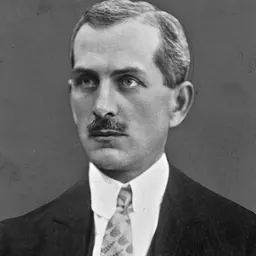
Harold Frith
Australian ornithologist and government administrator
About Harold Frith
Lived 1921 – 1982 (aged 60–61). Harold Frith was an Australian ornithologist and zoologist.
Harold James Frith (16 April 192128 June 1982) was an Australian administrator and ornithologist. He was born at Kyogle, New South Wales and studied Agricultural Science at Sydney University. Harry Frith (as he was usually known) first joined the CSIRO Division of Plant Industry but later transferred to the Division of Wildlife and carried out extensive research on malleefowl, waterfowl, especially magpie geese, and pigeons. He eventually became Chief of the Division and was instrumental in proposals that led to the establishment of Kakadu National Park.
Harry Frith was a member of the Royal Australasian Ornithologists Union (RAOU), and prominent among those pressing for reform of the organisation in the late 1960s. He was Secretary-General of the 16th International Ornithological Congress held in Canberra in 1974. Frith was elected a Fellow of the RAOU in 1974. He was an Officer of the Order of Australia.
Early life Harold James Frith was born on 16 April 1921 at Kyogle, in the north-east corner of New South Wales, the younger of two children of Richard and Elizabeth Frith. His father was a butcher later based at Lismore. Frith credited his father as a major influence on his early interest in natural history. Harry received his first rifle aged eight years and often accompanied his father to shoot pigeons for the table. On his tenth birthday he received the newly published Neville Cayley's What Bird is That?.
Move to Griffith Harry and Dorothy Frith relocated to Griffith in the Riverina district of NSW after Harry gained a position as assistant works manager and technologist at the Griffith Cannery. By May 1946, however, Frith had joined the Griffith Research Station run by the Council for Scientific and Industrial Research (CSIR, later to become CSIRO) under Eric West. Griffith was in the heart of the Murrumbidgee Irrigation Area and the CSIR research station had been established there in 1926 to carry out horticultural research and provide advice and assistance to the irrigation industry. As an assistant research officer Frith was engaged in experiments with horizontal wind fans to protect orchards against frost. His job included outreach to community and industry groups reporting on the results of his research, which were the subject of a number of his early publications.
In 1951, the officer-in-charge of the CSIRO Wildlife Survey section enlisted Harry Frith to assist with monitoring the spread of the newly released myxoma virus among rabbit populations. Frith had found himself increasingly drawn to the diverse wildlife of the district and took this opportunity to make wildlife biology the focus of his research. In July 1952 he formally transferred to the Wildlife Survey section.
Waterfowl research
After transferring to the Wildlife Survey section of the CSIRO, Frith undertook a major study into the ecology of waterfowl, specifically addressing the widespread perception that ducks were causing widespread damage to rice-crops. From 1951 to 1957 he carried out the first scientific survey of waterfowl in Australia, making extensive observations along the inland waterways of the Murray-Darling system. The period of Frith's study coincided with flood years interspersed with dry years and his data revealed that breeding in ducks was triggered by rising water levels.
In 1955, the Northern Territory administration requested the CSIRO Wildlife Survey section to investigate the impact of magpie geese on agriculture in northern Australia. The officer-in-charge, Francis Ratcliffe, asked Frith to undertake the task. Working with Stephen Davies the researchers found that magpie geese depended on moderately deep water for feeding and breeding habitats, and concluded that the geese "would not be a continuing problem to the rice industry; rather the advance of settlement would eliminate the magpie goose from the Northern Territory". Frith was in charge of the Australian Bird-Banding Scheme (within the CSIRO Wildlife Survey section) from 1960 to 1962. After Francis Radcliffe's resignation and a subsequent competitive selection process, Frith was appointed in May 1961 as officer-in-charge of the Wildlife Survey section. In 1962 the Wildlife Survey section became the Division of Wildlife Research within the CSIRO, with Frith as its chief.
Legacy Frith's life and work encompassed a period of change. When Frith began working for the CSIRO the value of native fauna and flora was seen in economic terms, to be eliminated if perceived or determined to be detrimental to economic activity. Throughout the 1960s and 1970s that mindset changed, evolving towards a recognition that the natural environment had its own intrinsic worth, that native animals and plants are “a priceless heritage to be protected and cherished”. Throughout his career as a biologist Harry Frith played a role in bringing about that perceptual change in Australian society. His influence was widespread, through his researches into the behaviour and ecology of a range of native birds and also kangaroos and the books intended for general readership that he wrote and edited. His leadership of wildlife research within the CSIRO was also significant, as well as the important influence he had on government conservation policy at both State and Federal levels.
Publications Frith was the author of more than 100 scientific papers, as well as numerous technical reports and popular articles. He was the author or editor of 14 books on wildlife and conservation, including the following: Frith, H. J. (1959), Breeding of the mallee fowl, Leipoa ocellata Gould (Megapodiidae), C.S.I.R.O. Wildlife Research: Canberra.Reprinted from the C.S.I.R.O. Wildlife Research, Vol.4, no.1, pp. 31–60, 1959. Frith, H. J. (1962), The Mallee-Fowl: The Bird that Builds an Incubator, Angus & Robertson: Sydney. Frith, H. J., & Newsome, A. E. (1966), The Kangaroo and the Game Meat Trade, Wildlife Conservation School, University of Adelaide: Adelaide ("Paper given at Wildlife Conservation School, University of Adelaide, July, 1966"). Frith, H. J. (c. 1967), Waterfowl in Australia, Angus & Robertson: Sydney. Frith, H. J., & Calaby, J. H. (1969), Kangaroos, Cheshire: Melbourne. Frith, H. J., & Costin, A. B. (eds.) (1971), Conservation, Penguin Books: Harmondsworth, Middlesex, UK. Frith, H. J. (1973), Wildlife Conservation, Angus & Robertson: Sydney. Frith, H. J., & Sawer, G. (eds.) (1974), The Murray Waters: Man, Nature and a River System, Proceedings of a Symposium, Angus & Robertson: Cremorne, NSW. Frith, H. J. (ed.) (1976), Birds in the Australian High Country, Reed: Sydney. Frith, H. J. (consultant ed.) (c. 1976), Reader's Digest Complete Book of Australian Birds, Reader's Digest Services: Surry Hills, NSW. Frith, H. J., & Calaby, J. H. (eds.) (1976), Proceedings of the 16th International Ornithological Congress, Canberra, Australia, 12–17 August 1974, Australian Academy of Science: Canberra. Frith, H. J. (1982), Pigeons and Doves of Australia, Rigby: Adelaide.
Don’t just read it —
keep it.
Full-length biographies made to live with: read them, listen on the way to work, watch them tonight.
- E-book
- Audio
- Video
Instant download · yours to keep · every purchase keeps this site free
Important facts
People in Harold Frith's life
Named in this biography and alive at the same time




Related people
Same field, nearest in time



Contemporaries
People whose lives overlapped Harold Frith's


Frequently asked questions
Who was Harold Frith?
Australian ornithologist and government administrator (1921–1982)
When was Harold Frith born?
Harold Frith was born on 1 April 1921.
When did Harold Frith die?
Harold Frith died in 1982.
What was Harold Frith's occupation?
Harold Frith was an ornithologist and zoologist.
What nationality was Harold Frith?
Harold Frith was Australian.
Sources & further reading
Cite this page
APA: Biography.guide. (2026). Harold Frith. https://biography.guide/harold-frith/
MLA: "Harold Frith." Biography.guide, https://biography.guide/harold-frith/.
Chicago: "Harold Frith." Biography.guide. https://biography.guide/harold-frith/.
Data last updated: 2026-09-20 · Spot an error? Report a correction.
Page generated 2026-09-27 05:22 UTC