
Harold Edwards
American mathematician
About Harold Edwards
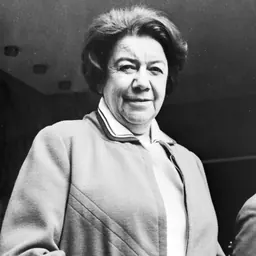
Lived 1936 – 2020 (aged 84). Harold Edwards was an American mathematician, historian of mathematics and university teacher.
Books
Higher Arithmetic: An Algorithmic Introduction to Number Theory (2008) An extension of Edwards' work in Essays in Constructive Mathematics, this textbook covers the material of a typical undergraduate number theory course, but follows a constructivist viewpoint in focusing on algorithms for solving problems rather than allowing purely existential solutions.
Essays in Constructive Mathematics (2005) Although motivated in part by the history and philosophy of mathematics, the main goal of this book is to show that advanced mathematics such as the fundamental theorem of algebra, the theory of binary quadratic forms, and the Riemann–Roch theorem can be handled in a constructivist framework. The second edition (2022) adds a new set of essays that reflect and expand upon the first. This was Edwards' final book, finished shortly before his death.
Linear Algebra, Birkhäuser, (1995)
Divisor Theory (1990) Algebraic divisors were introduced by Kronecker as an alternative to the theory of ideals. According to the citation for Edwards' Whiteman Prize, this book completes the work of Kronecker by providing "the sort of systematic and coherent exposition of divisor theory that Kronecker himself was never able to achieve." Galois theory is the study of the solutions of polynomial equations using abstract symmetry groups. This book puts the origins of the theory into their proper historical perspective, and carefully explains the mathematics in Évariste Galois' original manuscript (reproduced in translation). Mathematician Peter M. Neumann won the Lester R. Ford Award of the Mathematical Association of America in 1987 for his review of this book.
Fermat's Last Theorem: A Genetic Introduction to Algebraic Number Theory (1977) As the word "genetic" in the title implies, this book on Fermat's Last Theorem is organized in terms of the origins and historical development of the subject. It was written some years prior to Wiles' proof of the theorem, and covers research related to the theorem only up to the work of Ernst Kummer, who used p-adic numbers and ideal theory to prove the theorem for a large class of exponents, the regular primes.
Riemann's Zeta Function (1974) This book concerns the Riemann zeta function and the Riemann hypothesis on the location of the zeros of this function. It includes a translation of Riemann's original paper on these subjects, and analyzes this paper in depth; it also covers methods of computing the function such as Euler–Maclaurin summation and the Riemann–Siegel formula. However, it omits related research on other zeta functions with analogous properties to Riemann's function, as well as more recent work on the large sieve and density estimates.
Advanced Calculus: A Differential Forms Approach (1969) This textbook uses differential forms as a unifying approach to multivariate calculus. Most chapters are self-contained. As an aid to learning the material, several important tools such as the implicit function theorem are described first in the simplified setting of affine maps before being extended to differentiable maps.
Don’t just read it —
keep it.
Full-length biographies made to live with: read them, listen on the way to work, watch them tonight.
- E-book
- Audio
- Video
Instant download · yours to keep · every purchase keeps this site free
Important facts
Related people
Same field, nearest in time


Contemporaries
People whose lives overlapped Harold Edwards's





Frequently asked questions
Who was Harold Edwards?
American mathematician (1936–2020)
When was Harold Edwards born?
Harold Edwards was born on 6 August 1936 in Champaign.
When did Harold Edwards die?
Harold Edwards died on 10 November 2020 in New York City.
What was Harold Edwards's occupation?
Harold Edwards was a mathematician, historian of mathematics and university teacher.
What nationality was Harold Edwards?
Harold Edwards was American.
Sources & further reading
· DBpedia: Harold Edwards (mathematician)
Cite this page
APA: Biography.guide. (2026). Harold Edwards. https://biography.guide/harold-edwards-mathematician/
MLA: "Harold Edwards." Biography.guide, https://biography.guide/harold-edwards-mathematician/.
Chicago: "Harold Edwards." Biography.guide. https://biography.guide/harold-edwards-mathematician/.
Data last updated: 2026-09-20 · Spot an error? Report a correction.
Page generated 2026-09-27 05:01 UTC