
About Harold Brown
Lived 1927 – 2019 (aged 91). Harold Brown was an American physicist and politician.
Harold Brown (September 19, 1927 – January 4, 2019) was an American nuclear physicist who served as United States Secretary of Defense from 1977 to 1981, under President Jimmy Carter. Previously, in the John F. Kennedy and Lyndon B. Johnson administrations, he held the posts of Director of Defense Research and Engineering (1961–1965) and United States Secretary of the Air Force (1965–1969).
A child prodigy, Brown graduated from the Bronx High School of Science at age 15, and earned a Ph.D. in physics from Columbia University at age 21. As Secretary of Defense, he set the groundwork for the Camp David Accords, took part in strategic arms negotiations with the Soviet Union, and supported, unsuccessfully, ratification of the SALT II treaty.
Early life and career Brown was born in Brooklyn, New York, the son of Abraham, a lawyer who had fought in World War I, and Gertrude (Cohen) Brown, a diamond merchant's bookkeeper. His parents were secular Jews and strong supporters of President Franklin D. Roosevelt.
After a short period of teaching and postdoctoral research, Brown became a research scientist at the Radiation Laboratory at the University of California, Berkeley. At Berkeley, he played a role in the construction of the Polaris missile
U.S. Secretary of Defense Appointment and initial agenda
Although Brown had accumulated almost eight years of prior service in the Pentagon, he was the first natural scientist to become secretary of defense. He involved himself in practically all areas of departmental activity. Consistent with the Carter administration's objective to reorganize the federal government, Brown launched a comprehensive review of defense organization that eventually brought significant change. But he understood the limits to effective reform. In one of his first speeches after leaving office, "'Managing' the Defense Department-Why It Can't Be Done," at the University of Michigan in March 1981, he observed: Later, because of a substantial buildup of North Korean military forces and opposition to the troop withdrawal in the United States, the president shelved the plan, leaving approximately 40,000 U.S. troops in Korea. In establishing diplomatic relations with the People's Republic of China (PRC) on January 1, 1979, the United States formally recognized the PRC almost 30 years after its establishment. A year later Brown visited the PRC, talked with its political and military leaders, and helped lay the groundwork for limited collaboration on security issues.
Later life
After leaving the Pentagon, Brown remained in Washington, D.C., joining the Johns Hopkins University School of Advanced International Studies as a visiting professor and later the university's Foreign Policy Institute as chairman.
On January 5, 2006, he participated in a meeting at the White House of former Secretaries of Defense and State to discuss United States foreign policy with Bush administration officials.
In July 2011, Brown became a member of the United States Energy Security Council, which seeks to diminish oil's monopoly over the U.S. transportation sector and is sponsored by the Institute for the Analysis of Global Security (IAGS).
Brown died of pancreatic cancer on January 4, 2019, at the age of 91.
Don’t just read it —
keep it.
Full-length biographies made to live with: read them, listen on the way to work, watch them tonight.
- E-book
- Audio
- Video
Instant download · yours to keep · every purchase keeps this site free
Important facts
People in Harold Brown's life
Named in this biography and alive at the same time
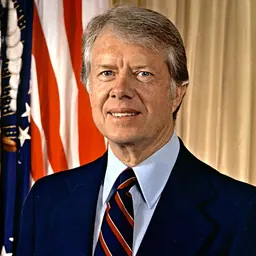

Related people
Same field, nearest in time


Contemporaries
People whose lives overlapped Harold Brown's



Frequently asked questions
Who was Harold Brown?
U.S. Secretary of Defense (1927-2019)
When was Harold Brown born?
Harold Brown was born on 19 September 1927 in New York City.
When did Harold Brown die?
Harold Brown died on 4 January 2019 in Rancho Santa Fe.
What was Harold Brown's occupation?
Harold Brown was a physicist and politician.
What nationality was Harold Brown?
Harold Brown was American.
Sources & further reading
· DBpedia: Harold Brown (secretary of defense)
Cite this page
APA: Biography.guide. (2026). Harold Brown. https://biography.guide/harold-brown-physicist/
MLA: "Harold Brown." Biography.guide, https://biography.guide/harold-brown-physicist/.
Chicago: "Harold Brown." Biography.guide. https://biography.guide/harold-brown-physicist/.
Data last updated: 2026-09-20 · Spot an error? Report a correction.
Page generated 2026-09-27 05:33 UTC