
About Hariprasad Chaurasia
Born 1938. Hariprasad Chaurasia is an Indian composer, flautist, university teacher and music director.
Hariprasad Chaurasia (born 1 July 1938) is an Indian classical flautist and composer who plays the bansuri in the Hindustani classical tradition. Starting in the late 1950s, he developed the bansuri as a concert instrument through an approach drawing on vocal and instrumental techniques of Hindustani music, and became one of India's internationally known classical musicians.
Born into a family with no professional musical background, Chaurasia initially trained as a wrestler at the insistence of his father while secretly studying music. He began his professional career with All India Radio (AIR) in Cuttack in 1957 before being transferred to Bombay in 1962, where he became active in both classical music and the Hindi film industry.
He received the Sangeet Natak Akademi Award in 1984, the Padma Bhushan in 1992 and India's second higest civilian honour, the Padma Vibhushan in 2000. In 2011 he was elected a Fellow of the Sangeet Natak Akademi, its highest honour.
Early life and education Chaurasia was born in Allahabad (present day Prayagraj) in the United Provinces (present Uttar Pradesh). His mother died when he was six years old, after which he was brought up by his father, Chhedilal Pehelwan, who was a professional wrestler. He had to learn music without his father's knowledge, as his father wanted him to become a wrestler. Chaurasia did go to the Akhada and trained with his father for some time, although he also started learning stenography and Hindustani vocal music from his neighbour, Pandit Rajaram at the age of 15. Later, he switched to playing the flute under the tutelage of Bholanath Prasanna of Varanasi for eight years. |Hariprasad Chaurasiaa
Career
Chaurasia first worked as a stenographer in Allahabad while continuing to practise music privately. He joined the All India Radio, Cuttack, Odisha in 1957 and worked as a composer and performer. This relocation helped him him to leave Allahabad and pursue music as a profession. Here after working four year he was transferred to Mumbai. Much later, while working for All India Radio, he received guidance from the reclusive surbahar player Annapurna Devi of Maihar gharana, daughter of Baba Allaudin Khan. She only agreed to teach him if he was willing to unlearn all that he had learnt until then. Another version is that she only agreed to teach him after he took the decision to switch from right-handed to left-handed playing to show her his commitment. In any case Chaurasia plays left-handed to this day.
In 1967, Chaurasia, santoor player Shivkumar Sharma and slide guitarist Brij Bhushan Kabra recorded the instrumental album Call of the Valley, it marked the beginning of Chaurasia's long professional association with Sharma. The album was widely circulated in India and abroad and became one of the best-known recordings associated with the three musicians, AllMusic reviewer Ken Hunt advises that "If the newcomer buys only one Indian classical recording, it should be "Call of the Valley"." It is listed in the book 1001 Albums You Must Hear Before You Die.
Starting 1970s, in a career stretching over six decades, Chaurasia toured locally and internationally extensively, as a soloist and in jugalbandi performances, performing at venues like Carnegie Hall, the Royal Albert Hall and the Kremlin.
Film music Apart from classical music, Hariprasad has collaborated with Shivkumar Sharma, forming a composing duo called Shiv-Hari. The pair composed music for many popular movies, including Silsila and Chandni, and created some highly popular songs, such as "Dekha Ek Khwab", "Yeh Kahan Aa Gaye Hum", "Neela Aasman So Gaya" and "Rang Barse". The duo encouraged actor Amitabh Bachchan to sing in the film Silsila, including on song "Rang Barse".
Chaurasia also collaborated with Bhubaneswar Mishra, forming the pair "Bhuban-Hari" (in line with Shiv-Hari), and the pair composed music for many Odia films including Samaya (1975) and Gapa Hele Bi Sata (1976), creating numerous songs that were hugely popular in the state. These include Muje janena kaha baata (sung by Suman Kalyanpur; movie: Gapa helebi Sata); and all songs from Maa o Mamata, and many more.
International collaborations He has collaborated with several western musicians, including John McLaughlin, Jan Garbarek, and Ken Lauber, and has composed music for Indian films. Chaurasia also played on The Beatles' 1968 B-side "The Inner Light", which was written by George Harrison. He also played with George Harrison on his first solo release, Wonderwall Music, and with Harrison, Ravi Shankar and others on the Dark Horse Records release Shankar Family & Friends (1974). In December 1986 he recorded Making Music (1987) with tabla player Zakir Hussain, guitarist John McLaughlin and Norwegian saxophonist Jan Garbarek, it featured improvisations both in Hindustani and European music.
In 1997, Chaurasia participated in the revived version of John McLaughlin's Indo-jazz group Shakti, known as Remember Shakti, and took part in its series of concerts in the United Kingdom.
Musical style
Chaurasia's playing is known for its lyrical, voice-like quality and for bringing the bansuri into the extended form of Hindustani classical music, with detailed alap, jor and jhala. An key influence on his style was his training under Annapurna Devi of the Maihar gharana. As she was not a flute player, she taught him by singing the musical phrases and ideas she wanted him to learn, which Chaurasia then reproduced on the flute. Chaurasia later explained that this taught him to think of the flute simply as a medium for expressing music, rather than limiting himself to techniques specific to the instrument.
Teaching Teaching became an increasingly important part of Chaurasia's later career, especially in the traditional guru–shishya model. In 2002 he established the Vrindaban Gurukul in Mumbai with support from the Sir Ratan Tata Trust, and formally inaugurated with an overnight concert around Krishna Janmashtami in 2002. A second Vrindaban Gurukul opened in Bhubaneswar in 2010. A role he continued even when the conservatory was incorporated into Codarts. In 2008, the Netherlands appointed him an "Officer of the Order of Orange-Nassau" for his musical contribution, presented by Princess Máxima. His second marriage after a few years, was with Anuradha Roy, a classical vocalist who he met while working a AIR Cuttack. He has three sons. With first wife Kamala Devi he has two sons, Vinay and Ajay. With Anuradha, Chaurasia has a son named Rajeev. Chaurasia has five granddaughters and a grandson. Kamala Devi died in her early forties after a period of illness. ) against Chaurasia and biographer Surjit Singh, alleging that the authorised biography Woodwinds of Change misrepresented the order of his marriages by suggesting that he married Kamala after Anuradha "Angurbala" Roy, which they argued implied that they were illegitimate. The family dispute resurfaced in 2013 after the release of the documentary Bansuri Guru, directed by Chaurasia's son Rajeev Chaurasia. Vinay Chaurasia criticised the film for omitting his mother Kamala Devi, meanwhile their previous their lawsuit concerning Woodwinds of Change still continued. In 2026, The Indian Express similarly noted that the biographical musical Bansuri Jab Gaane Lage, written by Chaurasia's daughter-in-law Pushpanjali and produced by Rajeev, portrayed several women important to his life but omitted Kamala Devi and their two sons.
His nephew Rakesh Chaurasia is also a flautist and carrying forward the family legacy.
In popular culture The 2013 documentary film Bansuri Guru features the life and legacy of Chaurasia and was directed by the musician's son Rajeev Chaurasia and produced by the Films Division Ministry of Information and Broadcasting, Government of India. A 2026 stage musical Bansuri Jab Gaane Lage based on his life and career was produced by his family members.
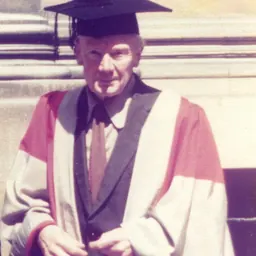
Awards and honours Sangeet Natak Academi Award - 1984 Konark Samman - 1992 Yash Bharati Samman - 1994 Padma Vibhushan - 2000 Honorary Doctorate, North Orissa University - 2008 Honorary Doctorate, Utkal University - 2011 Sangeet Natak Akademi Fellowship (Ratna Sadasya) – 2011
National Eminence award, NADA VIDYA BHARTI by Visakha Music and Dance Academy, Vizag - 2009 The 25 Greatest Global Living Legends In India by NDTV - 2013 Gansamradni Lata Mangeshkar Award - 2021-22 Lokmat Sur Jyotsna National Music Award 2023 Legend Award for his contribution to Indian music
Discography
Albums These are major albums released by Hariprasad Chaurasia
1967 Call of the Valley with Shivkumar Sharma and Brij Bhushan Kabra 1978 Krishnadhwani 60 1981 Pt. Hariprasad Chaurasia - Flute 1984 Pt. Hariprasad Chaurasia - Flute (different set of ragas, same album name) 1987 Morning to Midnight Ragas - Morning Ragas 1988 Nothing But Wind - Composed by the renowned musician "Isaignani" Ilaiyaraaja Call of the Valley 1989 Venu Live in Ahmedabad '89 1990 Immortal Series 1991 Megh Malhar 1992 Night Ragas Live in Amsterdam '92 Morning to Midnight Ragas - Afternoon Ragas All time Favourites Live from Sawai Gandharva Music Festival - Video (VHS) Raga-s DU Nord Et Du Sud Immortal Series - Flute Fantasia 1993 Indian Classical Masters Daylight Ragas Flute - Hariprasad Chaurasia Soundscapes - Music of the Rivers - Hari Prasad Chaurasia 1994 Thumri - The Music of Love In A Mellow Mood Possession Immortal Series - Devine Drupad Classic Greats1 - Ideas on Flute 1995 In Live Concert Cascades of Hindustani Music Maharishi Gandharva Veda - Pandit Hari Prasad Chaurasia - 4 am to 7 am Raga Bhairava: Integration Maharishi Gandharva Veda - Pandit Hari Prasad Chaurasia - 7 am to 10 am Raga Gurjari Todi: Compassion Maharishi Gandharva Veda - Pandit Hari Prasad Chaurasia - 7 am to 10 am Raga Jaita
English Some of his music was used in Mithaq Kazimi's 16 Days in Afghanistan (2007).
Biblliography Vasudev, Uma (2005). Hariprasad Chaurasia: Romance of the Bamboo Reed. Shubhi Publications. ISBN 978-81-8290-042-4. Singh, Surjit (2008). Woodwinds of Change: The Authorized Biography of Padmavibhushan Hariprasad Chaurasia. Richa's Enterprise. ISBN 978-81-906927-0-0. Tournier, Henri (2010). Hariprasad Chaurasia et l'art de l'improvisation: Découverte pas à pas de la musique de l'Inde du Nord. Accords Croisés–Harmonia Mundi. Tournier, Henri. Hariprasad Chaurasia and the Art of Improvisation * Saran, Sathya (2019). Breath of Gold: Hariprasad Chaurasia. Penguin.
Singh, Surjit (2010).Bansuri Samrat : Hariprasad Chaurasia (Hindi). Prabhat Prakashan. ASIN:B071XMLL7F.
Don’t just read it —
keep it.
Full-length biographies made to live with: read them, listen on the way to work, watch them tonight.
- E-book
- Audio
- Video
Instant download · yours to keep · every purchase keeps this site free
Important facts
People in Hariprasad Chaurasia's life
Named in this biography and alive at the same time



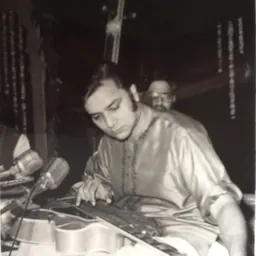
Related people
Same field, nearest in time



Contemporaries
People whose lives overlapped Hariprasad Chaurasia's



Frequently asked questions
Who is Hariprasad Chaurasia?
Indian bansuri player
When was Hariprasad Chaurasia born?
Hariprasad Chaurasia was born on 1 July 1938 in Prayagraj.
What is Hariprasad Chaurasia's occupation?
Hariprasad Chaurasia is a composer, flautist, university teacher and music director.
What nationality is Hariprasad Chaurasia?
Hariprasad Chaurasia is Indian.
Sources & further reading
· Wikipedia: Hariprasad Chaurasia
· DBpedia: Hariprasad Chaurasia
Cite this page
APA: Biography.guide. (2026). Hariprasad Chaurasia. https://biography.guide/hariprasad-chaurasia/
MLA: "Hariprasad Chaurasia." Biography.guide, https://biography.guide/hariprasad-chaurasia/.
Chicago: "Hariprasad Chaurasia." Biography.guide. https://biography.guide/hariprasad-chaurasia/.
Data last updated: 2026-09-26 · Spot an error? Report a correction.
Page generated 2026-09-27 05:16 UTC