
About Shivkumar Sharma
Lived 1938 – 2022 (aged 84). Shivkumar Sharma was an Indian santurist, composer, music composer and musician.
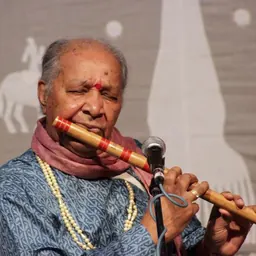
Shivkumar Sharma (13 January 1938 – 10 May 2022) was an Indian classical musician and santoor player who is credited with adapting the santoor for Indian classical music. As a music composer, he collaborated with Indian flautist Hariprasad Chaurasia under the collaborative name Shiv–Hari and composed music for such hit Indian films as Faasle, Chandni (1989), and Lamhe (1991).
Sharma was awarded the Sangeet Natak Akademi Award in 1986 and the Padma Shri and Padma Vibhushan (India's fourth and second highest civilian awards) in 1991 and 2001.
Early life Sharma was born to a Dogra family of the Brahmin caste, on 13 January 1938, in Jammu, in the princely state of Jammu and Kashmir in British India (now in Jammu and Kashmir, India).
Shivkumar's grandfather was the Rajpurohit (chief priest) of the royal temple of Pratap Singh, the king of the princely state of Jammu and Kashmir. His father started teaching him vocals and tabla, when he was just five.
Sharma spent his early years in Srinagar and saw the styles that integrated Sufi notes with traditional Kashmiri folk music and had his son play the instrument that was then new to Indian classical music. The one-hour-long rendition of Raga Yaman at his first live performance in 1955, left his audience in Mumbai shouting ‘Encore!’
Career
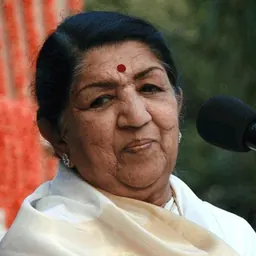
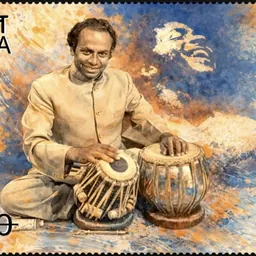
Starting his career playing the santoor with his father, Sharma is credited with introducing the santoor as a popular Indian classical music instrument. He recorded his first solo album in 1960. Further, he composed music for many Hindi films in collaboration with Chaurasia, starting with Silsila (1981). Sharma also played tabla including in the popular song "Mo Se Chhal Kiye Jaaye" sung by Lata Mangeshkar in the 1965 film Guide, on the insistence of music director S. D. Burman. However, Sharma's focus remained on classic music rather than film songs; he said, "Classical music is not for entertainment. It is to take you on a meditative journey, ye toh mehsoos karne ki cheez hai (This has to be experienced)."
Sharma was awarded the Sangeet Natak Akadeemi Award in 1986, the Padma Shri, India's fourth highest civilian award in 1991, and the Padma Bhushan, India's third highest civilian award in 2001. and had two sons, Rohit, who learned Sitar and is currently an executive with Sony India and they performed together since 1996. In a 1999 interview, Sharma stated that he chose Rahul as his shishya, because he thought he had the "gift of God".
Sharma died on 10 May 2022 from a cardiac arrest. He was 84 years old. He had kidney failure for the last few months and went through regular dialysis. He received a state funeral at Pawan Hans Juhu aerodrome, Mumbai, on 11 May 2022.
Contributing artist Source
Awards
Sharma was the recipient of national and international awards, including an honorary citizenship of the city of Baltimore, USA, in 1985, the Sangeet Natak Akademi Award in 1986, the Padma Shri in 1991, and the Padma Vibhushan in 2001.
Some of his other awards included:
Platinum Disc for Call of the Valley Platinum Disc for music of film Silsila Gold Disc for music of film Faasle Platinum Disc for music of film Chandni Pandit Chatur Lal Excellence Award – 2015
Don’t just read it —
keep it.
Full-length biographies made to live with: read them, listen on the way to work, watch them tonight.
- E-book
- Audio
- Video
Instant download · yours to keep · every purchase keeps this site free
Important facts
People in Shivkumar Sharma's life
Named in this biography and alive at the same time

Related people
Same field, nearest in time



Contemporaries
People whose lives overlapped Shivkumar Sharma's


Frequently asked questions
Who was Shivkumar Sharma?
Indian classical musician (1938–2022)
When was Shivkumar Sharma born?
Shivkumar Sharma was born on 13 January 1938 in Jammu.
When did Shivkumar Sharma die?
Shivkumar Sharma died on 10 May 2022 in Mumbai.
What was Shivkumar Sharma's occupation?
Shivkumar Sharma was a santurist, composer, music composer and musician.
What nationality was Shivkumar Sharma?
Shivkumar Sharma was Indian.
Sources & further reading
Cite this page
APA: Biography.guide. (2026). Shivkumar Sharma. https://biography.guide/shivkumar-sharma/
MLA: "Shivkumar Sharma." Biography.guide, https://biography.guide/shivkumar-sharma/.
Chicago: "Shivkumar Sharma." Biography.guide. https://biography.guide/shivkumar-sharma/.
Data last updated: 2026-09-25 · Spot an error? Report a correction.
Page generated 2026-09-27 05:12 UTC