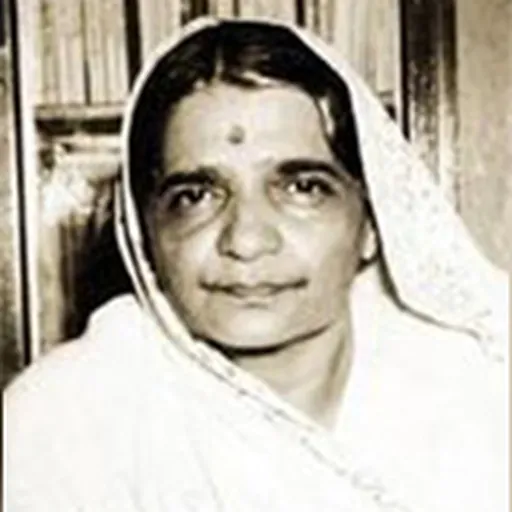
Hansa Jivraj Mehta
Reformist, social activist, freedom-fighter and educator and writer of India
About Hansa Jivraj Mehta
Lived 1897 – 1995 (aged 97). Hansa Jivraj Mehta was an Indian academic, activist, politician, women's rights activist, children's writer and translator.
Hansa Jivraj Mehta (; 3 July 1897 – 4 April 1995) was an Indian reformist, social activist, educator, independence activist, feminist and writer. She was one of only two women delegates working alongside Eleanor Roosevelt in the UN Human Rights Commission 1946-48 ensuring the wording "all human beings" instead of "all men" in the Universal Declaration of Human Rights.
Early life Hansa Manubhai Mehta was born on 3 July 1897 in Surat, now in Gujarat. She was the daughter of Manubhai Mehta, philosophy professor at Baroda College (now Maharaja Sayajirao University of Baroda) She lobbied for civil code that would lead to gender equality, meant to eventually supersede religious laws. She advocated for equality and justice for women in India.
Mehta was elected to Bombay Schools Committee in 1926 and founded, During the drafting process, one of the major debates concerned the text of Article 1, which initially used the phrase “All men.” Mehta was responsible for changing the language of the Universal Declaration of Human Rights from "all men are born free and equal" to "all human beings are born free and equal", highlighting the need for gender equality. While Roosevelt asserted that the use of the word "men" was “generally accepted to include all human beings,” Mehta insisted that the language should be changed. Mehta strongly argued for public participation in the work of the Commission. She also argued for an effective enforcement mechanism
Mehta later went on to become the vice chairman of the Human Rights Commission of the United Nations in 1950. She was also a member of the executive board of UNESCO.
From 1946 to 1948, Mehta served as the vice chancellor of the Shreemati Nathibai Damodar Thackersey Women’s University, and from 1949 to 1958 as the Vice-Chancellor of the Maharaja Sayajirao University of Baroda, making her the first woman to act in that role at an Indian co-educational university. Hansa Mehta was "an unusual person" who wanted "the Baroda University to be a centre of excellence and to be different from other Indian universities... She had selected young men and women from all over the country to staff the departments. She took a keen interest in the university's functioning and activities, and she had to intervene frequently to see that scholars could get on with their work and the administrative staff did not block their way. Several of the latter were men with small minds and could block any attempt at change but they all had a wholesome fear of Mrs Mehta." Srivinas himself was appointed as a profesor at a very young age because "Hansa Mehta had taken the risk of appointing an unknown young man in preference to Professor Radhakamal Mukerjee.
The U.N. holds a discussion series in her name, the Dr. Hansa Mehta Dialogue. The first installement took place in 2021 and centered on women's economic empowerment following the COVID-19 pandemic. The series aims to raise global awareness and conversation about gender equality, women's, and human rights. When she was elected the Vice-President of the International Alliance of Women in August 1946, she had presented the Charter at its Interlaken Congress. She had also presented the Charter to several other bodies including the Cabinet Mission, and the UN Sub-Commission on the Status of Women. Leaders of the feminist campaign for election to the Constituent Assembly, wanted Hansa Mehta to be elected because the Constitution would design the fundamental rights of the future. Eventually, she, along with Rajkumari Amrit Kaur were elected to the Fundamental Rights Sub-Committee of the Constituent Assembly of India and made some of the most significant interventions during its discussions. The notes of dissent written by Hansa Mehta and Rajkumari Amrit Kaur include their objection to compulsory military service, the freedom of practice of religion, and the demand to make the Directive Principles of State Policy fundamental to the country's governance. These notes are considered as an expression of "women's determined refusal to be appropriated by the dominant discourses of the Constituent Assembly."
Hansa Mehta participated in the Constituent Assembly's discussions on the Hindu Code Bill during its legislative sessions. While criticizing the provisions for adoption in the proposed Bill, she reminded the Constituent Assembly that "We are a secular State. We want to be a secular State. Adoption in Hindu law is for religious purposes. Why should a secular State have anything to do with a religious custom?"
Contribution to Literature
Hansa Mehta was a dedicated reader of classical Indian literature. As the Vice Chancellor of the MS University Baroda, Hansa Mehta had also taken a keen interest in the preparation and publication of the Critical Edition of the Ramayana on the pattern of the Critical Edition of the Mahabharata edited by the Bhandarkar Oriental Research Institute, Pune. She presided over the opening of the Ramayana Department at the Oriental Institute of the University in 1951. In 1954, she inaugurated the collation section for the Ramayana at the institute. Subsequently, when the first edition of the Critical Edition of The Valmiki Ramayana was published in 1961, it was dedicated to her. Besides the Ramayana, she ensured that MS University Baroda undertook projects to publish other monumental works of classical India.
Mehta wrote several children's books in Gujarati, including Arunnu Adbhut Swapna (1934), Bablana Parakramo (1929), Balvartavali Part 1-2 (1926, 1929). She translated some books of Valmiki Ramayana: Aranyakanda, Balakanda and Sundarakanda. She translated many English stories, including Gulliver's Travels. She had also adapted some plays of Shakespeare. Her essays were collected and published as Ketlak Lekho (1978).
Don’t just read it —
keep it.
Full-length biographies made to live with: read them, listen on the way to work, watch them tonight.
- E-book
- Audio
- Video
Instant download · yours to keep · every purchase keeps this site free
Important facts
People in Hansa Jivraj Mehta's life
Named in this biography and alive at the same time



Related people
Same field, nearest in time


Contemporaries
People whose lives overlapped Hansa Jivraj Mehta's


Frequently asked questions
Who was Hansa Jivraj Mehta?
reformist, social activist, freedom-fighter and educator and writer of India
When was Hansa Jivraj Mehta born?
Hansa Jivraj Mehta was born on 3 July 1897 in Surat.
When did Hansa Jivraj Mehta die?
Hansa Jivraj Mehta died on 4 April 1995 in Mumbai.
What was Hansa Jivraj Mehta's occupation?
Hansa Jivraj Mehta was an academic, activist, politician, women's rights activist, children's writer and translator.
What nationality was Hansa Jivraj Mehta?
Hansa Jivraj Mehta was Indian.
Sources & further reading
· Wikipedia: Hansa Jivraj Mehta
Cite this page
APA: Biography.guide. (2026). Hansa Jivraj Mehta. https://biography.guide/hansa-jivraj-mehta/
MLA: "Hansa Jivraj Mehta." Biography.guide, https://biography.guide/hansa-jivraj-mehta/.
Chicago: "Hansa Jivraj Mehta." Biography.guide. https://biography.guide/hansa-jivraj-mehta/.
Data last updated: 2026-09-23 · Spot an error? Report a correction.
Portrait: Wikimedia Commons · author & licence
Page generated 2026-09-27 05:07 UTC