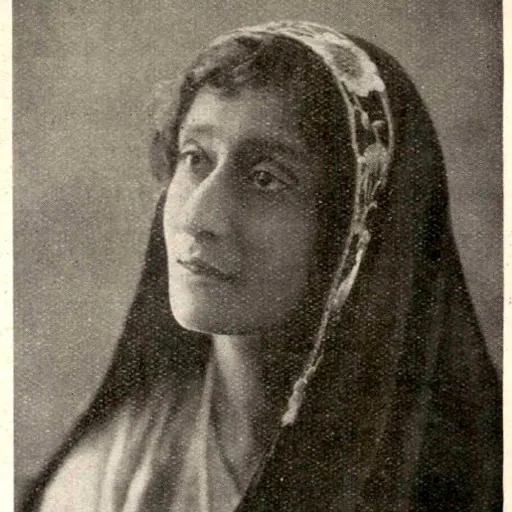
About Amrit Kaur
Lived 1889 – 1964 (aged 75). Amrit Kaur was an Indian politician, activist and freedom fighter.
Rajkumari Bibiji Amrit Kaur DStJ (née Ahluwalia; 2 February 1887 – 6 February 1964) was an Indian activist and politician. Following her long-lasting association with the Indian independence movement, she was appointed the first and the longest serving Health Minister of India in 1947 and remained in office until 1957. She also held the charge of Sports Minister and Urban Development Minister and was instrumental in setting up the National Institute of Sports, Patiala. During her tenure, Kaur ushered in several healthcare reforms in India and is widely remembered for her contributions to the sector and her advocacy of women's rights. Kaur was also a member of the Constituent Assembly of India, the body that framed the Constitution of India.
Kaur was raised as a Christian, and had her early education in Sherborne School for Girls in Dorset, England, and had her college education at Oxford University. After completing her education in England, she returned to India in 1918. Although she was, at the time of her death, a practicing Christian, she was cremated according to family customs and her funeral was presided over by the SGPC. Kaur had never married, and had no children. She was strongly opposed to the practice of purdah and to child marriage, and campaigned to abolish the devadasi system in India. and testified before the Lothian Committee on Indian franchise and constitutional reforms, and before the Joint Select Committee of British Parliament on Indian constitutional reforms.
Kaur served as the Chairperson of the All India Women's Education Fund Association. She was a member of the Executive Committee of Lady Irwin College in New Delhi. She was sent as a member of the Indian delegation to UNESCO conferences in London and Paris in 1945 and 1946, respectively. She also served as a member of the Board of Trustees of the All India Spinners' Association.
Kaur worked to reduce illiteracy, and eradicate the custom of child marriages and the purdah system for women, which were then prevalent among some Indian communities.
Representative of the Christian Indian community Raj Kumari Amrit Kaur was a Punjabi Christian and was linked with several Christian missionary organizations around the world.
AIIMS (All India Institutes of Medical Sciences ) On February 18, 1956, the then Minister of Health, Rajkumari Amrit Kaur, introduced a new bill in the Lok Sabha (House of the People). In her speech, Kaur said:
The creation of a major central institute for post-graduate medical education and research had been earlier recommended by the Health survey of the government of India. By 1956, the AIIMS (All India Institutes of Medical Sciences) was formed as an autonomous institution through an Act of Parliament.
Member of the Constituent Assembly
Ninety-three cases of penicillin, a gift from the Canadian Red Cross to India arrived at New Delhi in a special plane from Canada on 17 October 1947. Presenting the gift to Amrit Kaur, the then Health Minister in the Government of India at the Palam aerodrome. Jivraj Narayan Mehta, Director General of Health Services appears on the left and standing on the right is Sardar Balwant Singh Puri of the Indian Red Cross.
Following India's independence from the colonial rule in August 1947, Kaur was elected from the United Provinces to the Constituent Assembly of India, the government body that was assigned to design the Constitution of India. She was also a member of Sub-Committee on Fundamental Rights and Sub-Committee on Minorities. As a member of the Constituent Assembly, she supported a proposal for a Uniform Civil Code in India.
Health Minister After India's independence, Amrit Kaur became part of Jawaharlal Nehru's first Cabinet; she was the first woman to hold Cabinet rank, serving for ten years. In January 1949, she was appointed a Dame of the Order of Saint John (DStJ). She was assigned the Ministry of Health. In 1956, Kaur was awarded an honorary degree of Doctor of Laws by the Princeton University.
Kaur believed that the only proper method of birth control was continence, and promoted the rhythm method of birth control in India. Government money was not spent on contraceptives, and instead women were given beads to keep track of "safe" days (green) and "baby" days (black). and was named TIME Magazine's Woman of the Year in 1947.
Don’t just read it —
keep it.
Full-length biographies made to live with: read them, listen on the way to work, watch them tonight.
- E-book
- Audio
- Video
Instant download · yours to keep · every purchase keeps this site free
Important facts
People in Amrit Kaur's life
Named in this biography and alive at the same time
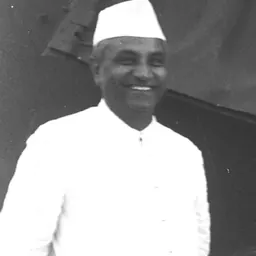


Related people
Same field, nearest in time






Contemporaries
People whose lives overlapped Amrit Kaur's


Frequently asked questions
Who was Amrit Kaur?
Indian politician (1889–1964)
When was Amrit Kaur born?
Amrit Kaur was born on 2 February 1889 in Lucknow.
When did Amrit Kaur die?
Amrit Kaur died on 6 February 1964 in New Delhi.
What was Amrit Kaur's occupation?
Amrit Kaur was a politician, activist and freedom fighter.
What nationality was Amrit Kaur?
Amrit Kaur was Indian.
Sources & further reading
Cite this page
APA: Biography.guide. (2026). Amrit Kaur. https://biography.guide/amrit-kaur-politician/
MLA: "Amrit Kaur." Biography.guide, https://biography.guide/amrit-kaur-politician/.
Chicago: "Amrit Kaur." Biography.guide. https://biography.guide/amrit-kaur-politician/.
Data last updated: 2026-09-22 · Spot an error? Report a correction.
Portrait: Wikimedia Commons · author & licence
Page generated 2026-09-27 05:02 UTC