
About Hans Wildermann
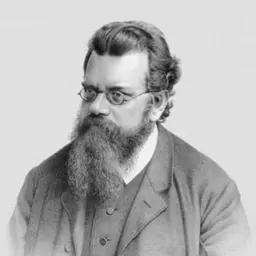
Lived 1884 – 1954 (aged 70). Hans Wildermann was a German sculptor, painter, scenographer, graphic artist, exlibrist and designer.
Hans Wilhelm Wildermann (21 February 1884 ) was a German stage designer, painter and sculptor.
Life
Wildermann was born in Cologne the son of the authorised agent Heinrich W. Wildermann and his wife Maria Wildermann, née Röhr. He first attended schools in Recklinghausen and Cologne and then studied at the Kunstakademie Düsseldorf, the Universität der Künste Berlin and the Akademie der Bildenden Künste München. In Düsseldorf, where he studied from 1900 to 1903, Peter Janssen and Willy Spatz were his teachers.
From 1907, Wildermann lived again in his home town, where he worked under Max Martersteig and his conductor Otto Lohse on the decoration of the Bühnen der Stadt Köln and as a sculptor. Martersteig had seen Wildermann's etching Tor der Phantasie. Contact then arose through Lohse's wife, in whose salon the theatre world from Germany and other countries met. Wildermann then participated in the 1911 Opera Festival and the following year took part in the Cologne Sonderbund exhibition, where he created the group of figures "Young Man with Pony" and "Girl with Deer" for the forecourt of the exhibition hall at the Aachener Tor which later stood in the green spaces of until World War II. In 1912 the .
Until the end of the First World War, he worked mainly as a sculptor, painter and graphic artist. Somehow this doesn't really fit in anywhere, he seems to have been constantly on the move in all the arts during that time.
In 1912, brought him to the Stadttheater Essen as a guest stage designer. A year later, in 1913, he went to Munich, where he met Paul Klee. This was followed by collaborations with the Berlin Opera House, the Nationaltheater München and the Opernhaus Leipzig. In August 1919, Wildermann again followed Maurach, who was now artistic director at the Städtische Bühnen Dortmund. In 1920 he then married Erna Maria Concordia Hoheisel in Berlin.
Wildermann and National Socialism Already in the 1920s, Wildermann had a deep friendship with the nationalist and, since 1933, national-socialist Regensburg music book publisher Gustav Bosse. Bosse had him illustrate the Almanach der Deutschen Musikbücherei (1920-1927) extensively and dedicated a separate publishing line to him, Hans-Wildermann-Werke, in which almost the entire graphic work had already appeared in 1923. Wildermann cut the Anton Bruckner Medal of the International Bruckner Society in 1936 on the occasion of the unveiling of Anton Bruckner's bust in the Valhalla on 6 June 1937; a commission that once again emanated from Bosse. In 1942, he illustrated the book Italian Poetry from Dante to Mussolini - An Anthology (Gauverlag-NS-Silesia), and in the same year was honoured with Siegmund Skraup's book Die Oper als lebendiges Theater by illustrating 35 stage sets. His illustrations for Die Schildbürger appeared in the for the 63,000th time in 1942. For his 60th birthday in 1944, the magazine published – Organ of the Office of Music at the Fuehrer's Commissioner for the Supervision of All Spiritual and Ideological Training and Education of the NSDAP the homage by Carl Niessen Hans Wildermann als Bühnenbildner (issue 1, ).
Achievements Wildermann began his career during the economically difficult period of the Weimar Republic. However, he used the financial bottlenecks as an opportunity and implemented new developments from painting in stage design. Instead of elaborate, decorative scenery, he used simple shapes and achieved desired effects with colours and lighting.
In addition to his work as a stage designer, Wildermann always worked as a sculptor, painter and graphic artist. The Museum für Kunst und Kulturgeschichte in Dortmund, dedicated a place to him in its permanent exhibition. Cologne, Bismarckstr. 7 (war-destroyed) Faust am Meer, 1911, Wandgemälde im Deutschen Theater, Christian Morgenstern, 1918, Bronzeplastik (1933 im Städtischen Museum, Darmstadt). Johannes der Täufer, 1924, wooden statue. Otto-Lohse-Urne (mit 3 Figuren), 1925, Bronzetempelchen zu Ehren von Otto Lohse. Liegende-Madonna, 1928, Holzplastik.
Cycles Faust-Wirklichkeiten, 1909 to 1919, collection with 49 prints., created on the occasion of Faust productions by Max Martersteig.
Single pages Vier Elemente, 1922, Grafik.
Don’t just read it —
keep it.
Full-length biographies made to live with: read them, listen on the way to work, watch them tonight.
- E-book
- Audio
- Video
Instant download · yours to keep · every purchase keeps this site free
Important facts
People in Hans Wildermann's life
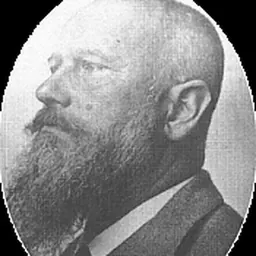
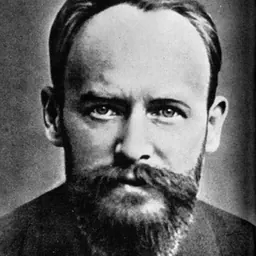
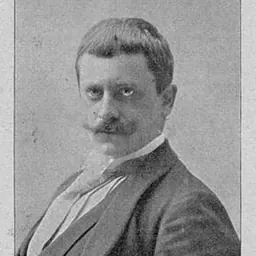
Named in this biography and alive at the same time





Related people
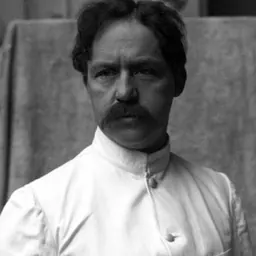
Same field, nearest in time


Contemporaries
People whose lives overlapped Hans Wildermann's


Frequently asked questions
Who was Hans Wildermann?
German sculptor and painter (1884-1954)
When was Hans Wildermann born?
Hans Wildermann was born on 21 February 1884 in Kalk.
When did Hans Wildermann die?
Hans Wildermann died on 1 November 1954 in Cologne.
What was Hans Wildermann's occupation?
Hans Wildermann was a sculptor, painter, scenographer, graphic artist, exlibrist and designer.
What nationality was Hans Wildermann?
Hans Wildermann was German.
Sources & further reading
Cite this page
APA: Biography.guide. (2026). Hans Wildermann. https://biography.guide/hans-wildermann/
MLA: "Hans Wildermann." Biography.guide, https://biography.guide/hans-wildermann/.
Chicago: "Hans Wildermann." Biography.guide. https://biography.guide/hans-wildermann/.
Data last updated: 2026-09-20 · Spot an error? Report a correction.
Page generated 2026-09-27 05:15 UTC