
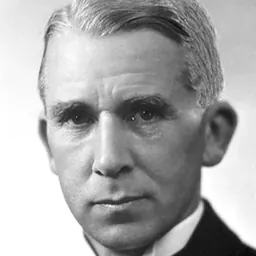
Hans Weik
German flying ace
About Hans Weik
Lived 1922 – 2001 (aged 78).
Hans Weik (6 July 1922 – 5 June 2001) was a former German Luftwaffe fighter ace and recipient of the Knight's Cross of the Iron Cross during World War II. He is credited with 36 victories achieved in only 85 combat missions, including 25 victories over the Western Front. Following World War II, Weik became an architect and died on 5 June 2001 in Heidenheim an der Brenz.
Early life and career Weik was born on 6 July 1922 in Heilbronn in the Free People's State of Württemberg of the Weimar Republic. He joined the Luftwaffe in October 1941 and following his flight and fighter pilot training,, Weik was posted to the Geschwaderstab (headquarters unit) of Jagdgeschwader 3 "Udet" (JG 3—3rd Fighter Wing) on 21 February 1943 holding the rank of Leutnant (second lieutenant). At the time, the Geschwaderstab was based at Tatsinskaya Airfield and had been fighting in the Battle of Stalingrad.
World War II World War II in Europe had begun on Friday, 1 September 1939 when German forces invaded Poland. In June 1941, German forces had invaded the Soviet Union in Operation Barbarossa. Following the German defeat at Stalingrad in early 1943. The Geschwaderstab under command of Major Wolf-Dietrich Wilcke, fought in operations against the Kuban bridgehead as part of the IV. Fliegerkorps (4th Air Corps). In March 1943, the Geschwaderstab was based at Anapa located on the northern coast of the Black Sea near the Sea of Azov. Here, Weik claimed his first aerial victory on 9 March, a Soviet Yakovlev Yak-1. In total, pilots of the Geschwaderstab claimed 38 aerial victories in March and April 1943, including eleven by Weik. In early May 1943, the Geschwaderstab was ordered out of actions and returned to München-Gladbach, present-day Mönchengladbach. For his achievements on the Eastern Front, Weik was awarded the both classes of the Iron Cross .
Weik was then posted to 4. Staffel (4th squadron) of Ergänzungs-Jagdgruppe Ost, a supplementary fighter pilot training unit based at La Rochelle. Flying with this unit, Weik claimed his first four-engined heavy bomber on 16 September, a Boeing B-17 Flying Fortress. In November 1943, Weik was transferred to 9. Staffel of JG 3, a squadron of III. Gruppe (3rd group). In November 1943, 9. Staffel was commanded by Leutnant Ekkehard Tichy and based at Bad Wörishofen and fighting in defense of the Reich. On 19 December, the United States Army Air Forces (USAAF) Fifteenth Air Force attacked railroad infrastructure at Innsbruck and the Messerschmitt factories at Augsburg. III. Gruppe of JG 3 was vectored to intercept the formation heading for Innsbruck. There, the Gruppe without loss of their own claimed eight B-17 bombers shot down, including one by Weik.
Squadron leader and end of war On 10 February 1944, Weik was appointed Staffelkapitän (squadron leader) of 10. Staffel of JG 3. He succeeded Oberleutnant Alfred Humer who had been killed in action. The Staffel was subordinated to IV. Gruppe of JG 3, at the time based at Venlo Airfield and placed under command of Major Friedrich-Karl Müller. On 19 February, Weik logged his first practice flight with IV. Gruppe. On 6 March, the USAAF Eighth Air Force sent a force of 730 heavy bombers escorted by 800 fighters on mission to Berlin. At 11:37, IV. Gruppe took off from their airfield at Salzwedel and intercepted the bombers near Braunschweig. In a frontal attack, Weik claimed one of the B-17 bombers shot down. Shortly after, the Gruppe regrouped and flew a second frontal attack and Weik claimed his second B-17 bomber shot down that day.
Combat box of a 12-plane B-17 squadron. Three such boxes completed a 36-plane group box. On 15 April 1944, Generalmajor Adolf Galland, at the time the General der Jagdflieger (General of Fighters), visited IV. Gruppe of JG 3 at the airfield in Salzwedel. Galland announced that the IV. Gruppe would be converted to a Sturmgruppe (assault group), the first of such units, as a means to combat the bomber formations of the USAAF. Similar to the experimental Sturmstaffel 1 (1st Assault Squadron) of JG 3, the Gruppe was equipped with the heavily armored variant of the Focke-Wulf Fw 190 A series. Every pilot of the Gruppe was asked to sign a contract, declaring that they would commit themselves to pressing attacks on the bombers to point-blank range, and that aerial ramming should be considered. Three days later, Hauptmann Wilhelm Moritz was officially appointed Gruppenkommandeur (group commander) of the IV. Sturmgruppe of JG 3. He replaced Hauptmann Heinz Lang, who had temporarily led the Gruppe after its former commander, Major Friedrich-Karl Müller had been appointed Geschwaderkommodore (wing commander) on 11 April. On 8 May, Weik claimed two Consolidated B-24 Liberator and a single B-17 bomber shot down. One of the B-24 bombers claimed was in fact an Herausschuss (separation shot)—a severely damaged heavy bomber forced to separate from its combat box which was counted as an aerial victory. For this, Weik was awarded the German Cross in Gold two days later.
On 7 July, a force of 1,129 B-17 and B-24 bombers of the USAAF Eighth Air Force had set out from England to bomb aircraft factories in the Leipzig area and the synthetic oil plants at Boehlen, Leuna-Merseburg and Lützkendorf. This formation was intercepted by a German Gefechtsverband (combat formation) consisting of IV. Sturmgruppe of JG 3, led by Moritz, escorted by two Gruppen of Bf 109s from Jagdgeschwader 300 (JG 300—300th Fighter Wing) led by Major Walther Dahl. Dahl and Moritz drove the attack to point-blank range behind the Liberators of the 492d Bombardment Group before opening fire. 492d Bombardment Group was temporarily without fighter cover. Within about a minute the entire squadron of twelve B-24s had been annihilated. The Germans claimed 28 USAAF 2nd Air Division B-24 bombers that day and were credited with at least 21. The majority to the Sturmgruppe attack. This figure includes one B-24 bomber claimed shot down by Weik. In total, Luftwaffe pilots claimed the destruction of 60 bombers while actual losses were 28 bombers destroyed and further bombers returned with various levels of combat damage. The authors Prien, Stemmer and Bock state that the consolidated attack flown in close formation by the Sturmgruppe resulted in overclaiming of aerial victories caused by the confusing combat situation. During these attacks, multiple pilots may have simultaneously fired at the same bomber. It was therefore unclear who was responsible for the destruction of the bomber.
On 18 July, the USAAF Fifteenth Air Force sent approximately 500 B-17 and B-24 bombers to targets in southern Germany, northern Italy. Memmingen Airfield was targeted by over 200 bombers, escorted by North American P-51 Mustang and Lockheed P-38 Lightning fighters. At 09:38, IV. Sturmgruppe of JG 3 was scrambled at Memmingen Airfield. A formation of B-17 bombers was intercepted over Lake Starnberg. In this encounter, Weik claimed one of the B-17 bombers shot down, but was also hit by the defensive fire and wounded. His Fw 190 A-8/R2 (Werknummer 680747—factory number) crashed near Kempten. Consequently command of 10. Staffel was briefly passed to Leutnant Walther Hagenah before Oberleutnant Tichy took command of the Staffel on 3 August. During his convalescence, Weik was awarded the Knight's Cross of the Iron Cross on 27 July for 36 aerial victories claimed and promoted to Hauptmann (captain) on 1 September.
Following his convalescence in April 1945, Weik served with III. Gruppe of Ergänzungs-Jagdgeschwader 2, also known as Erprobungskommando Lechfeld, a replacement training unit which flew the Messerschmitt Me 262 jet fighter Lechfeld.
Later life After the war, Weik became an architect. He planned and built many schools, sports auditoriums and other buildings. In retirement, he indulged his passion for model shipbuilding. Weik died on 5 June 2001 at the age of in Heidenheim an der Brenz, Germany.
Summary of career Aerial victory claims According to Obermaier, Weik was credited with 36 aerial victories claimed in 85 combat missions, including 25 victories over the Western Front. Forsyth states that he was credited with 22 heavy bombers shot down, making him one of the leading fighter pilots against the heavy bombers. Mathews and Foreman, authors of Luftwaffe Aces — Biographies and Victory Claims, researched the German Federal Archives and found records for 34 aerial victories, plus two further unconfirmed claims. Of this figure, he claimed eleven aerial victories on the Eastern Front and 23 over the Western Allies, including 22 four-engined bombers.
Victory claims were logged to a map-reference (PQ = Planquadrat), for example "PQ 34 Ost 98344". The Luftwaffe grid map covered all of Europe, western Russia and North Africa and was composed of rectangles measuring 15 minutes of latitude by 30 minutes of longitude, an area of about . These sectors were then subdivided into 36 smaller units to give a location area in size.
Chronicle of aerial victories Claim Date Time Type Location Claim Date Time Type Location – Stab of Jagdgeschwader 3 "Udet" –Eastern Front — 4 February – 10 May 1943 1 9 March 1943 11:36 Yak-1 PQ 34 Ost 98344, south of Marijewka 7 15 April 1943 16:30 LaGG-3 PQ 34 Ost 85142, west of Abinskaya 2 23 March 1943 11:27 LaGG-3 PQ 34 Ost 8089, Spewakowka 8 16 April 1943 15:10 P-39 northeast of Krymskaya 3 27 March 1943 11:30 I-16 PQ 34 Ost 9881, southwest of Rostov 9 17 April 1943 15:05 P-39 west of Kholmskaya west-southwest of Taganrog 4 31 March 1943 16:15 La-5 PQ 35 Ost 9057, Golodajew 10 21 April 1943 11:05 Il-2 PQ 34 Ost 75457, south of Novorossiysk 5 11 April 1943 05:35 I-16 PQ 34 Ost 8531, southeast of Krymskaja 11 21 April 1943 11:08 Il-2 PQ 34 Ost 75461, west of Kabardinka 6 11 April 1943 12:03 LaGG-3 PQ 34 Ost 8594, north of Krymskaja – 4. Staffel of Ergänzungs-Jagdgruppe Ost –Western Front — September 1943 12 16 September 1943 18:59 B-17 south of La Rochelle – 9. Staffel of Jagdgeschwader 3 "Udet" –Defense of the Reich – 8 August – 31 December 1943 13 19 December 1943 12:26 B-17 southeast of Innsbruck – 10. Sturmstaffel of Jagdgeschwader 3 "Udet" –Defense of the Reich – 1 January – 7 June 1944 13? 20 February 1944 15:20 P-47 PQ 05 Ost S/OM, LiègeKoblenz-Aachen 25 24 April 1944 13:45 B-17 PQ 04 Ost S/CF, south of Landshut 15 21 February 1944 14:38 B-17* PQ 05 Ost S/JU, Hannovervicinity of Holzminden 26 24 April 1944 13:46 B-17* PQ 04 Ost S/CF, south of Landshut 16 25 February 1944 13:20 B-17* southeast of Crailsheim 27 29 April 1944 11:05 B-17 PQ 15 Ost S/HB-1, Helmstedt 17 4 March 1944 13:10 B-17 PQ 15 Ost S/EF-4, Neuruppin 28 29 April 1944 11:20 B-17 PQ 15 Ost S/HD-3, Burg 18 6 March 1944 12:47 B-17 PQ 15 Ost S/GD-5south of Tangerhütte 29 8 May 1944 10:09 B-24 PQ 15 Ost S/FA-1south of Sülze-Südheide 19 6 March 1944 12:52 B-17 PQ 15 Ost S/GE-5, west of Brandenburgnorth of Braunschweig 30 8 May 1944 10:14 B-24* PQ 15 Ost S/FA-9, northwest of Braunschweig 20 8 March 1944 13:30 B-17* PQ 15 Ost S/HD-2Celle-Rathenow 31 8 May 1944 12:10? B-17 PQ 05 Ost S/FT-1, northwest of Nienburgsouthwest of Hoya 21? 8 March 1944 13:56 P-51 PQ 15 Ost S/HE-8, southwest of DessauCelle-Rathenow 32 12 May 1944 12:30 B-17 PQ 05 Ost S/PR, northeast of Frankfurt 22 23 March 1944 11:20 B-17 PQ 05 Ost S/KQ-9, Recklingensoutheast of Dissen 33 12 May 1944 12:37 B-17 PQ 05 Ost S/PS, northeast of FrankfurtBad Nauheim-Fulda 23 30 March 1944 16:30 P-47 southwest of Mönchengladbach 34 13 May 1944 14:24 B-17 PQ 05 Ost S/UG-7, south of Grimmen 24 24 April 1944 13:36 B-17 PQ 04 Ost S/CE, northeast of Munich – 10. Sturmstaffel of Jagdgeschwader 3 "Udet" –Defense of the Reich – 1–18 July 1944 35 7 July 1944 09:42 B-24 PQ 15 Ost S/HC, Oschersleben 36 18 July 1944 10:50 B-17 southeast of Memmingen
Awards Iron Cross (1939) 2nd and 1st Class Honor Goblet of the Luftwaffe on 15 May 1944 as Leutnant and pilot German Cross in Gold on 10 May 1944 as Leutnant in the 10./Jagdgeschwader 3 Knight's Cross of the Iron Cross on 27 July 1944 as Leutnant and Staffelführer of the 10./Jagdgeschwader 3 "Udet"
Don’t just read it —
keep it.
Full-length biographies made to live with: read them, listen on the way to work, watch them tonight.
- E-book
- Audio
- Video
Instant download · yours to keep · every purchase keeps this site free
Important facts
People in Hans Weik's life
Named in this biography and alive at the same time

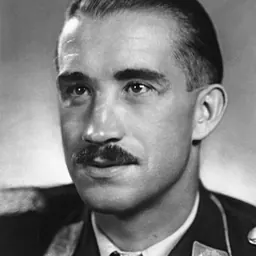



Contemporaries
People whose lives overlapped Hans Weik's

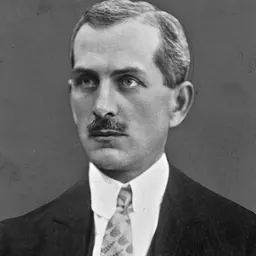
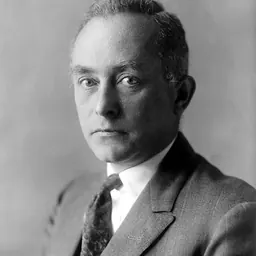
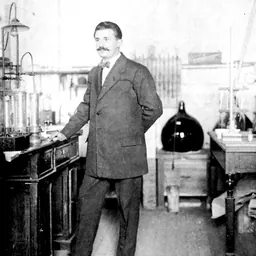

Frequently asked questions
Who was Hans Weik?
German flying ace (1922-2001)
When was Hans Weik born?
Hans Weik was born on 6 July 1922 in Heilbronn.
When did Hans Weik die?
Hans Weik died on 5 June 2001 in Heidenheim an der Brenz.
Sources & further reading
Cite this page
APA: Biography.guide. (2026). Hans Weik. https://biography.guide/hans-weik/
MLA: "Hans Weik." Biography.guide, https://biography.guide/hans-weik/.
Chicago: "Hans Weik." Biography.guide. https://biography.guide/hans-weik/.
Data last updated: 2026-09-20 · Spot an error? Report a correction.
Page generated 2026-09-27 05:09 UTC