
About Hans Thieme
Lived 1906 – 2000 (aged 94). Hans Thieme was a German legal historian, university teacher, jurist, jurisprudence and legal history.
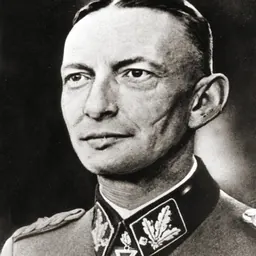
Hans Thieme (10 August 1906 - 3 October 2000) was a German jurist and legal historian who became a university professor in 1938. His published output was, in aggregate, considerable, although he tended to prefer to present his research conclusions in articles - sometimes lengthy articles - published in learned journals, rather than in textbooks or monographs. Themes on which he focused included legal history in the context of German history, both medieval and modern, along with European humanism, law codifications and (German) Natural Law theory. He came to wider public attention as a result of a letter he wrote to the national news magazine Der Spiegel in 1957, in which he made public the alleged war crimes committed at the time of the Warsaw Uprising by former SS commander Heinz Reinefarth, who had been (indirectly) Thieme's commanding officer during the later war years. Reinefarth launched a legal action for insult and defamation against Thieme. The legal action failed, but the West German prosecuting authorities launched an investigation against Reinefarth which lasted several years: the accumulating weight of accusations and suspicion forced the former SS-officer to abandon the post-war political career on which he had by this time embarked.
Life Provenance and early years Hans Thieme was born into a Protestant family in Naunhof, a small town just outside Leipzig. His father, Karl Thieme (1862-1932) was a Theologian who taught at Leipzig University. His mother, born Jenny Respinger, was the daughter of a businessman from Basel called Wilhelm Respinger by his marriage to a French woman called Emma Cécile His. His elder brother was Karl Otto Thieme, a German historian and political scientist. The Swiss connection was important to Thieme throughout his life. While still a schoolboy he spent a year attending a secondary school in Basel. Between 1925 and 1928, he studied Jurisprudence at the University of Basel, the Ludwig-Maximilians-Universität München, the Friedrich Wilhelm University of Berlin, and Leipzig University. He received his doctorate at Leipzig University in 1929 in return for a study on developments in International Arbitration procedure since the war. The work was supervised by Richard Schmidt or Franz Exner. returning only after 1945. 1933 was also the year in which Hans Thieme passed his Level II State Law Exams, meaning that in professional terms he was fully qualified to work as a lawyer if necessary. Thieme received an "Extraordinarius" (junior professorship) in 1935.
Despite making no secret of his distaste for the party, Hans Thieme responded to a direct request from the "NS-Dozentenbund" (party lecturers' association) by becoming a (quietly critical) party member in 1937. His Ordinary [full] University Professorship in Legal History, Civil and Commercial Law at the University of Breslau followed in 1938. It was not the last time that Thieme would make a career move that involved following in Beyerle's footsteps. The transfer to Leipzig appears to have represented a promotion to a more all-encompassing professorship at a more prestigious university, located close to his childhood home. (His mother was still alive.) By the time the European war ended in May 1945 Thieme was a British Prisoner of War. He was released relatively quickly in Konstanz, close to Switzerland where his wife and children had sought refuge from the British and American bombing of Leipzig during the closing months of the war. In 1974, aged 68, Hans Thieme retired from his professorial chair at the University of Freiburg.
Zeitschrift der Savigny-Stiftung für Rechtsgeschichte For many years, between 1954 and 1977, Thieme was a co-editor of the (at that time) Vienna-based "Zeitschrift der Savigny-Stiftung für Rechtsgeschichte", described as "one of the oldest legal journals in the world".
Recognition, celebration and memberships Marks of appreciation for Hand Thieme were not restricted to his various honorary doctorates. In 1976 Yitzhak Nebenzahl, in his capacity as State Comptroller of Israel, planted 70 trees in the "Jerusalem Forest of Martyrs" (Ya'ar HaKdoshim), reportedly in Thieme's honour.
Hans Thieme was a member of the Heidelberg Academy of Sciences and Humanities and a corresponding member of the Austrian Academy of Sciences and Humanities.
State honours conferred on him included, in 1972, the West German Order of Merit and, in 1984, the Order of Merit of Baden-Württemberg.
Don’t just read it —
keep it.
Full-length biographies made to live with: read them, listen on the way to work, watch them tonight.
- E-book
- Audio
- Video
Instant download · yours to keep · every purchase keeps this site free
Important facts
People in Hans Thieme's life
Named in this biography and alive at the same time




Related people
Same field, nearest in time




Contemporaries
People whose lives overlapped Hans Thieme's

Frequently asked questions
Who was Hans Thieme?
German legal historian (1906–2000)
When was Hans Thieme born?
Hans Thieme was born on 10 August 1906 in Naunhof.
When did Hans Thieme die?
Hans Thieme died on 3 October 2000 in Freiburg im Breisgau.
What was Hans Thieme's occupation?
Hans Thieme was a legal historian, university teacher, jurist, jurisprudence and legal history.
What nationality was Hans Thieme?
Hans Thieme was German.
Sources & further reading
Cite this page
APA: Biography.guide. (2026). Hans Thieme. https://biography.guide/hans-thieme/
MLA: "Hans Thieme." Biography.guide, https://biography.guide/hans-thieme/.
Chicago: "Hans Thieme." Biography.guide. https://biography.guide/hans-thieme/.
Data last updated: 2026-09-26 · Spot an error? Report a correction.
Page generated 2026-09-27 05:16 UTC