
About Hans Sluga
Born 1939. Hans Sluga is an American philosopher and university teacher.
Hans D. Sluga (; born 24 April 1937) is a German philosopher who spent most of his career as professor of philosophy at the University of California, Berkeley. Sluga teaches and writes on topics in the history of analytic philosophy, the history of continental philosophy, as well as on political theory, and ancient philosophy in Greece and China. He has been particularly influenced by the thought of Gottlob Frege, Ludwig Wittgenstein, Martin Heidegger, Friedrich Nietzsche, and Michel Foucault.
Education and career Hans Sluga studied at the University of Bonn and LMU Munich. He subsequently obtained a BPhil at the University of Oxford, where he studied under R. M. Hare, Isaiah Berlin, Gilbert Ryle and Michael Dummett.
Since 1970, Sluga has been a professor of philosophy at the University of California, Berkeley, serving from 2009 as the William and Trudy Ausfahl Professor of Philosophy until his retirement in 2020. He previously served as a lecturer in philosophy at University College London.
Philosophical work
Sluga describes his philosophical orientation as follows: "My overall philosophical outlook is radically historicist. I believe that we can understand ourselves only as beings with a particular evolution and history." whose challenges are defined by the growth of human populations, rapid technological changes, and an ever more pressing environmental crisis.
Wittgenstein scholar Sluga is a noted interpreter of Wittgenstein and has contributed significantly to Wittgenstein scholarship, including editing the 1996 volume The Cambridge Companion to Wittgenstein with David G. Stern. He has argued against the relevance of increasingly more detailed and sophisticated analyses of Wittgenstein's work, even claiming that Wittgenstein himself would not have regarded this exegetical excess as a legitimate concern for philosophy. In recent years, he has endorsed Rupert Read's "post-therapeutic" or "liberatory" interpretation of Wittgenstein.
Books Gottlob Frege, Routledge & Kegan Paul, London 1980 Chinese translation, Beijing 1990, 2nd ed. 1993 Greek translation, Athens 2010 Heidegger's Crisis. Philosophy and Politics in Nazi Germany, Harvard U. P. 1993 Chinese translation, Beijing 2015 Bulgarian translation, Sofia 2024 Wittgenstein, Wiley-Blackwell, 2011 Italian translation, 2012 Arabic translation, 2014 Chinese translation, 2015 Politics and the Search for the Common Good, Cambridge U. P. 2014 The Philosophy of Frege, (ed.), 4 vols., Garland Press, 1993 The Cambridge Companion to Wittgenstein, (ed. With David Stern), Cambridge U. P. 1996 Licensed Chinese edition, Beijing 2007
Don’t just read it —
keep it.
Full-length biographies made to live with: read them, listen on the way to work, watch them tonight.
- E-book
- Audio
- Video
Instant download · yours to keep · every purchase keeps this site free
Important facts
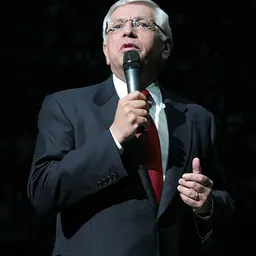
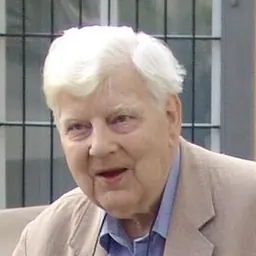
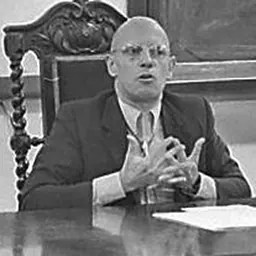
People in Hans Sluga's life
Named in this biography and alive at the same time




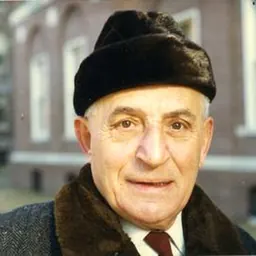
Related people
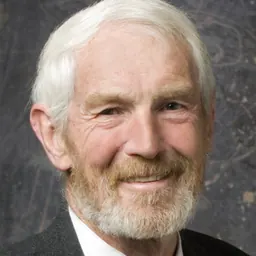
Same field, nearest in time



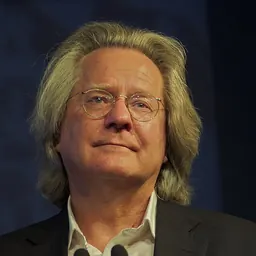
Contemporaries
People whose lives overlapped Hans Sluga's





Frequently asked questions
Who is Hans Sluga?
German logician
When was Hans Sluga born?
Hans Sluga was born on 24 April 1939.
What is Hans Sluga's occupation?
Hans Sluga is a philosopher and university teacher.
What nationality is Hans Sluga?
Hans Sluga is American.
Sources & further reading
Cite this page
APA: Biography.guide. (2026). Hans Sluga. https://biography.guide/hans-sluga/
MLA: "Hans Sluga." Biography.guide, https://biography.guide/hans-sluga/.
Chicago: "Hans Sluga." Biography.guide. https://biography.guide/hans-sluga/.
Data last updated: 2026-09-20 · Spot an error? Report a correction.
Page generated 2026-09-27 05:07 UTC