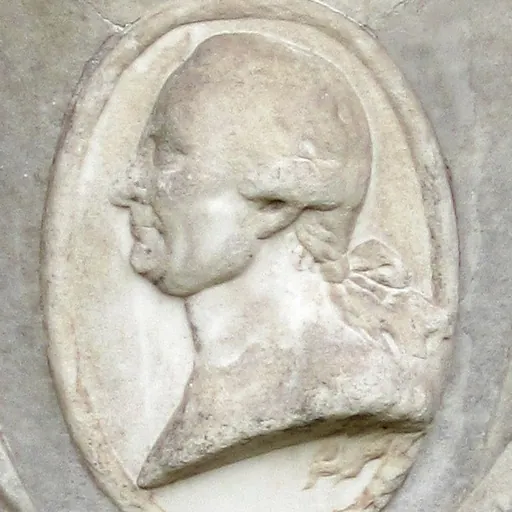
About Hans Sigismund Lestwitz
Lived 1718 – 1788 (aged 69). Hans Sigismund Lestwitz was a German military personnel.
Hans Sigismund von Lestwitz (19 June 1718 – 16 February 1788) was a Prussian major general of the infantry and was especially honored by Frederick II for his action in the Battle of Torgau. His decisive leadership at Torgau, in which he snatched victory from defeat, was credited at the time and subsequently with saving the Prussian state. Frederick acknowledged his action with the post-war gift of vast estates near Kunersdorf.
Family The Lestwitz's were an old Silesian family, dating to the 14th century with Hannes, a free man who served the Duke of Silesia. Hans Sigismund von Lestwitz was born on 19 June 1718 in Kontoppe, Duchy of Glogau, part of the Brandenburg Neumark. His father, Johann Georg von Lestwitz, was a lieutenant general in the Prussian Army and his mother, Helen, was Baroness von Kottwitz. As a youth, Lestwitz studied at the University of Frankfurt. Lestwitz's military career emulated that of the sons of other Junkers. Many of the Junkers owned immense estates, especially in the north-eastern part of Prussia (i.e. the provinces of Brandenburg, Pomerania, Silesia, West Prussia, East Prussia and Posen). Their younger sons frequently followed careers as soldiers, starting as Fahnenjunker and accepting commissions in various branches of the military. With so many family members pursuing profitable careers in the military, the Junkers became heavily invested in the success of the Prussian state.
Lestwitz married Catharina Charlotte von Tresckow (1734–1789), and they had one daughter, Helene Charlotte (1754–1803). Charlotte married at the age of 16, but the marriage was later annulled. Based on his successful career in the army, especially during the latter years of the Seven Years' War, Lestwitz was able to invest in property, eventually acquiring substantial holdings near Friedland, both via purchase and gifts from his grateful king. The property, referred to as Old Friedland, included six farms, several sheep and cow herds and a mill, plus assorted fishing communities. Fishing employed a third of the population until the end of the century. Eventually his daughter inherited the estates. She drained much of the marshland, creating a more profitable environment. Charlotte, known by decree of Frederick William II as the Lady of Friedland, was widely considered to be a successful agriculturalist, albeit a "very strange woman."
Military career Lestwitz began his military career in 1734 as a Fahnenjunker in the infantry regiment of Kurt Christoph von Schwerin in Frankfurt on the Oder. In the First and Second Silesian Wars, Lestwitz participated in some of the most hotly contested battles: Mollwitz, Chotusitz, Hohenfriedberg, and Soor. In the Seven Years' War, after the Battle of Lobositz (1 October 1756), he received the Order Pour le Mérite. The loss of Breslau required Frederick to march cross-country from Rossbach where, earlier in November, he had won a decisive engagement against the Imperial and French forces. In 12 days, Frederick's army covered the to Leuthen, a half day's march from Breslau, where he engaged a superior Imperial force. Following his victory there, Frederick laid siege to Breslau, which surrendered a week later.
Despite his father's failure at Breslau, young Lestwitz maintained Frederick's approval and his actions at the exhausting Battle of Torgau helped to reestablish the family in the eyes of the King. The staff officers of the Lestwitz regiment received a golden medal.
Figure on the Equestrian statue of Frederick the Great: (left to right) Joachim Bernhard von Prittwitz, Hans Sigismund von Lestwitz, Prince Augustus William of Prussia, Heinrich Sigismund von der Heyde, Johann Dietrich von Hülsen. In 1765, Lestwitz was appointed colonel, and in 1766 he was appointed Inhaber of the Life Grenadier Regiment. At the outbreak of the War of Bavarian Succession, as a major general, he commanded the right wing of the Prussian army. At the conclusion of this unexciting war, he retired in 1779. In 1788, he died in Berlin.
Don’t just read it —
keep it.
Full-length biographies made to live with: read them, listen on the way to work, watch them tonight.
- E-book
- Audio
- Video
Instant download · yours to keep · every purchase keeps this site free
Important facts
People in Hans Sigismund Lestwitz's life
Named in this biography and alive at the same time


Related people
Same field, nearest in time




Contemporaries
People whose lives overlapped Hans Sigismund Lestwitz's



Frequently asked questions
Who was Hans Sigismund Lestwitz?
Prussian major general
When was Hans Sigismund Lestwitz born?
Hans Sigismund Lestwitz was born on 19 June 1718 in Konotop.
When did Hans Sigismund Lestwitz die?
Hans Sigismund Lestwitz died on 16 February 1788 in Berlin.
What was Hans Sigismund Lestwitz's occupation?
Hans Sigismund Lestwitz was a military personnel.
What nationality was Hans Sigismund Lestwitz?
Hans Sigismund Lestwitz was German.
Sources & further reading
· Wikipedia: Hans Sigismund Lestwitz
· DBpedia: Hans Sigismund von Lestwitz
Cite this page
APA: Biography.guide. (2026). Hans Sigismund Lestwitz. https://biography.guide/hans-sigismund-lestwitz/
MLA: "Hans Sigismund Lestwitz." Biography.guide, https://biography.guide/hans-sigismund-lestwitz/.
Chicago: "Hans Sigismund Lestwitz." Biography.guide. https://biography.guide/hans-sigismund-lestwitz/.
Data last updated: 2026-09-23 · Spot an error? Report a correction.
Portrait: Wikimedia Commons · author & licence
Page generated 2026-09-27 05:06 UTC