
About Hans Merensky
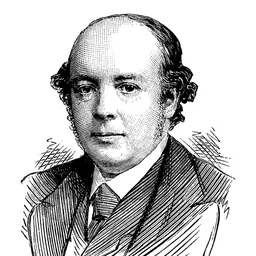
Lived 1871 – 1952 (aged 80–81). Hans Merensky was a German and South African geologist, academic and donor.
Hans Merensky (16 March 1871 – 21 October 1952) was a South African geologist, prospector, scientist, conservationist and philanthropist.
Early life and education Johannes "Hans" Merensky was born on 16 March 1871 at the Berlin Missionary Society's mission station Botshabelo, which was established by his father, the noted German missionary, ethnographer and author, Alexander Merensky. In 1882 the family returned to Germany, where Hans commenced his education. Keenly interested in minerals and enjoying outdoor living, he studied mining geology after finishing his schooling in Germany. He completed his practical training in coal mines in the Saarland and in Silesia and began work for the Department of Mines in East Prussia, but the constraints of civil service did not sit well with him.
He did very well from all the consulting work flowing from the post-Second Boer War mining boom, mainly identifying and analysing mineral samples, especially for the many German mining industrialists that were based in the Johannesburg area at the time. Some examples of his work include various German reports on new tin deposits found in the Transvaal Colony, and a report on the Premier Diamond Mine, where the Cullinan Diamond was found, but in 1905 he made a name for himself by exposing the infamous Lecomte Madagascar Gold Concession "oberfaul" (fraud). Other papers from this period include:
The Gold Deposits of the Murchison Range in the North-East Transvaal (1905) The Origin of the River Diamonds Within the Area of the Vaal (1907) The Rocks Belonging to the Area of the Bushveld Granite Complex in Which Tin May Be Expected, with Descriptions of the Deposits Actually Found (1908) The Diamond Deposits of Lüderitzland, German South-West Africa (1909)
He was admitted to both the Geological Society of South Africa and the South African Association for the Advancement of Science.
Insolvency and war Even though Merensky's consulting work was a financial success, he started trading speculatively on the stock market, not just for his own account, but also for local and German friends and family. Initially he earned substantial trading profits for himself and others, but eventually lost it all and was declared insolvent in 1913. The next decade, his 40s, would prove to be extremely challenging for him, starting with World War I (1914–1918), which, due to his Prussian Army background, he spent in a concentration camp near Pietermaritzburg. He also became seriously ill during his internment, and it took some time after his release in 1919 to recuperate, but the post-war depression and the destruction of the German economy meant that mining consulting work was scarce and he still had loads of debt from his speculative trading days. In short, at the age of 52, he regarded himself as a total failure. Lombaard's brother-in-law, H.C. Dunne, sent the sample to Merensky, who had it confirmed as platinum by a company in Johannesburg. Merensky, who recognised the significance of the sample, immediately started raising funds for prospecting, forming the Lydenburg Platinum Syndicate. Within three days they succeeded in determining platinum in a pyroxenite and associated ultrabasic rocks on the farms Mooihoek and Maandagshoek. By early September 1924 they had discovered the famous Merensky Reef, tracing it over many kilometers whilst procuring the necessary surface area mining rights and options for the L.P. Syndicate. Despite the reef extending some 300 kilometeres and being the largest discovered platinum deposit in the world, Merensky made just enough money to settle his debts – and pay for a well-deserved holiday in Germany in 1926. Later he added Kalkfontein near Warmbaths, Rietbokspruit near Letsitele, and Vlakpoort near Northam. He also built a land portfolio in Germany, consisting of Rodenwalde (Mecklenburg), Suesswinkel (Breslau) and Gutzmin (Pommere). These were all forfeited to East Germany after World War II, but the Merensky Trust managed to extract a measure of compensation.
Gold, chrome and vermiculite As long ago as 1908 Merensky had become interested in gold, particularly in Northeastern Transvaal. In 1930 he assisted a geophysicist from Germany, Dr. Rudolph Krahmann, with his analysis of West Rand gold seams, which lead to the establishment of various gold mines on the West Wits line, as well as the exploration of Orange Free State, Klerksdorp and Evander. He did not derive much personal benefit from gold, however, but made important contributions to the development of the industry.
During his platinum prospecting experience in the Bushveld, he had gained a lot of information about the possible deposits of chrome, procuring various options to acquire land. In 1937 he exercised one such option, buying the farm Jagdlust 418 K.S., 80 kilometers southeast of Pietersburg, where an extremely rich seam of chrome oxide was discovered and developed. A neighbouring farm, Wintersveld, was added shortly thereafter, with both properties eventually sold to Union Carbide.
That same year he also heard from an acquaintance, Max Rhu, that an old prospector had come across an extensive deposit of high quality vermiculite near Phalaborwa, which Merensky then developed into one of the largest and richest in the world and mining it with his Transvaal Ore Company.
Retirement and phosphates In 1940, with the outbreak of World War II, Merensky retired to his farm, Westfalia, instead of once again being sent to an internment camp at his advanced age. After the war, aged 75, he still had the energy and drive to establish a camp near Phalaborwa and supervise the prospecting and drilling of phosphate deposits. The Government eventually purchased the claims, thus establishing the Phosphate Development Corporation (Foskor) to mine and process the deposit. After this final commercial achievement, Merensky returned to his farm for good, increasingly struggling with his health and hearing. He set up and endowed the Hans Merensky Trust, later named the Merensky Foundation, in order to complete open projects and to keep developing South Africa's natural and human resources.
Personal life Merensky was by all accounts rather introverted and never married, associating mainly with German-speaking friends and acquaintances. He died peacefully in his sleep on 21 October 1952. In line with his wishes, he was cremated and his ashes were scattered on Rosendal, Westfalia.
Technische Hochschule of Berlin: Honorary Doctorate in engineering University of Stellenbosch: Honorary Doctorate University of Pretoria: Honorary Doctorate David Draper Medal of the Geological Society of South Africa Leibnitz Medal of the Prussian Academy of Sciences
Don’t just read it —
keep it.
Full-length biographies made to live with: read them, listen on the way to work, watch them tonight.
- E-book
- Audio
- Video
Instant download · yours to keep · every purchase keeps this site free
Important facts
People in Hans Merensky's life
Named in this biography and alive at the same time

Related people
Same field, nearest in time



Contemporaries
People whose lives overlapped Hans Merensky's



Frequently asked questions
Who was Hans Merensky?
German South African geologist, prospector, scientist, conservationist and philanthropist (1871–1952)
When was Hans Merensky born?
Hans Merensky was born on 16 March 1871 in Transvaal Province.
When did Hans Merensky die?
Hans Merensky died in 1952 in Union of South Africa.
What was Hans Merensky's occupation?
Hans Merensky was a geologist, academic and donor.
What nationality was Hans Merensky?
Hans Merensky was German and South African.
Sources & further reading
Cite this page
APA: Biography.guide. (2026). Hans Merensky. https://biography.guide/hans-merensky/
MLA: "Hans Merensky." Biography.guide, https://biography.guide/hans-merensky/.
Chicago: "Hans Merensky." Biography.guide. https://biography.guide/hans-merensky/.
Data last updated: 2026-09-20 · Spot an error? Report a correction.
Page generated 2026-09-27 05:21 UTC