
About Alexander Merensky
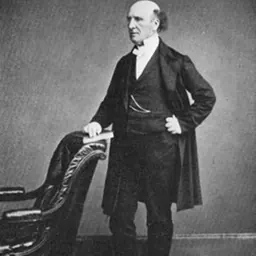
Lived 1837 – 1918 (aged 80). Alexander Merensky was a German writer, missionary and superintendent.
Alexander Merensky (8 June 1837 in Panten near Liegnitz – 22 May 1918 in Berlin) was a German missionary, working in South Africa (Transvaal) from 1859 to 1892.
Early life Alexander's mother, Pauline von Kessel, died during his birth, and his father, Conrad Albert Friedrich, seven years later, in 1844. He was therefore orphaned early in life and grew up in the well-known Schindler orphanage and among relatives. Encouraged by the well-known Rev. Gustav Knak, he entered the mission seminary of the Berlin Missionary Society in 1855 and was sent out on 23 November 1858. Together with a fellow missionary, Karl-Heinrich Theodor Grützner, he travelled by sailboat from Amsterdam to Cape Town and on to Natal.
Mission stations On 14 August 1860, he and fellow missionary Heinrich Grützner co-founded the mission station Gerlachshoop, the first mission station of the Berlin Missionary Society north of the Vaal River. Seven children were born to this union, one of whom was the well-known geologist, Hans Merensky. They lived in Kgalatlou until May 1864 and with the permission of Sekhukhune, the leader of the Bapedi, founded the mission station Ga-Ratau, approximately 15 km from the Bapedi capital. This station was dedicated in May 1864.
The British annexed the Transvaal Republic in 1876 and Sir Wolseley made Botshabelo his headquarters in the Transvaal. During the First Anglo-Boer War, Merensky was conscripted to the Boer forces as military medic. He took part in the battles of Laing's Nek, Skuinshoogte and Majuba Hill and described the battles viewed from afar from his field hospital.
Return to Germany After the end of the war, Merensky was mistrusted by both the British and Boer authorities and decided to move back to Germany with his family in 1882. In 1883 he was promoted to Inspector of the Berlin Missionary Society.
In 1890 he travelled to Southern Africa again, this time to the northern shore of Lake Njassa (now known as Lake Malawi in Malawi) in the area called Kondeland. Here he founded two further mission stations, Wangemannshöhe (named after BMS Director Hermann Theodor Wangemann) and Manow. Being interested in geography, he later also published a map of this area. On his way back to Germany he had another opportunity to visit Botshabelo.
Honours and legacy Merensky received honorary doctorates from universities in Berlin and Heidelberg for his scientific publications. He died in Berlin on 22 May 1918.
Don’t just read it —
keep it.
Full-length biographies made to live with: read them, listen on the way to work, watch them tonight.
- E-book
- Audio
- Video
Instant download · yours to keep · every purchase keeps this site free
Important facts
People in Alexander Merensky's life
Named in this biography and alive at the same time

Related people
Same field, nearest in time

Contemporaries
People whose lives overlapped Alexander Merensky's




Frequently asked questions
Who was Alexander Merensky?
German missionary (1837–1918)
When was Alexander Merensky born?
Alexander Merensky was born on 8 June 1837 in Legnica.
When did Alexander Merensky die?
Alexander Merensky died on 22 May 1918 in Berlin.
What was Alexander Merensky's occupation?
Alexander Merensky was a writer, missionary and superintendent.
What nationality was Alexander Merensky?
Alexander Merensky was German.
Sources & further reading
· Wikipedia: Alexander Merensky
Cite this page
APA: Biography.guide. (2026). Alexander Merensky. https://biography.guide/alexander-merensky/
MLA: "Alexander Merensky." Biography.guide, https://biography.guide/alexander-merensky/.
Chicago: "Alexander Merensky." Biography.guide. https://biography.guide/alexander-merensky/.
Data last updated: 2026-09-22 · Spot an error? Report a correction.
Page generated 2026-09-27 05:18 UTC