
About Hans Litten
Lived 1903 – 1938 (aged 34). Hans Litten was a jurist, lawyer and resistance fighter, known for Adolf Hitler.
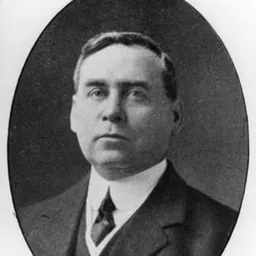
Hans Joachim Albert Litten (19 June 1903 – 5 February 1938) was a German lawyer who represented opponents of the Nazis at important political trials between 1929 and 1932, defending the rights of workers during the Weimar Republic.
During one trial in 1931, Litten subpoenaed Adolf Hitler to appear as a witness, and cross-examined him for three hours. Hitler was so rattled by the experience that, years later, he would not allow Litten's name to be mentioned in his presence. In retaliation, Litten was arrested on the night of the Reichstag fire along with other progressive lawyers and leftists. Litten spent the rest of his life in one German concentration camp or another, enduring torture and many interrogations. After five years and a move to Dachau, where his treatment worsened and he was cut off from all outside communication, he committed suicide.
A number of memorials to him exist in Germany, but Litten was largely ignored for decades because his politics did not fit comfortably in either the West or the Communist postwar propaganda. Not until 2011 was Litten finally portrayed in the mass media, when the BBC broadcast The Man Who Crossed Hitler, a television film set in Berlin in summer 1931.
Biography
Family and early years Litten was born the eldest of three sons in a wealthy family in Halle. His parents were Irmgard (née Wüst) and Friedrich Litten (Fritz). Fritz was born and raised Jewish, but converted to Lutheranism in order to further his career as a law professor. He was a nationalist conservative, and served in the army in World War I, earning the Iron Cross, 1st and 2nd Class. He opposed the postwar Weimar Republic. A distinguished jurist and professor of Roman and civil law, he was dean of Königsberg's law school, later becoming rector of that institution. Nonetheless, as a youngster he learned Hebrew, choosing it as one of the subjects for his Abitur examinations. From his mother, Litten acquired an interest in humanitarian ideas and art, and gained a strong sense of justice for the threatened, persecuted and disenfranchised. While his father was away at war, Litten once took food from the kitchen to give to a beggar, addressing him as "sir". Litten's relationship with his father was strained, and his initial interest in Judaism was out of rebellion; he felt his father's conversion was opportunistic. Litten became interested in a German-Jewish youth group with socialist-revolutionary ideas, joining with a school friend, Max Fürst.
Litten sought out political debate in his youth. He was shaped by important political and social events of the era, such as World War I,
Litten was pressed into studying law by his father. He was not interested in it, writing in his journal, "When the ox in paradise was bored, he invented jurisprudence." He wanted to study art history, but nonetheless, he approached his law studies in Berlin and Munich with intensity, inspired by the events of the day. The Kapp Putsch, the 1924 court case against Adolf Hitler and other events convinced Litten that Germany was approaching a very dangerous period. His perception that right-wing radicals were receiving more lenient treatment in court than their opponents led to his decision to become a lawyer.
Nazi seizure of power By 1932, the Nazi Party was in ascendancy. Litten's mother and friends were urging him to leave Germany, but he stayed. He said, "The millions of workers can't leave here, so I must stay too." Hitler's hatred for Litten was not forgotten and in the early hours of 28 February 1933, the night of the Reichstag fire, he was roused from his bed, arrested and taken into protective custody. Litten's colleagues Ludwig Barbasch and Professor Felix Halle were also arrested. such as Clifford Allen and the "European Conference for Rights and Freedom", which had members from several countries. Litten was sent to Sonnenburg concentration camp, Brandenburg-Görden Prison, where he was tortured, along with anarchist Erich Mühsam. In February 1934, he was moved to the Moorlager, Esterwegen concentration camp in Emsland and a few months later, he was sent to Lichtenburg.
Despite his injuries and suffering, Litten strove to maintain his spirits. At one point in 1934, his situation improved a little bit when he was moved to Lichtenburg. Initially, it was the same, with more beatings, but then he was allowed to work in the book bindery and the library. On occasion, he was able to listen to music on the radio on Sundays. He was well liked and respected by his fellow prisoners for his knowledge, inner strength and courage.
The day before his suicide, one of Litten's friends, Alfred Dreifuß, found a noose under Litten's pillow. He showed it to the blockälteste, who said it was not the first that had been found in Litten's possession. At the time, Litten was under interrogation in the "bunker" (see photo). When he came back, he was clearly in a suicidal frame of mind, repeating several times that he "must speak with Heinz Eschen", a prisoner who had just died. He also had recently told his friends that he had enough of being imprisoned. Another of Litten's Dachau friends, Alfred Grünebaum, said later that Litten was in constant fear of more brutal interrogations and that Litten had given up on ever being free. On the evening of 4 February 1938, it was clear what Litten had in mind, but no one kept watch. In the middle of the night, his bed was discovered empty and his friends found him hanging in the lavatory. Litten wrote a few parting words and that he had decided to take his life.
Litten was able to get some of the workers recognized as political actors, making them eligible under the amnesty law of August 1920. Through his law partner, Barbasch, Litten got involved with the Rote Hilfe, a solidarity organization founded by Wilhelm Pieck and Clara Zetkin that supported worker's families in dire need during the turbulent early years of the Weimar Republic. In addition, the Rote Hilfe arranged legal support and legal defense for workers who were under indictment for their political activities or views. By mid 1929, the Rote Hilfe had helped nearly 16,000 arrested workers with legal defense and supported the legal rights of another 27,000 cases.
1929: May Day Trial In 1929, Litten defended participants in the 1929 May Day rally in Berlin, known as Blutmai ("Bloody May 1929"). Annual rallies on 1 May had been taking place in Berlin since 1889. In 1929, however, the rally turned bloody when the city banned all demonstrations and the Berlin police intervened with excessive force. Confrontations between demonstrators and police erupted and the police began firing live ammunition into crowds and buildings, killing 33 and injuring hundreds, including many bystanders. The workers were charged with severe breach of the peace and with sedition.
In preparation for a defense, Litten founded a committee with Alfred Döblin, Heinrich Mann and Carl von Ossietzky to investigate the event. Litten himself had been at the demonstration and observed the actions of the police. When he went to one man's aid and began writing down the names of victims and eyewitnesses, he was himself beaten by a policeman, even though he had identified himself as a lawyer. Litten filed an indictment against Berlin Police President, Karl Friedrich Zörgiebel, charging him with 33 counts of incitement to commit murder. Hitler had insisted that his party operated legally, that the phrase "National Revolution" was to be interpreted only "politically", and that his Party was a friend, not an enemy of the Reichswehr.
The court called Hitler to appear on the witness stand on 8 May 1931. Litten set out to show that the SA Sturm 33 ("Storm 33") was a rollkommando (a small, mobile paramilitary unit, generally murderous) and that its attack of the Eden and the resulting murders were undertaken with the knowledge of the party leadership.
1932: Felseneck Trial The Felseneck Trial was Litten's last major fight against the Nazi Party. On trial were five Nazis and 19 residents of the Felseneck arbour colony, where many left-wing workers, including Communists and Social Democrats, were living. In January 1932, there was a brawl involving about 150 storm troopers and colony residents. The troopers surrounded the colony and attacked with stones and firearms. Two people were killed, Ernst Schwartz, a member of the Berlin SA and Fritz Klemke, a Communist; several others, including two police officers, were injured. The resulting trial had numerous defendants and hundreds of witnesses. Litten was excoriated in the Nazi press as the "Red Death Defender" It was no longer possible for Litten to go out in public without a bodyguard.
When East and West Germany were reunited, the lawyers association of Berlin chose to call itself the Hans Litten Bar Association. Every two years, a lawyer is given the Hans Litten Prize by the German and European Democratic Lawyers Association. The Israeli lawyer Leah Tsemel and Michael Ratner, an American lawyer and the president of the Center for Constitutional Rights, have both received the award.
There is a memorial plaque for Litten located on the former Neue Friedrichstraße, renamed in Litten's honor in 1951. The federal and Berlin bar associations (Bundesrechtsanwaltskammer and Rechtsanwaltskammer Berlin) have their headquarters at the Hans Litten Haus, also on Littenstraße. In 2008, the first in-depth biography of Litten in English was written. Author Benjamin Carter Hett, a historian and former lawyer, came across Litten while working on another book. Commenting on the relevance of Litten's life today and the treatment he suffered while imprisoned, Hett said: Hayhurst has also written a play on Litten's life, entitled Taken At Midnight, which premiered at Chichester Festival Theatre in September 2014 and transferred to Theatre Royal, Haymarket, London in January 2015.
In popular culture Litten has been played by Ed Stoppard in the 2011 TV film The Man Who Crossed Hitler, by Martin Hutson in Taken at Midnight at Chichester Festival Theatre in 2014 and Theatre Royal Haymarket in 2015, and by German actor Trystan Putter in Seasons 3 and 4 of the 2017 TV show Babylon Berlin. Litten's work as a lawyer prior to Hitler becoming Chancellor is featured prominently in Politics, ep. 1 of Season 1 of the 2019 BBC documentary Rise of the Nazis. The book Crossing Hitler: The Man Who Put the Nazis on the Witness Stand (2008) by Benjamin Carter Hett recounts the episode from the trial in which Hans Litten summons Hitler to testify. This is the only time Hitler ever had to testify in court.
Don’t just read it —
keep it.
Full-length biographies made to live with: read them, listen on the way to work, watch them tonight.
- E-book
- Audio
- Video
Instant download · yours to keep · every purchase keeps this site free
Important facts
People in Hans Litten's life
Named in this biography and alive at the same time


Related people
Same field, nearest in time

Contemporaries
People whose lives overlapped Hans Litten's
Frequently asked questions
Who was Hans Litten?
German lawyer (1903–1938)
When was Hans Litten born?
Hans Litten was born on 19 June 1903 in Halle (Saale).
When did Hans Litten die?
Hans Litten died on 5 February 1938 in Dachau concentration camp.
What was Hans Litten's occupation?
Hans Litten was a jurist, lawyer and resistance fighter.
What was Hans Litten known for?
Hans Litten was known for Adolf Hitler.
What nationality was Hans Litten?
Hans Litten's recorded nationality: German Reich.
Sources & further reading
Cite this page
APA: Biography.guide. (2026). Hans Litten. https://biography.guide/hans-litten/
MLA: "Hans Litten." Biography.guide, https://biography.guide/hans-litten/.
Chicago: "Hans Litten." Biography.guide. https://biography.guide/hans-litten/.
Data last updated: 2026-09-22 · Spot an error? Report a correction.
Page generated 2026-09-27 05:06 UTC