
Hans Joachim von Zieten
Prussian general
About Hans Joachim von Zieten
Lived 1699 – 1786 (aged 86). Hans Joachim von Zieten was a German military officer, military leader and military commander.
Hans Joachim von Zieten, sometimes spelled Johann Joachim von Ziethen, (14 May 1699 – 26 January 1786), also known as Zieten aus dem Busch, was a cavalry general in the Prussian Army. He served in four wars and was instrumental in several victories during the reign of Frederick the Great, most particularly at Hohenfriedberg and Torgau. He is also well known for a raid into the Habsburg territories during the Second Silesian War, known as Zieten's Ride. After engaging in a reputed 74 duels, and fighting in four wars, he died in his bed at the age of 86.
Early life Zieten was born on 14 May 1699 in the hamlet of Wustrau, now part of Fehrbellin, in the Margraviate of Brandenburg. His father was Joachim Matthias (1657–1720) and his mother, Ilsabe Catharine Jurgass. The family had lived there for several hundred years; records show them founding a Latin School in the mid-fourteenth century. The property was small and the family referred to the ramshackle house as a calliope. His father shared the property with his brother, Hans Dietrich; when the brother died in 1693, the father owned the property outright, valued at 4,000 thalers. Zieten was the third of seven children; by 1720, when his father died, only four children remained. Wustrau came to Zieten and his three sisters. The estate was valued at 8,000 thalers, of which the maintenance of the mother had to be fulfilled and his sisters' inheritances and dowries paid. This left Zieten with about half of the value. Upon his appointment as governor of Spandau, Schwendy, who had been Zieten's mentor, released his regiment to command of Generalmajor Kurt Christoph Graf von Schwerin. In a report to Frederick William I, Zieten was described as "... very small, and of [too] weak voice for commanding." This was sufficient for the so-called soldier-king, who was obsessed with tall men, to overlook Zieten in the promotions lists. On 28 July 1724, Zieten journeyed from Crossen, where his regiment was garrisoned, with a petition for promotion to the King, who then wrote on the margin of the petition that Zieten "shall have his dismissal." Zieten retired to his estates. Two years later, during a stay in Berlin, Zieten heard of the doubling of the dragoon regiment of Wuthenow and obtained a position as lieutenant in this regiment. In 1727, after an argument with his captain (Rittmeister), he was condemned to a one-year imprisonment on the fortress of Königsberg for disobedience. After returning from the fortress, Zieten challenged the Rittmeister to a duel and he was subsequently cashiered. He returned to Wustrau.
In 1744, Zieten advanced with the avant-garde of the Prussian army in Bohemia to Budejovice. On his own initiative at Moldau, the colonel, with his red-uniform Hussar Regiment No. 2, forced a larger enemy's force into its knees. Zieten covered the retreat behind the Elbe, and on 12 October, he fell into a violent ambush at Moldau. In this year the nickname, "Zieten aus den Busch" (Zieten of the bush) was born. During the attack at Domstadt, he could not prevent the loss of a large supply convoy. During the Battle of Liegnitz on 15 August 1760, he managed to keep the Austrian main army at bay so that it could not participate in the battle. Zieten was promoted to general of cavalry. He made one of the few tactical mistakes of his career early in the Battle of Torgau, 3 November 1760, when he misdirected an attack against the Austrian troops; he made up for this error when he and his hussars stormed the Süptitzer heights.
In the subsequent years of peace, the old army commander remained a tireless instructor of his now legendary Hussar regiment. In his last years of life, Zieten alternated between Berlin, where he bought a house in 1763 on Kochstrasse No. 61–62. and on his property at Wustrau, where he devoted himself mainly to charity. At the same time, he worked with great care to improve his property. He enjoyed the special trust of Frederick, who frequently visited "his old father Zieten." In one visit with the King, at Sanssouci, after a long conversation, the King ordered a chair to be placed on which he invited the 85-year-old man to sit. Despite his infirmities, Zieten refused to sit in the presence of the monarch; the King said: "Sit down, Zieten, or I will go away." He was buried on 31 January 1786 on the Wustrau cemetery next to the village church. His estate was valued at 65,057 thalers. Apart from property at Wustrau, he left no fortune. The furniture of the Berlin house had to be auctioned after his death, and his widow was only freed from debt by a gift from King Frederick of ten thousand thalers.
Marriages and children
From his first marriage with Judith von Jürgaß (1703–19 March 1756) (married on 5 November 1737) came a daughter, Johanna (1747–7 June 1829). She married Karl von Jürgaß (1702–19 March 1756), the son of Joachim von Jürgaß and Luise von Zieten.
After the death of his first wife, he married on 24 August 1764 to Hedwig von Platen (1738–6 September 1818). His only son, Friedrich von Zieten (6 October 1765–29 June 1854), whose baptism Frederick witnessed, was first a captain of hussars and from 1800–1824 councilor of Ruppin. In 1840 he was raised to the nobility by Frederick William II of Prussia. He died in 1854, unmarried, and was buried in the local cemetery.
With the death of the last male heir, the property and title moved from the Zieten family to the line of Schwerin, due to the marriage of one of his granddaughters, Karoline Albertine Luise Wilhelmine Emilie von Zieten (22 April 1806–24 February 1853) to Albert Ludwig Wilhelm von Schwerin (17 June 1801–27 October 1865). Their children inherited the property and title.
Another famous member of the Hussars-Zieten, Hans Count von Zieten, is only remotely related to Hans Joachim.
Memorials In 1794 Frederick William II placed a monument to Zieten in Berlin on the Wilhelmplatz (Berlin-Mitte). It was first created by Johann Gottfried Schadow in marble and replaced in 1857 with a bronze cast by August Kiß. It stands today on the Zietenplatz on the corner Wilhelmstraße and Mohrenstraße (Berlin) next to the monument of Leopold I, the Old Dessauer. A similar one stands at Rupppin See.
Zieten's name is on the Equestrian statue of Frederick the Great in Berlin (1851), and a full-sized relief of him stands at the corner of the statue; in addition, built between 1981 and 1983, the National People's Army barracks in Beelitz bore his name, as well as Zietenstraße in Düsseldorf and the Zietenring in Wiesbaden, a street in Lünen, also bear his name. From 1936 to 1945, Göttingen had the Zieten barracks and the Zieten Terrace; Pietrowice (German: Peterwitz) in the rural community of Głubczyce (German: Leobschütz) in Silesia was called Zietenbusch from 1936 to 1945.
Don’t just read it —
keep it.
Full-length biographies made to live with: read them, listen on the way to work, watch them tonight.
- E-book
- Audio
- Video
Instant download · yours to keep · every purchase keeps this site free
Important facts
People in Hans Joachim von Zieten's life
Named in this biography and alive at the same time

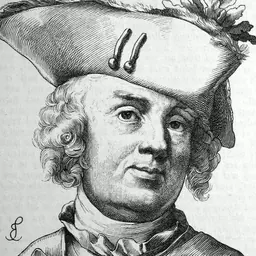
Related people
Same field, nearest in time
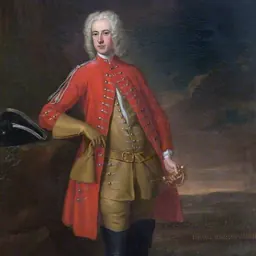
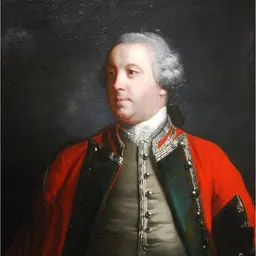


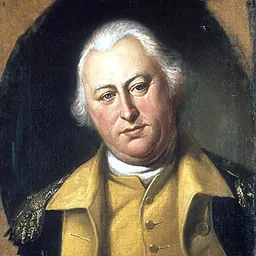
Contemporaries
People whose lives overlapped Hans Joachim von Zieten's



Frequently asked questions
Who was Hans Joachim von Zieten?
Prussian general (1699-1786)
When was Hans Joachim von Zieten born?
Hans Joachim von Zieten was born on 14 May 1699 in Fehrbellin.
When did Hans Joachim von Zieten die?
Hans Joachim von Zieten died on 26 January 1786 in Berlin.
What was Hans Joachim von Zieten's occupation?
Hans Joachim von Zieten was a military officer, military leader and military commander.
What nationality was Hans Joachim von Zieten?
Hans Joachim von Zieten was German.
Sources & further reading
· Wikipedia: Hans Joachim von Zieten
· DBpedia: Hans Joachim von Zieten
Cite this page
APA: Biography.guide. (2026). Hans Joachim von Zieten. https://biography.guide/hans-joachim-von-zieten/
MLA: "Hans Joachim von Zieten." Biography.guide, https://biography.guide/hans-joachim-von-zieten/.
Chicago: "Hans Joachim von Zieten." Biography.guide. https://biography.guide/hans-joachim-von-zieten/.
Data last updated: 2026-09-25 · Spot an error? Report a correction.
Page generated 2026-09-27 05:11 UTC