
About Hans Hellmut Kirst
Lived 1914 – 1989 (aged 74). Hans Hellmut Kirst was a German writer, journalist, novelist and military officer.
Hans Hellmut Kirst (5 December 1914 – 23 February 1989) was a German novelist and the author of 46 books, many of which were translated into English. Kirst is best remembered as the creator of the "Gunner Asch" series which detailed the ongoing struggle of an honest individual to maintain his identity and humanity amidst the criminality and corruption of Nazi Germany.
Biography
Early years
Hans Hellmut Kirst was born in Osterode, East Prussia. Osterode is today Ostróda in Poland.
Kirst joined the German Army in 1933 and served as an officer during World War II, ending the war as a First Lieutenant and Nationalsozialistischer Führungsoffizier. Kirst was a member of the Nazi Party, stating later that he had "confused National Socialism with Germany". The Return of Gunner Asch (1957), What Became of Gunner Asch (1964) and Party Games (1980). ("Party Games", NOT part of the Gunner Asch series)
Other major novels by Kirst set during the Third Reich and World War II include Officer Factory, about the investigation into the death of a training officer in an officer school near the end of World War II, Last Stop, Camp 7, the story of 48 hours in an internment camp for former Nazis, The Wolves, a tale of crafty resistance in a German village, and The Nights of the Long Knives, about a fictitious 6-man squad of SS hit men. All of these novels featured humor and satire, with leading characters often shown positioning themselves as outspoken, ardent Nazis during the Third Reich era before effortlessly flipping to become equally ardent in their claims to have been anti-Nazi and 100% pro-democracy or pro-communist after the tide turned.
Kirst also wrote about the July 1944 attempt to assassinate Adolf Hitler in Aufstand der Soldaten (1965), which was translated into English as Soldiers' Revolt.
Kirst's non-World-War-II-themed novels included The Seventh Day (1957), a nuclear holocaust story that received worldwide acclaim and was dubbed "so convincing, that it doesn't seem like fiction at all". Using a wide array of viewpoint characters, most of them Germans, it describes – step by step and day by day – how in just a single week a chain of small incidents escalates into bigger incidents, small-scale fighting, all-out war, resort to nuclear arms and finally a worldwide nuclear exchange with Europe totally destroyed by the Seventh Day and "the Days of Humanity were numbered". Symbolic characters are a pair of star-crossed lovers, a West German boy and his East German girlfriend, who spend the entire book desperately searching for each other finally to find and run towards each other but before they can touch a nuclear explosion vaporizes both of them in a split second.
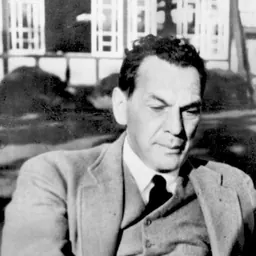
Die letzte Karte spielt der Tod (1955) is a fictional account of the life of Soviet spy Richard Sorge, published in the United States as The Last Card and in the United Kingdom as Death Plays the Last Card.
In 1965 Kirst was nominated for an Edgar Award of the Mystery Writers of America for his 1962 book Die Nacht der Generale, translated into English as The Night of the Generals. He was also a member of International PEN and The Authors Guild.
Legacy At the time of his death, the New York Times noted that "his novels, many of them replaying the events of the war, reflect his acceptance of his nation's guilt," but that some critics "charged him with trivializing the history of the Third Reich.
Death Kirst died in Bremen in February 1989 aged 74 years and was survived by his wife, Ruth, and a daughter.
Kirst's books were translated into 28 languages and sold a total of 12 million copies during his lifetime.
Works in English translation
The Lieutenant Must Be Mad. New York: Harcourt, Brace, 1951/London: George G. Harrap and Co., 1951. The Revolt of Gunner Asch. Boston: Little, Brown, 1955. UK title: Zero Eight Fifteen: The Strange Mutiny of Gunner Asch: A Novel. London: Weidenfeld and Nicolson, 1955. Forward, Gunner Asch! Boston: Little, Brown, 1956. UK title: Gunner Asch Goes to War: Zero Eight Fifteen II: A Novel. London: Weidenfeld and Nicolson, 1956. The Return of Gunner Asch. Boston: Little, Brown, 1957/London: Weidenfeld and Nicolson, 1957. Subtitled Zero Eight Fifteen III in the UK edition. The Seventh Day. Garden City, NY: Doubleday, 1959. UK title: No One Will Escape: A Novel. London: Weidenfeld and Nicolson, 1959. (online copy at archive.org) Officer Factory: A Novel. London: Collins, 1962/Garden City, NY: Doubleday, 1963. The Night of the Generals: A Novel. New York: Harper and Row, 1963/London: Collins, 1963. What Became of Gunner Asch. New York: Harper and Row, 1964/London: Collins, 1964. Brothers in Arms: A Novel. New York: Harper and Row, 1965/London: Collins, 1965. Soldiers' Revolt. New York: Harper and Row, 1966. UK title: The 20th of July. London: Collins, 1966 . The Last Card. New York: Pyramid Books, 1967. UK title: Death Plays the Last Card. London: Fontana/Collins, 1968. The Wolves. New York: Coward-McCann, 1968. UK title: The Fox of Maulen. London: Collins, 1968. Last Stop, Camp 7. New York: Coward-McCann, 1969. UK title: Camp 7 Last Stop. London: Collins, 1969. No Fatherland. New York: Coward-McCann, 1970. UK title: Undercover man. London: Collins, 1970. The Adventures of Private Faust. New York: Coward, McCann and Geoghegan, 1971. Who's In Charge Here? London: Collins, 1971. Hero in the Tower. New York: Coward, McCann and Geoghegan, 1972/London: Collins, 1972. A Time for Scandal. London: Collins, 1973. American title: Damned to Success: A Novel of Modern Munich. New York: Coward, McCann and Geoghegan, 1973. A Time for Truth. London: Collins, 1974/New York: Coward, McCann and Geoghegan, 1974. A Time for Payment. London: Collins, 1976. The Nights of the Long Knives. New York: Coward, McCann and Geoghegan, 1976/London: Collins, 1976. Everything Has Its Price. New York: Coward, McCann and Geoghegan, 1976. UK title A time for payment. The Affairs of the Generals. New York: Coward, McCann and Geoghegan, 1979. UK title: Twilight of the Generals. London: Collins, 1979. Party Games. New York: Simon and Schuster, 1979/London: Collins, 1980. Heroes for Sale. London: Collins, 1982.
Most of these novels are pure fiction. But not only is "The 20th of July" based on the assassination attempt against Hitler but Kirst followed the development of this event by using archive sources step by step. He filled in only small gaps of minor importance, where no sources were available.
List of novels in German
Wir nannten ihn Galgenstrick, 1950 Sagten Sie Gerechtigkeit, Captain? 1952 (Neufassung 1966, Letzte Station Camp 7) Aufruhr in einer kleinen Stadt, 1953 1. Band: 08/15 in der Kaserne, 1954 2. Band: 08/15 im Krieg, 1954 3. Band: 08/15 bis zum Ende, 1955 Die letzte Karte spielt der Tod, 1955 Gott schläft in Masuren, 1956 Mit diesen meinen Händen, 1957 (literal translation: With these my hands) Keiner kommt davon, 1957 (literal translation: 'No one gets away (with it)’ Kultura 5 und der rote Morgen, 1958 (literal translation: "Kultura 5" and the red morning) Glück läßt sich nicht kaufen, 1959 (literal translation: Fortune cannot be bought) Fabrik der Offiziere, 1960 Kameraden, 1961 (literal translation: Comrades) Die Nacht der Generale, 1962 (literal translation: The night of the generals) Bilanz der Traumfabrik, 1963 08/15 heute, 1965 (literal translation: 08/15 Today) Aufstand der Soldaten, 1965 Letzte Station Camp 7, 1966 (first edition 1952, Sagten Sie Gerechtigkeit, Captain?; literal translation Last Station Camp 7) Die Wölfe, 1967 (literal translation: the Wolves) Deutschland deine Ostpreußen, 1968 (literal translation: Germany your East Prussians) Kein Vaterland, 1968 (literal translation: No Fatherland) Soldaten, Offiziere, Generale, 1969 (literal translation: Soldiers, Officers, Generals) Faustrecht, 1969 Heinz Rühmann, (biography), 1969 Held im Turm, 1970 Das Udo Jürgens Songbuch, 1970 Kriminalistik, BLV-juniorwissen Band 5, 1971 Verdammt zum Erfolg, 1971 Gespräche mit meinem Hund Anton, 1972 Verurteilt zur Wahrheit, 1972 Verfolgt vom Schicksal, 1973 Alles hat seinen Preis, 1974 (literal translation: Everything has its price) Und Petrulla lacht, 1974 Die Nächte der langen Messer, 1975 (literal translation: The nights of the long knives) Generals-Affären, 1977 Die Katzen von Caslano, 1977 Endstation Stacheldraht, 1978 08/15 in der Partei, 1978 (literal translation: 08/15 in the party) Der Nachkriegssieger, 1979 Der unheimliche Freund, 1979 Hund mit Mann-Bericht über einen Freund, 1979 Eine Falle aus Papier, 1981 (literal translation: A trap made of paper) Bedenkliche Begegnung, 1982 Geld-Geld-Geld, 1982 (literal translation: Money-Money-Money) Ausverkauf der Helden, 1983 Die gefährliche Wahrheit, 1984 (literal translation: The dangerous truth) Die seltsamen Menschen von Maulen, 1984 Blitzmädel, 1984 Ende 45, 1985 Das Schaf im Wolfspelz. Ein deutsches Leben, 1985 Ein manipulierter Mord, 1987 (literal translation: A manipulated murder) Geschieden durch den Tod, 1987 Erzählungen aus Ostpreußen, 1987 (literal translation: Tales from East Prussia) Die merkwürdige Hochzeit in Bärenwalde, 1988 (literal translation: The strange feast in "Bärenwalde"/bear forest) Stunde der Totengräber, 1988 (literal translation: Hour of the grave-diggers) Der unheimliche Mann Gottes, 1988 Menetekel ’39, 1989 Vergebliche Warnung, Der Polenfeldzug, 1989 Die Ermordung des Rittmeisters, 1992 Erinnerungen an eine unvergessene Heimat
Film adaptations 08/15 (1954) (1955) (1955) (1960) The Night of the Generals (1967) (1989, TV miniseries)
Don’t just read it —
keep it.
Full-length biographies made to live with: read them, listen on the way to work, watch them tonight.
- E-book
- Audio
- Video
Instant download · yours to keep · every purchase keeps this site free
Important facts
People in Hans Hellmut Kirst's life
Named in this biography and alive at the same time

Related people
Same field, nearest in time



Contemporaries
People whose lives overlapped Hans Hellmut Kirst's




Frequently asked questions
Who was Hans Hellmut Kirst?
German writer (1914–1989)
When was Hans Hellmut Kirst born?
Hans Hellmut Kirst was born on 5 December 1914 in Ostróda.
When did Hans Hellmut Kirst die?
Hans Hellmut Kirst died on 23 February 1989 in Werdum.
What was Hans Hellmut Kirst's occupation?
Hans Hellmut Kirst was a writer, journalist, novelist and military officer.
What nationality was Hans Hellmut Kirst?
Hans Hellmut Kirst was German.
Sources & further reading
· Wikipedia: Hans Hellmut Kirst
Cite this page
APA: Biography.guide. (2026). Hans Hellmut Kirst. https://biography.guide/hans-hellmut-kirst/
MLA: "Hans Hellmut Kirst." Biography.guide, https://biography.guide/hans-hellmut-kirst/.
Chicago: "Hans Hellmut Kirst." Biography.guide. https://biography.guide/hans-hellmut-kirst/.
Data last updated: 2026-09-22 · Spot an error? Report a correction.
Page generated 2026-09-27 05:27 UTC