
About Hans Friedrich Blunck
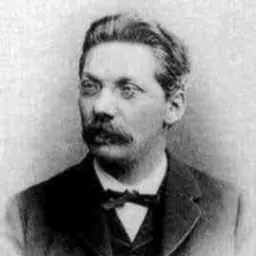
Lived 1888 – 1961 (aged 72). Hans Friedrich Blunck was a German jurist, writer, poet and novelist.
Hans-Friedrich Blunck (3 September 1888 – 24 April 1961) was a German jurist and a writer. In the time of the Third Reich, he occupied various positions in Nazi cultural institutions.
Life A schoolteacher's son, Blunck was born in Altona near Hamburg and studied law at the University of Kiel and the Ruprecht Karl University of Heidelberg. At the latter university Blunck earned his PhD in 1912 with the dissertation Die Anfangsklage. Eine rechtsgeschichtliche Studie.
He was called into the forces in the First World War and served as an officer. Between 1920 and 1928, he worked as a government adviser, and from 1925 until 1928 as a syndic at the University of Hamburg.
Blunck lived from 1919 to 1924 in the Vierbergen district of Ahrensburg and later lived in Hoisdorf. In 1931, Blunck moved to his estate "Mölenhoff" in Grebin near Plön.
Between 1920 and 1940, Blunck published many novels and narratives, which are regarded in modern times as an attempt to establish the way to National Socialism. Blunck was especially interested in Nordic themes and Hanseatic history, which he framed with an emphasis on nationalistic aspects and the "völkisch" body of thought. His work includes conflicts with the Germanic pantheon, Norse sagas, fairy tales, ghost stories and Low Saxon poetry.
After Adolf Hitler and the Nazis seized power, Blunck was chosen on 7 June 1933 to be the second chairman of the Section for Poetry of the Prussian Academy of the Arts; the first chairman was Hanns Johst. Blunck had before this taken up one of the posts left open after all Jewish members had been excluded.
In 1933, Blunck was ordered to take the post of the first President of the Reich Literature Chamber (Reichsschrifttumskammer), whose job was to further the control and Gleichschaltung of literary production and distribution. Blunck signed the "vow of most faithful allegiance" to Adolf Hitler in the same year. However, by October 1935, he was removed from this position at Hans Hinkel's instigation. Unlike his successor Johst, Blunck was not yet a member of the NSDAP (Nazi Party) and spoke out against persecution of Jews who served in World War I. Blunck was named foreign representative of the Reich Literature Chamber and Honorary "Chairman by Seniority."
In 1936, Blunck founded the "Foundation of German Works Abroad" ("Stiftung Deutsches Auslandswerk"), whose goal was to propagate a positive picture of the Third Reich abroad. He joined the Nazi party in 1937.
Blunck became a member of the "Eutiner Dichterkreis", one of the most ardent Nazi poet societies in the Third Reich, whose patron was Hinrich Lohse (other members were Gunnar Gunnarsson, Helene Voigt-Diederichs, and Gustav Frenssen). Blunck was first president, and then from 1940 forward, he served as honorary president of the foundation, which in consultation with Reich ministries and NSDAP organizations coordinated foreign-based German companies' activities.
In 1952, Blunck published his memoirs under the title Unwegsame Zeiten ("Pathless Times"). He died on 24 April 1961.
Quotations
Literature Jürgen Blunck: Bibliographie Hans Friedrich Blunck. Mit einem Anhang: Schriften von und über Barthold Blunck. Hamburg: Ges. zur Förderung d. Werkes von Hans Friedrich Blunck e. V. 1981. (= Jahrbuch der Gesellschaft zur Förderung des Werkes von Hans Friedrich Blunck; 1981) W. Scott Hoerle: Hans Friedrich Blunck. Poet and Nazi collaborator. 1888-1961. Oxford u.a.: Peter Lang. 2003. (= Studies in modern German literature; 97) Christian Jenssen: Hans Friedrich Blunck. Leben und Werk. Berlin: Buch- und Tiefdr.-Ges., Abt. Buchverl. 1935. Kai-Uwe Scholz: Chamäleon oder Die vielen Gesichter des Hans-Friedrich Blunck. Anpassungsstratregien eines prominenten NS-Kulturfunktionärs vor und nach 1945. In: Ludwig Fischer (Hrsg.): Dann waren die Sieger da. Studien zur literarischen Kultur in Hamburg 1945-1950. Hamburg: Dölling und Galitz. 1999.(= Schriftenreihe der Hamburgischen Kulturstiftung; 7)
Don’t just read it —
keep it.
Full-length biographies made to live with: read them, listen on the way to work, watch them tonight.
- E-book
- Audio
- Video
Instant download · yours to keep · every purchase keeps this site free
Important facts
People in Hans Friedrich Blunck's life
Named in this biography and alive at the same time



Related people
Same field, nearest in time


Contemporaries
People whose lives overlapped Hans Friedrich Blunck's




Frequently asked questions
Who was Hans Friedrich Blunck?
German jurist and writer (1888–1961)
When was Hans Friedrich Blunck born?
Hans Friedrich Blunck was born on 3 September 1888 in Altona.
When did Hans Friedrich Blunck die?
Hans Friedrich Blunck died on 24 April 1961 in Hamburg.
What was Hans Friedrich Blunck's occupation?
Hans Friedrich Blunck was a jurist, writer, poet and novelist.
What nationality was Hans Friedrich Blunck?
Hans Friedrich Blunck was German.
Sources & further reading
· Wikipedia: Hans Friedrich Blunck
· DBpedia: Hans-Friedrich Blunck
Cite this page
APA: Biography.guide. (2026). Hans Friedrich Blunck. https://biography.guide/hans-friedrich-blunck/
MLA: "Hans Friedrich Blunck." Biography.guide, https://biography.guide/hans-friedrich-blunck/.
Chicago: "Hans Friedrich Blunck." Biography.guide. https://biography.guide/hans-friedrich-blunck/.
Data last updated: 2026-09-20 · Spot an error? Report a correction.
Page generated 2026-09-27 05:25 UTC