
About Hans Bol
Lived 1534 – 1593 (aged 58). Hans Bol was a painter, printmaker, draftsperson, graphic artist and visual artist.
Hans Bol or Jan Bol (16 December 1534 – 20 November 1593), was a Flemish painter, miniature painter, print artist and draftsman. He is known for his landscapes, allegorical and biblical scenes, and genre paintings executed in a late Northern Mannerist style.
After a successful career in Flanders, he left his home country for the Dutch Republic during the Siege of Antwerp. His landscape work had an important influence on the next generation of Dutch landscape painters. His prints after his own designs as well as those of Flemish masters such as Pieter Brueghel the Elder contributed to the spread of their themes in the Northern Netherlands.
Life Bol was born in Mechelen as the son of Simon Bol en Catherina van den Stock. He was a member of a family 'of good descent'. He received his first training in Mechelen from his two uncles Jacob Bol I and Jan Bol who were painters. He was apprenticed to a local canvas painter at the age of fourteen. He was trained in the local tradition of 'water-verwers' (water-painter) or 'doekschilders' (canvas painters). He travelled in Germany spending time in Heidelberg from 1550 to 1552. He returned to Mechelen in 1560 where he was admitted as a master of the Mechelen Guild of Saint Luke on 20 February 1560.
After the fall of Calvinist Mechelen to the Spanish in 1572, he left his hometown for Antwerp where he became a master in the local Guild of Saint Luke in 1574. In 1575 he became a poorter of Antwerp. He died in 1593 of the plague. These themes included peasant scenes.
He started out as a painter of watercolour and tempera on canvas. These works served at the time as a more affordable alternative for tapestries in the decoration of walls. Hans Bol achieved considerable success in this typical Mechelen specialty, which led to his designs becoming widely copied and even sold under his name. Bol therefore abandoned these large-scale works in favour of very small-sized works, which would be more difficult to copy by others. He built a reputation with his miniature drawings minutely finished in colours on parchment. The Master of the Small Landscapes depicted real rather than imaginary landscapes, something which would be influential on future Flemish landscape artists, including Bol.
Bol's drawings reveal his prominent role in the development of landscape art in the Low Countries. His landscapes are often populated by human figures depicting biblical or ordinary people are a combination of the two. He mixed realistic details with imaginary elements. In his approach to landscape art Bol was influenced by the work of his contemporary Pieter Bruegel the Elder. With this master he also shared his preference for depicting the seasons and the months of the year. Bruegel had revived this medieval tradition with his monumental series of the months, painted in 1565. In the following years Hans Bol made designs for a series of prints of the Four Seasons. The project was originally started by Bruegel as a project for the prominent Antwerp printer Hieronymus Cock. When Bruegel died in 1569, he had only completed the designs for Spring and Summer. That Bol was approached by Hieronymus Cock to make designs for Autumn and Winter is proof of the high esteem in which he was held by 1570. Through this commission the young Bol had effectively become the old Bruegel's successor. Unlike the series of the months in the Museum Boijmans van Beuningen, which represents each month by the human labours associated with it, the drawings in the series in Brussels combine representations from the New Testament – numerous parables – and lay scenes. The scenes representing the human labours have been moved to the background, giving prominence to the religious scenes. This was a really innovative iconographic concept for the period. Some of the drawings represent several parts of a story in a single composition.
In 1582 Hans Bol and his workshop illuminated the Book of Hours of the Duke of Alençon, who was proclaimed Duke of Brabant in that year.
Don’t just read it —
keep it.
Full-length biographies made to live with: read them, listen on the way to work, watch them tonight.
- E-book
- Audio
- Video
Instant download · yours to keep · every purchase keeps this site free
Important facts
more
Nach H Boll, hons bol, H. Bol, l'ancien Hans Bol, John Boll, Jan. Bol, Hanns Boll, Bol, den Ouden Hans Bol, Hans Boll, John Bol, Joannes BolliusPeople in Hans Bol's life
Named in this biography and alive at the same time
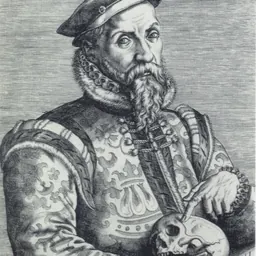
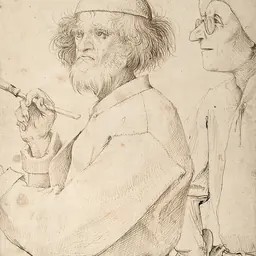
Related people
Same field, nearest in time
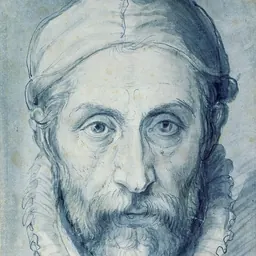
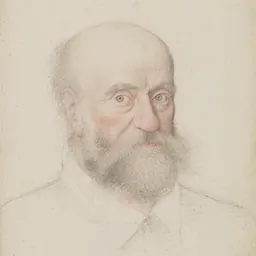

Contemporaries
People whose lives overlapped Hans Bol's


Frequently asked questions
Who was Hans Bol?
Flemish painter and draughtsman (1534-1593)
When was Hans Bol born?
Hans Bol was born on 16 December 1534 in Mechelen.
When did Hans Bol die?
Hans Bol died on 20 November 1593 in Pétaouchnok, Amsterdam.
What was Hans Bol's occupation?
Hans Bol was a painter, printmaker, draftsperson, graphic artist and visual artist.
What nationality was Hans Bol?
Hans Bol's recorded nationality: Habsburg Netherlands.
Sources & further reading
Cite this page
APA: Biography.guide. (2026). Hans Bol. https://biography.guide/hans-bol/
MLA: "Hans Bol." Biography.guide, https://biography.guide/hans-bol/.
Chicago: "Hans Bol." Biography.guide. https://biography.guide/hans-bol/.
Data last updated: 2026-09-20 · Spot an error? Report a correction.
Page generated 2026-09-27 05:21 UTC