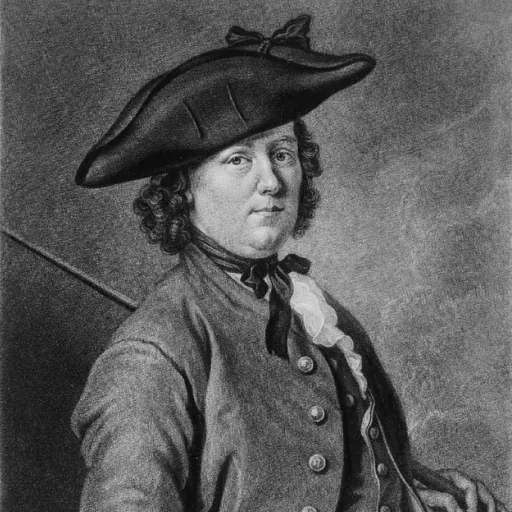
About Hannah Snell
Lived 1723 – 1792 (aged 68). Hannah Snell was a British soldier.
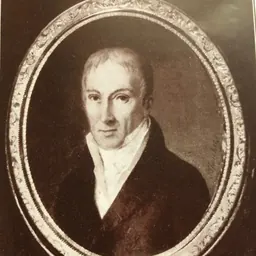
Hannah Snell (23 April 1723 – 8 February 1792) was an English woman who disguised herself as a man to join the British military. Snell was mentioned in James Woodforde's diary entry of 21 May 1778 selling buttons, garters, and laces.
Early life Hannah Snell was born in Worcester, England, on 23 April 1723. She was the youngest daughter of the family, with eight siblings. Her father Samuel Snell was a hosier and dyer. Due to Snell's grandfather’s service in the military and the money that they inherited from him, her father and his second wife, Mary Williams, were wealthy enough to live comfortably and provide adequate education for all their children.
Snell’s parents died when she was 17. She moved to London on 25 December 1740 to live with her older sibling, Susanah, in her house in Wapping. on 18 January 1744. Summs often sought the company of other women and grew to despise Snell. He used her patrimony to pay for his luxurious lifestyle. Susanna, who died in infancy. Later, she learned that her husband had been executed for murder.
While in Coventry, she enlisted in the British Army. She boarded the sloop HMS Swallow at Portsmouth and sailed as a cabin boy under commander John Rowzier to Lisbon. Her unit was to invade French Mauritius as part of the War of the Austrian Succession, but the attack was called off. Her unit then sailed to India to take part in the First Carnatic War. In August 1748, her unit was sent to an unsuccessful expedition to besiege the French colony of Pondicherry in India. Later, she fought in a battle at Devicottah in June 1749. She was injured a total of 11 times, with one shot in her groin and five in her leg. To avoid revealing her sex, she either removed the bullet herself or was assisted by a local woman, instead of being tended by the regimental surgeon.
After her three-month recovery, she was reunited with her fleet and returned to duty on the undermanned ship. She then spent five weeks in Bombay where her crewmates noticed that she did not shave her face and nicknamed her "Miss Molly Gray". This prompted her to "begin flirting with the local women" as a way to reduce suspicion about her sex. Shortly thereafter, Gray returned home to England after being discharged for complications with her wounds. Three painters painted her portrait in her uniform and The Gentleman's Magazine reported her claims. She was honourably discharged and the Royal Hospital Chelsea officially recognized Snell's military service in November, and granted a pension in 1750 of 5d per day, By the mid-1750s, Snell was living in Newbury in Berkshire. In 1759, she married Richard Eyles there, with whom she had two children. In 1772, she married Richard Habgood of Welford, also in Berkshire, and the two moved to the Midlands. In 1785, she was living with her child George Spence Eyles, a clerk, on Church Street, Stoke Newington.
In 1791, her mental condition suddenly worsened. She was admitted to Bethlem Hospital on 20 August and died on 8 February 1792. She was buried at Chelsea Hospital (now the Old Burial Ground, Royal Hospital Chelsea).
Hannah Snell is mentioned in the 1969 film The Prime of Miss Jean Brodie as a woman who was prepared to "serve, suffer and sacrifice."
There are numerous accounts of Snell’s life. Snell’s memoir The Female Sailor was released in 1750 by London publisher Robert Walker. It has continued to be in circulation even to the present day, available in the following books: The Female Soldier; Or, The Surprising Life and Adventures of Hannah Snell (2011), The Lady Tars: The Autobiographies of Hanna Snell, Mary Lacy, Mary Talbot, and Mary Anne Talbot (2008), and The Female Soldier: Two Accounts of Women Who Served & Fought as Men (2011). Snell’s life is also the subject of further examination. For instance, Hannah Snell: The Secret Life of a Female Marine (2014) investigates the context in which her life took place, while Female Husbands (2020) discusses themes related to Snell’s and other figures’ "transing" of gender. Records of later 1800s publications show the reach of Snell’s narrative; articles on Snell’s in US magazines and newspapers, for instance, are found in The New York Ledger (1865), Boston’s Ballou’s Dollar Monthly (1855–1865), Minnesota’s The St. Paul Globe (1890), and Utah’s The Salt Lake Herald (1893). Snell’s media presence decreased in the 1900s. Documented publications about her during this period, however, were still present in Utah’s The Salt Lake Tribune (1910) and Oregon's The Gazette-Times (1914).
The pronouns and gender identity assigned to Snell vary between publications. In Snell’s original 1746 memoir, she referred to herself as "Hannah Snell" and used female pronouns. However, the subsequent 1750 version identified the author as James Gray. Later editions and newspaper articles reverted back to using "Hannah Snell". Much of the academic work on Snell likewise uses her birth name and pronouns, although papers in transgender studies and related fields have diverged from this norm.
Don’t just read it —
keep it.
Full-length biographies made to live with: read them, listen on the way to work, watch them tonight.
- E-book
- Audio
- Video
Instant download · yours to keep · every purchase keeps this site free
Important facts
People in Hannah Snell's life
Named in this biography and alive at the same time




Related people
Same field, nearest in time


Contemporaries
People whose lives overlapped Hannah Snell's




Frequently asked questions
Who was Hannah Snell?
British soldier (1723-1792)
When was Hannah Snell born?
Hannah Snell was born on 23 April 1723 in Worcester.
When did Hannah Snell die?
Hannah Snell died on 8 February 1792 in Bethlem Royal Hospital.
What was Hannah Snell's occupation?
Hannah Snell was a soldier.
What nationality was Hannah Snell?
Hannah Snell was British.
Sources & further reading
Cite this page
APA: Biography.guide. (2026). Hannah Snell. https://biography.guide/hannah-snell/
MLA: "Hannah Snell." Biography.guide, https://biography.guide/hannah-snell/.
Chicago: "Hannah Snell." Biography.guide. https://biography.guide/hannah-snell/.
Data last updated: 2026-09-23 · Spot an error? Report a correction.
Portrait: Wikimedia Commons · author & licence
Page generated 2026-09-27 05:08 UTC